
DealDash.com Explained: How Penny Auctions Promise Big Discounts
Penny auctions look like a cheat code for shopping. You see a tablet, console, or small appliance sitting at a shockingly low price, and the clock keeps resetting like the deal is still “alive.” That’s the hook. Platforms like dealdash.com turn the auction itself into the product, with excitement, timers, and tiny price jumps that feel harmless.
The big idea is simple: the listed price is not the whole cost. In many penny-auction models, you pay to place bids, and those bids are what really drive revenue. The final “winning” price can be low, but the total spent on bids can be much higher than it looks at first glance. Understanding that difference is the key to smarter choices.
If you’re curious about dealdash.com, treat it like a paid game with a prize at the end, not a normal online store. When you approach penny auctions with clear rules, a budget, and realistic expectations, you can avoid the most common mistakes and decide whether the thrill is worth the spend for you.
What a Penny Auction Really Is
A penny auction is an online auction where the displayed price rises in tiny increments when someone bids, and the countdown timer often extends with each bid. The exciting part is that the final price can remain low compared to retail. The expensive part is that bidding usually costs real money. On dealdash, those paid bids are the engine behind the “big discount” promise.
The Timer-and-Increment Trick
Most penny auctions use two levers: time pressure and small price increases. A bid may add only a small amount to the visible price, but it can also reset or extend the timer, keeping the auction alive. That creates rapid-fire decision making, where bidders react emotionally. The result is a pace that feels like a game, especially on dealdash.com style auctions.
Why the “Huge Savings” Story Feels So Real
Your brain compares the low displayed price to a retail price you recognize. That difference feels like instant value, even before you’ve spent anything. But penny auctions are designed to shift attention away from bid spending and toward the scoreboard-like auction price. With dealdash.com, the best protection is remembering you’re paying for each attempt, not just the final win.
How the Bidding Process Works on Penny Auctions
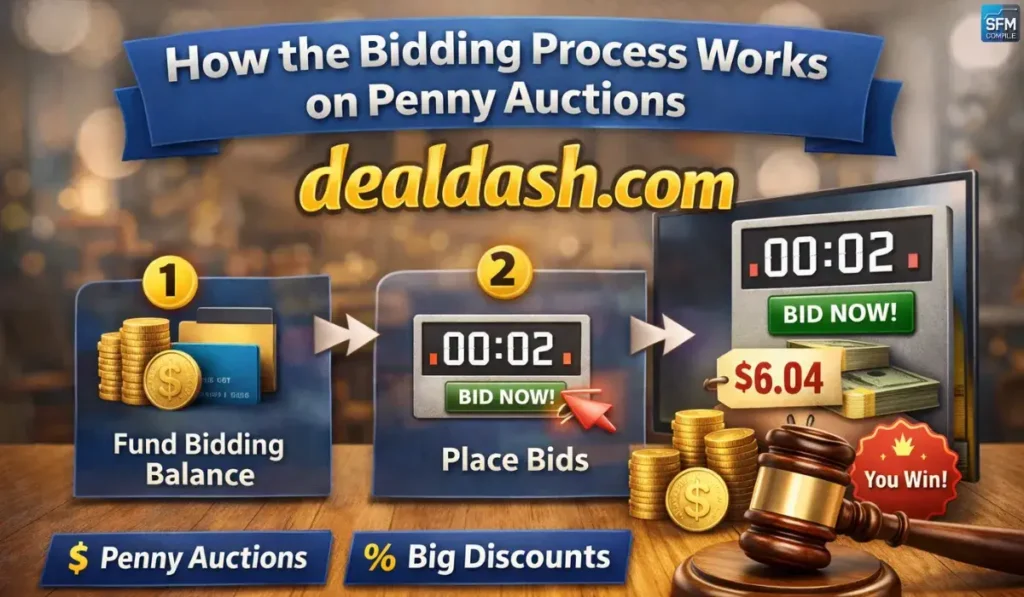
To participate, you typically create an account, fund your bidding balance, and then place bids on items as the timer runs down. Each bid increases the current price by a small step and may extend the countdown. The platform profits from bid purchases, while bidders compete for the right moment to take the lead. That’s the basic flow many people experience with dealdash.com.
Buying Bids and Entering Auctions
The usual starting point is purchasing a pack of bids, which acts like your “ammo” for auctions. You then choose an auction and begin bidding manually or with tools the platform may offer. It’s important to treat bids like cash, because they are. When you browse dealdash.com items for sale, the real question isn’t only “What’s the item?” but “How many bids could this realistically cost me?”
What “Winning” Actually Means
Winning generally means you held the top position when the timer hit zero. You then pay the final auction price, plus any applicable shipping and other charges. The tricky part is that the final price might be low, but your bid spending is separate. On dealdash.com, a “cheap” win can still be an expensive outcome if your bid costs are high.
Also Read This: “Mylawyer360.com Criminal: The Smart Way to Find the Right Defense Lawyer Fast“
The Real Cost: What You Pay Beyond the Final Price
The visible auction price is only one piece of the math. In penny auctions, the major cost can be the bids you place, especially if you bid repeatedly and don’t win. The platform model depends on many people paying to compete, while only one person gets the item. If you’re using dealdash.com, tracking your total spend is more important than tracking the auction’s displayed price.
Bid Spending and Total Ownership Cost
A practical way to evaluate any auction is to estimate your all-in cost: (bids used × cost per bid) + final price + fees. People often ignore the first part because it doesn’t show on the auction ticker. But it’s the biggest driver of outcomes. When you think about dealdash.com this way, it becomes easier to set a limit and walk away.
Fees, Shipping, and Small Charges That Add Up
Even when the auction price looks tiny, you may still face shipping costs, taxes, or processing charges depending on the platform and your location. These aren’t “bad,” but they can change the deal dramatically. Before bidding, read the item details and checkout terms. When browsing dealdash.com items for sale, assume extras exist until you confirm otherwise.
Cost Snapshot Table (Use This Before You Bid)
| Cost Component | What It Includes | Quick Question to Ask |
| Bid spending | Paid bids used during the auction | “What’s my maximum bids for this item?” |
| Final auction price | The visible price at the end | “Is this price still good after bid costs?” |
| Shipping/handling | Delivery fees and packaging | “Is shipping fixed or item-dependent?” |
| Taxes/processing | Tax and possible payment fees | “Do these apply in my region?” |
| Return/refund terms | Rules if item arrives damaged or unwanted | “What’s the timeline and policy?” |
What People Commonly Buy and Why Those Items Show Up

Penny-auction listings often feature popular electronics, small home goods, tools, and giftable items. These categories attract attention and create competitive bidding, which is the entire point of the model. When scanning dealdash.com items for sale, remember that the platform benefits from high-interest products because they trigger more bidding behavior and longer auction cycles.
The “In-Demand” Categories Pattern
You’ll often see items that are widely recognized, easy to compare against retail pricing, and emotionally tempting. That might include headphones, smart devices, kitchen gadgets, and seasonal products. These categories also have predictable demand, which keeps auctions active. On dealdash.com, the more competitive the item, the more disciplined you need to be with your bid budget.
New, Refurbished, and “Like-New” Labels
Condition matters more than many bidders realize. “New” usually carries a different expectation than “refurbished” or “open-box,” and the value comparison changes accordingly. Always check what’s included in the box, warranty coverage, and the item’s exact model. If you’re considering dealdash.com, treat condition details as part of your price calculation, not a footnote.
Who Penny Auctions Work For (and Who Should Avoid Them)
Penny auctions tend to reward people who enjoy the game-like aspect and can stick to strict spending rules. They are less friendly to anyone who chases losses, bids emotionally, or expects every auction to be a guaranteed bargain. If you approach dealdash as entertainment with a controlled budget, it can feel fun. If you approach it as “shopping,” it can disappoint.
Casual Bidders vs. Heavy Participants
Casual bidders often spend a little, lose a few auctions, and walk away feeling confused about where the money went. Heavy participants may learn patterns, use tools strategically, and manage budgets more tightly, but they also risk spending more overall. With dealdash.com, your experience depends less on luck and more on discipline, patience, and knowing when not to bid.
The Psychology That Drives Overbidding
Penny auctions can trigger “I’ve already spent this much, I can’t stop now” thinking. That’s sunk cost, and it’s powerful. The countdown timer adds urgency, and the tiny price increments make each decision feel small. If you’ve ever felt pulled into “one more try,” treat dealdash.com bidding like spending in a game: set limits before you start.
Safer, Smarter Ways to Participate Without Regret
The difference between a fun experiment and an expensive spiral is usually a plan. Decide your maximum total spend first, including bids and checkout costs, and stop when you hit it. Don’t chase. Don’t “win back” losses. If you’re going to use dealdash.com, you’ll get the best results by acting like a careful accountant, not an excited spectator.
Budget Rules That Actually Work
Start with a fixed “auction wallet” amount for the month and never top it up mid-auction. Track each auction’s bid usage in real time, not after the fact. If you win, calculate the all-in cost immediately and compare it to normal alternatives. This approach keeps dealdash.com from turning into unpredictable spending disguised as bargain hunting.
- Set a hard maximum spend per item (bids + final price + fees).
- Choose only one or two auctions at a time to avoid impulse bidding.
- Avoid “hot” items if you hate competition and fast timers.
- Stop bidding when emotion rises, not when your bids run out.
- Keep a simple log: date, item, bids used, outcome, total cost.
A Quick Pre-Bid Checklist
Before you place a single bid, confirm the item condition, what’s included, expected delivery costs, and return terms. Then decide the maximum number of bids you will spend, and write it down. If you hit that number, you stop, even if the item feels “close.” With dealdash, the win is staying in control, not outbidding everyone.
Common Complaints and How to Protect Yourself

Many frustrations come from misunderstanding how penny auctions make money. People feel misled by low displayed prices, overlook bid spending, or get caught chasing. Others are unhappy with item condition, shipping delays, or return friction. The best protection when using dealdash.com is to slow down, read the terms carefully, and treat every bid like a cash decision.
Red Flags to Watch While Bidding
If you notice yourself bidding faster than you can think, you’re in the danger zone. If your plan was “just a few bids” but you’re already far past it, pause. If an item’s details feel unclear or the condition isn’t obvious, skip it. On dealdash.com, the safest auctions are the ones you fully understand before you join.
What to Do If You’re Unhappy With an Outcome
If you win and the item isn’t as expected, document everything: screenshots, order details, photos on arrival, and timestamps. Then follow the platform’s official support process and keep communication polite and specific. If you didn’t win but spent more than planned, the lesson is still valuable: adjust your rules. With dealdash.com, prevention is easier than fixing regret.
Conclusion
Penny auctions promise big discounts by keeping the visible price low while charging for the competition itself. That doesn’t automatically make them “good” or “bad,” but it does mean they work differently than normal shopping. If you understand bid spending, fees, and the psychology of timers, you can judge whether the experience fits your budget and personality.
If you decide to try dealdash.com, treat it like paid entertainment with a chance of a prize, not a guaranteed bargain bin. Set strict limits, track total cost, and walk away early if you feel pulled in. When you focus on control instead of excitement, you give yourself the best chance to enjoy the process without turning “discount hunting” into overspending.
FAQs
Is dealdash the same as a normal online store?
Not really. A normal store sells items at listed prices. Penny auctions sell a competitive bidding experience where bids often cost money, and the final displayed price is only part of the total cost. If you use dealdash, you should think in terms of “total spend” rather than the auction price alone.
Why do prices look so low on deal dash auctions?
Because the price typically increases in tiny increments per bid, while the platform’s main revenue may come from paid bids. The low visible price creates excitement and makes the savings feel massive. On dealdash.com, the key is remembering that the “cheap” number doesn’t include what you spent to get there.
Are dealdash.com items for sale always brand-new?
They can be, but not always. Listings may include new, refurbished, open-box, or otherwise described conditions. The deal depends heavily on condition, warranty, and what’s included. Before bidding on dealdash.com items for sale, read the details closely and compare your all-in cost to a similar-condition item elsewhere.
How can I avoid overspending on dealdash.com?
Use a strict bid limit per auction and a monthly budget you never exceed. Track bids in real time, not after you lose. Avoid bidding when you feel rushed or emotional, and don’t chase losses. If you’re using dealdash.com, your best tool is a written rule you follow even when the timer gets intense.
What’s the smartest way to decide if deal dash is worth it?
Ask yourself if you enjoy the auction experience enough to pay for it, even if you don’t win. Then evaluate the math: estimate bid spending, add fees, and compare to normal pricing for the same item condition. If the numbers only work when you “get lucky,” dealdash.com may not be the right fit for your goals.

I’m Eric Nelson, a professional content writer with over 8 years of experience creating clear, engaging, and well-researched content across multiple digital spaces. I focus on turning complex topics into easy-to-understand stories that inform, entertain, and add real value for readers.
My Experience & Expertise 🚀
Multi-Niche Content Specialist:
Over the years, I’ve written across a wide range of categories including tech, crypto, business, lifestyle, fashion, grooming, celebrities, and breaking news. I specialize in content that feels current, trustworthy, and genuinely useful. 💡
Writer, Researcher & Trend Analyst ✍️
As an author at SFMCompilee.com, I cover:
Tech insights & explainers 💻
Crypto & business trends 📊
Lifestyle, fashion & grooming guides 👔
Celebrity stories & trending topics 🌟
In-depth reviews and practical guides 🧭
I write with a balance of research, experience, and reader-first thinking, making sure every piece is informative, engaging, and easy to follow without unnecessary fluff.






One Comment