


When a long-haul flight suddenly changes course, it can feel like the aircraft “disappeared” from its plan. In reality, modern tracking platforms keep updating the story in near real time. They stitch together multiple data feeds to show position, altitude, speed, route changes, and arrival estimates, often within seconds of what the aircraft is transmitting.
A diversion like Delta Flight DL275 diverted to LAX is the perfect example of why aviation tracking has become a tech topic, not just a travel one. You’re not only watching a dot move across a map. You’re seeing sensor broadcasts, network relays, and decision-support systems translate cockpit and air-traffic reality into public-facing signals.
This article breaks down how flight data tracking tools detect a diversion, what signals usually appear first, and why the “why” is often the hardest part to confirm. We’ll also use DL275 as a case-style reference while keeping the focus on the technology and the limits of what data can truly prove.
What a diversion looks like in live flight data
A diversion is basically a “re-plan” happening mid-flight, and the data begins to reflect that shift long before a public statement exists. Trackers detect changes in heading, route geometry, and destination fields, then update arrival projections as the aircraft commits to a new airport. What seems sudden on social media usually appears as a gradual data pattern in tracking feeds.
Diversion vs delay vs return-to-gate
A delay keeps the destination the same but shifts times, while a return-to-gate often shows short taxi movement or a quick airborne loop back to the departure field. A diversion changes the destination logic entirely. Trackers may display “diverted” after landing, but the clues often appear earlier through repeated heading changes, a new airport code, and rapidly changing estimated arrival times.
The signals trackers often see first
The earliest clue is often a sustained turn that breaks the planned route, especially if it persists for several minutes. Next comes altitude behavior, such as leveling off, stepping down earlier than expected, or changing speed profiles. Many tools also detect reroutes through waypoint changes or route strings that update as flight plans are revised in operational systems.
Why LAX can suddenly appear as “new destination”
When an aircraft commits to a diversion, trackers may switch the destination once they have enough confidence, based on trajectory and how the flight is being handled. Sometimes the destination flips back and forth briefly, especially if the crew is coordinating options. On popular platforms, the “destination” can be a calculated best guess before it becomes a confirmed arrival airport.
The data sources behind “real-time” flight tracking

“Real time” usually means “as fast as the data reaches the platform,” and that depends on where the signals come from. The biggest public source is ADS-B broadcasts from the aircraft, combined with ground and satellite receivers. Other sources include multilateration, radar-derived feeds, and aviation data exchanges that help tracking providers fill gaps and verify details.
ADS-B as the backbone of modern tracking
ADS-B is like a constant broadcast of a flight’s basic state: position, altitude, and velocity-related fields. Tracking networks collect those broadcasts from receivers, then publish them to apps and dashboards. Because ADS-B is transmitted frequently, it’s ideal for spotting route deviations quickly, especially over dense receiver coverage where updates are continuous.
MLAT and radar-derived feeds in crowded airspace
When ADS-B isn’t available or is incomplete, multilateration (MLAT) can help estimate position by comparing the timing of transponder replies received at multiple stations. Some platforms also rely on radar-derived data or aggregated feeds in certain regions. These methods are powerful, but the update rate and accuracy can vary, so the “diversion moment” may appear later than it truly happened.
ATC data sharing and SWIM-style consumers
In the United States, programs like the FAA’s System Wide Information Management (SWIM) support near real-time exchange of flight, aeronautical, and related operational information across the aviation community. Some commercial services consume these kinds of feeds to enrich flight plan context, gate events, and route changes. This helps tools explain not just where the flight is, but how it’s being handled.
Also Read This: “SnapJotz.com: The Digital Note-Taking Tool Built for Speed“
Step-by-step: How tools detect a diversion in real time
Most trackers don’t “know” a diversion the moment it’s decided in the cockpit. They infer it by reading patterns and confirming them as more data arrives. The process is a blend of geometry, statistics, and rule-based logic. When several signals align, the platform flips from “possible reroute” to “diverting” to “diverted,” sometimes with confidence thresholds behind the scenes.
Route geometry changes and turnback detection
A sustained turn away from the planned corridor is the first major flag. Trackers compare the aircraft’s heading and projected path against the filed route or typical track. If the aircraft begins flying toward an alternate airport and the path remains consistent, the tool may display a new destination prediction even before the flight plan record updates publicly.
Altitude and speed patterns that look “off script”
Diversions often come with changes that are unusual for cruise: early descents, leveling at intermediate altitudes, or speed adjustments that don’t match the original arrival flow. Tools monitor these trends and update arrival time models accordingly. That’s why you may see the ETA jump around at first, then stabilize once the aircraft is clearly committed to the alternate.
Squawk codes and why they’re not the whole story
People often look for emergency squawk codes, but many diversions don’t require them. Even when a code changes, it doesn’t automatically reveal the cause. Tracking tools may highlight “emergency” status, but it’s a limited signal compared to what airline operations and air traffic control actually know. It’s best treated as one clue, not a conclusion.
Quick signs you’re watching a diversion (mid-article checklist):
- A persistent turn that breaks the planned track
- Destination/arrival airport field suddenly changes
- ETA swings widely, then stabilizes toward a new airport
- Early descent or unusual altitude steps during what should be cruise
- The flight path starts aiming at a major hub or suitable alternate
Delta Flight DL275 diverted to LAX: what the data likely showed
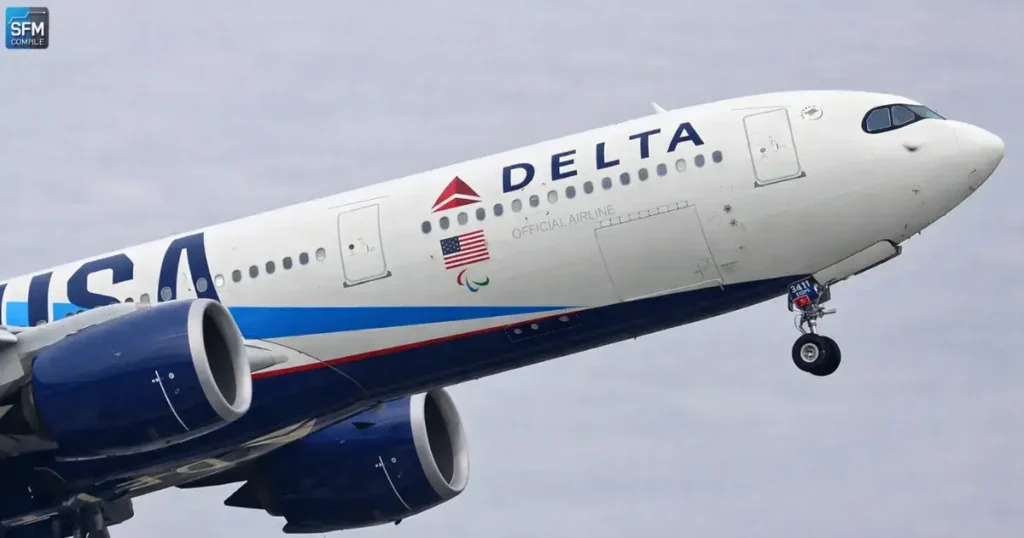
Public flight pages for DL275 typically show it as a long-haul route with detailed tracking and history, which makes changes easier to spot when something unusual happens. In widely discussed reporting, the diversion event associated with DL275 involved a turnback and a landing at Los Angeles, with aviation outlets pointing to an engine anti-ice system issue as the reported trigger.
Baseline expectations for a long-haul track
On an uneventful day, a long-haul flight’s data looks smooth: stable cruise altitude, consistent groundspeed, and gradual route curvature that aligns with winds and standard oceanic tracks. Trackers display steady ETAs and predictable waypoint progress. This baseline matters because it makes anomalies obvious. A sudden sustained turn or new destination field stands out immediately against normal patterns.
The turnback pattern and the “alternate airport lock-in”
When DL275’s track began aiming for LAX, tracking tools would have first shown an unusual heading change, then a growing confidence that the flight was no longer continuing along its original plan. After that, arrival estimates would pivot to Los Angeles, often adjusting multiple times as the descent profile and airport sequencing became clearer. This is why watchers see “updates” even after the decision is made.
Why the “reason” is rarely visible in public data
Even if reporting suggests a likely technical issue, public tracking data rarely proves the cause. ADS-B tells you where the aircraft is and how it’s moving, not what system message appeared in the cockpit. Unless an airline issues a statement or a reputable aviation incident report confirms details, the best you can do is describe the data behavior and avoid overconfident claims.
The tracking tools people use and what each does best
Flight tracking is a whole stack: receivers, aggregators, APIs, and user-facing apps. The public sees the front end, but the reliability depends on coverage density and how the provider fuses data sources. Many platforms also keep historical replay, which helps analysts compare the live diversion track against normal flight paths for the same route and aircraft type.
Consumer apps and map views
Consumer tools are great for quick visibility: live position, estimated arrival, route line, and basic alerts. They also make diversions understandable at a glance. The tradeoff is that consumer views simplify complexity, smoothing data and sometimes presenting predicted destinations before confirmation. That’s not “wrong,” but it means early diversion moments can look messy or inconsistent.
Pro data feeds and enterprise-grade context
Enterprise feeds emphasize consistency, provenance, and integration. They often combine surveillance data with operational context like schedules, tail numbers, airports, and sometimes enriched events. For businesses, the goal is not just “watch the dot,” but forecast disruption: missed connections, gate changes, crew timing, and maintenance impacts. That’s why pro systems may behave more conservatively before labeling a diversion.
Alerts, push notifications, and the “confidence problem”
Diversion alerts are hard because platforms must decide when to notify you. Too early, and you get false alarms. Too late, and you miss the real-time advantage. Many services use confidence thresholds based on trajectory, descent patterns, and destination inference. The best alerts explain what changed, not just that “something happened,” so readers don’t confuse detection with confirmation.
The limits: gaps, delays, and confusing moments in tracking
Even the best trackers can’t show everything instantly. Coverage varies by geography, receiver density, and whether satellites are involved. Some data is delayed, filtered, or blocked for policy reasons. Understanding these limits helps you interpret diversions without jumping to conclusions, especially on long oceanic segments where updates can be less frequent.
Coverage gaps and satellite ADS-B reality
Over land with dense receivers, updates can be near-continuous. Over oceans, Satellite ADS-B helps, but coverage and refresh behavior can vary by provider and region. That’s why a diversion over the Pacific might appear “late” to casual watchers, even though the aircraft was tracked adequately by operational systems. The app experience depends on the network, not just the aircraft.
Latency, filtering, and “smoothing” effects
Tracking platforms often filter noisy points and smooth paths to avoid jagged map lines. That improves readability but can hide small turns and make timing feel off by a minute or two. Latency can also come from data fusion: if a provider merges multiple feeds, it may wait for confirmation before updating a destination field, leading to a brief mismatch between the track and the displayed plan.
Privacy blocks, callsigns, and mistaken identity
Some flights may appear with limited details, changed identifiers, or partial visibility. In those cases, people can misread which aircraft they’re watching, especially if two flights share similar routes or numbers on different days. During a diversion, that confusion spreads fast. Good tracking practice is to confirm tail number, route, and timestamp before sharing screenshots publicly.
Using diversion data responsibly in a fast-sharing internet
Diversions can involve medical situations, maintenance issues, or operational constraints that have nothing to do with dramatic headlines. Tracking data is useful, but it’s also easy to misuse when people treat inference as fact. The most responsible approach is to describe what the data clearly shows, label uncertainty, and wait for credible confirmation before stating reasons or assigning blame.
Respect passengers and crew while the event is unfolding
A diversion can be stressful onboard, even when it’s precautionary and handled smoothly. Turning it into a spectacle doesn’t help anyone. If you share updates, focus on safety and verified information rather than personal details or unconfirmed claims. Remember that families may be watching the same tracking page, and clarity matters more than speed.
How to verify before posting “what happened”
Start with the basics: confirm the date, flight number, and aircraft identity. Then compare multiple tracking sources to see if the route change and destination match across platforms. If you mention a cause, base it on a reputable aviation outlet or a confirmed statement, not on guesswork from a map. This is where discipline beats virality.
What’s next: predictive tracking and smarter disruption signals
The future isn’t only tracking the diversion faster. It’s predicting downstream impact: arrival stand availability, passenger rebooking load, and recovery time for the network. As data-sharing improves, systems can generate better early warnings while still avoiding false alarms. The best tools will explain confidence and context, not just deliver notifications.
Key Points Table
| Topic | What tracking tools do | What they can’t fully confirm |
| Diversion detection | Identify sustained route changes and new destination patterns | The exact reason in the cockpit |
| Core technology | Use ADS-B, MLAT, and aggregated feeds | Perfect global coverage at all times |
| Real-time updates | Refresh ETAs and routes as new data arrives | Instant accuracy when coverage is weak |
| Public vs operational data | Show movement and timing clearly | Maintenance details and internal decisions |
| Responsible sharing | Encourage verification and uncertainty labels | Prevent all misinformation during fast events |
Conclusion
Diversions like Delta Flight DL275 diverted to LAX show how powerful flight tracking technology has become. A modern tracking tool can reveal route changes, descent behavior, and likely alternates quickly, often before the general public hears any official explanation. That speed comes from a layered tech stack that translates aircraft and airspace signals into readable updates.
At the same time, flight tracking has limits that matter. It can show what happened in the sky, but not always why it happened. The smartest way to use these tools is to treat them as evidence of movement, not as a substitute for confirmed incident details. With that mindset, tracking becomes informative instead of misleading.
FAQ’s About “Delta Flight DL275 Diverted LAX
How do tracking apps know a flight is diverting?
They infer it from sustained heading changes, a path that aligns with an alternate airport, shifting ETAs, and sometimes flight plan updates.
Can tracking data tell me the exact reason for a diversion?
Usually no. Public tracking focuses on position and movement, not cockpit system alerts or maintenance findings.
Why does the destination sometimes change more than once?
Because prediction comes before confirmation. A flight may appear to aim toward one alternate, then adjust as weather, air traffic flow, or operational considerations change.
Are diversions always emergencies?
Not always. Many diversions are precautionary or operational, such as a technical indication that needs inspection, a medical situation, or an airport constraint.
What’s the most reliable way to verify a diversion?
Check the aircraft identity (like tail number), match the route change across more than one tracker, and confirm the actual landing airport and time.

I’m Eric Nelson, a professional content writer with over 8 years of experience creating clear, engaging, and well-researched content across multiple digital spaces. I focus on turning complex topics into easy-to-understand stories that inform, entertain, and add real value for readers.
My Experience & Expertise 🚀
Multi-Niche Content Specialist:
Over the years, I’ve written across a wide range of categories including tech, crypto, business, lifestyle, fashion, grooming, celebrities, and breaking news. I specialize in content that feels current, trustworthy, and genuinely useful. 💡
Writer, Researcher & Trend Analyst ✍️
As an author at SFMCompilee.com, I cover:
Tech insights & explainers 💻
Crypto & business trends 📊
Lifestyle, fashion & grooming guides 👔
Celebrity stories & trending topics 🌟
In-depth reviews and practical guides 🧭
I write with a balance of research, experience, and reader-first thinking, making sure every piece is informative, engaging, and easy to follow without unnecessary fluff.
1 Comment
Pingback: United Airlines Flight UA770 Emergency Diversion: What Live Radar Apps Showed Minute By Minute