


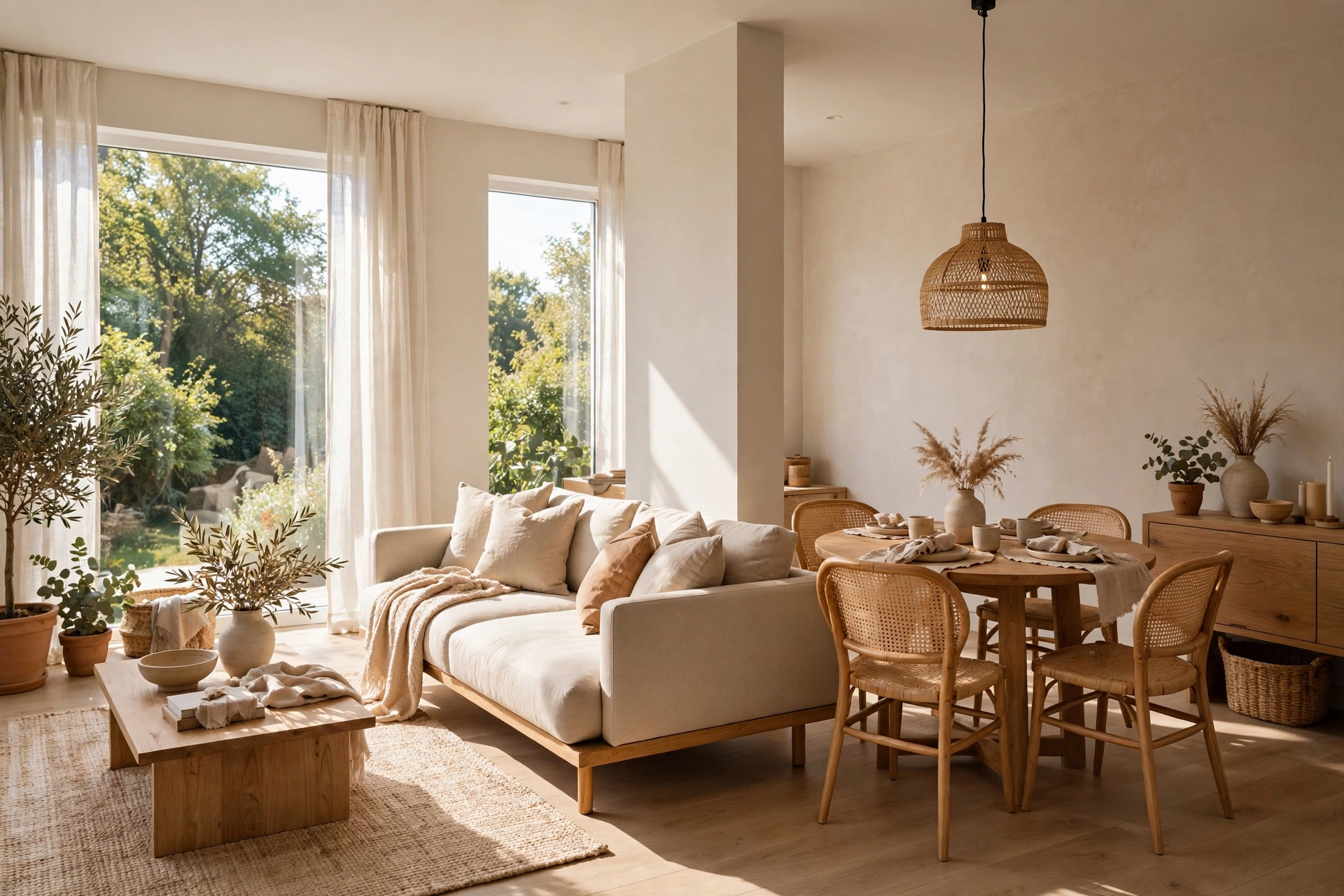
A combined living and dining room is one of the most common layouts in small apartments and condos, and honestly, it can be a gift. When one room hosts both lounging and dinner parties, you get brighter, airier sightlines and furniture that earns its place. The trick is making the two zones feel distinct without walling either one off.
Below you will find 31 small living room dining room combo ideas that help you zone the space, choose space-smart furniture, and keep everything looking intentional and pulled together. If your floor plan runs long and skinny, our how to decorate a narrow living room guide has more layout tricks that pair perfectly with these combos.
31 Small Living Room Dining Room Combo Ideas
1. Float the Sofa to Define Zones
Push the sofa off the wall and float it between the living and dining areas to create a natural room divider. The back of the sofa draws a soft boundary that reads as intentional rather than cramped. This one move instantly gives each zone its own identity without adding a single piece of furniture.
Keep the sofa low-profile so sightlines stay open across the whole room. A slim profile avoids the bulky feeling that can swallow a small space, and it lets light travel freely from window to window.
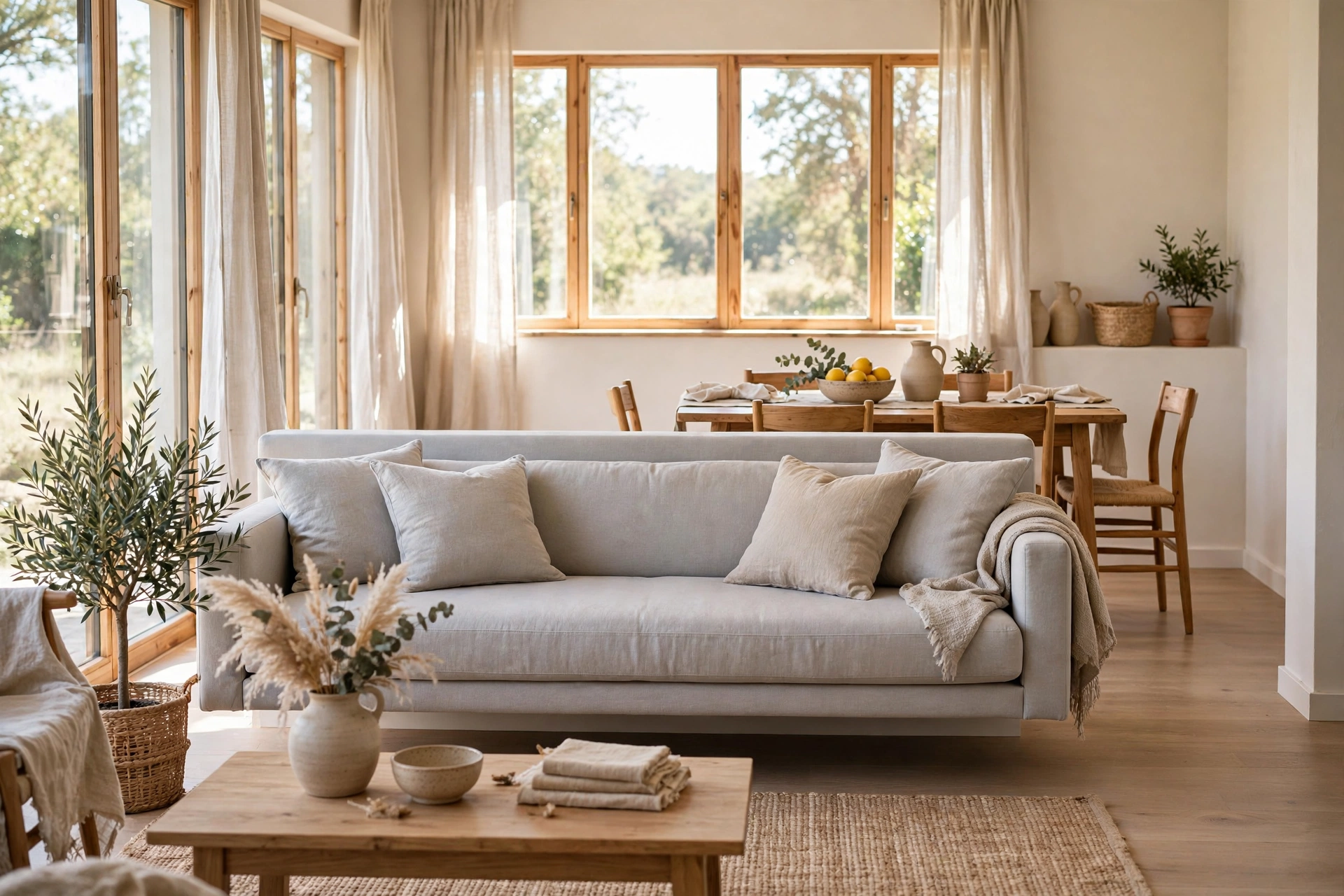
2. Choose a Round Dining Table
Round dining tables are a small-space hero because they have no sharp corners and fit more people around a smaller footprint. A 36-inch round table seats four comfortably while leaving circulation room. It is the easiest swap you can make for a tight combo layout.
Look for a pedestal base instead of four legs so chairs tuck in close and feet have room. A pedestal also makes it simpler to squeeze in an extra chair when guests drop by.
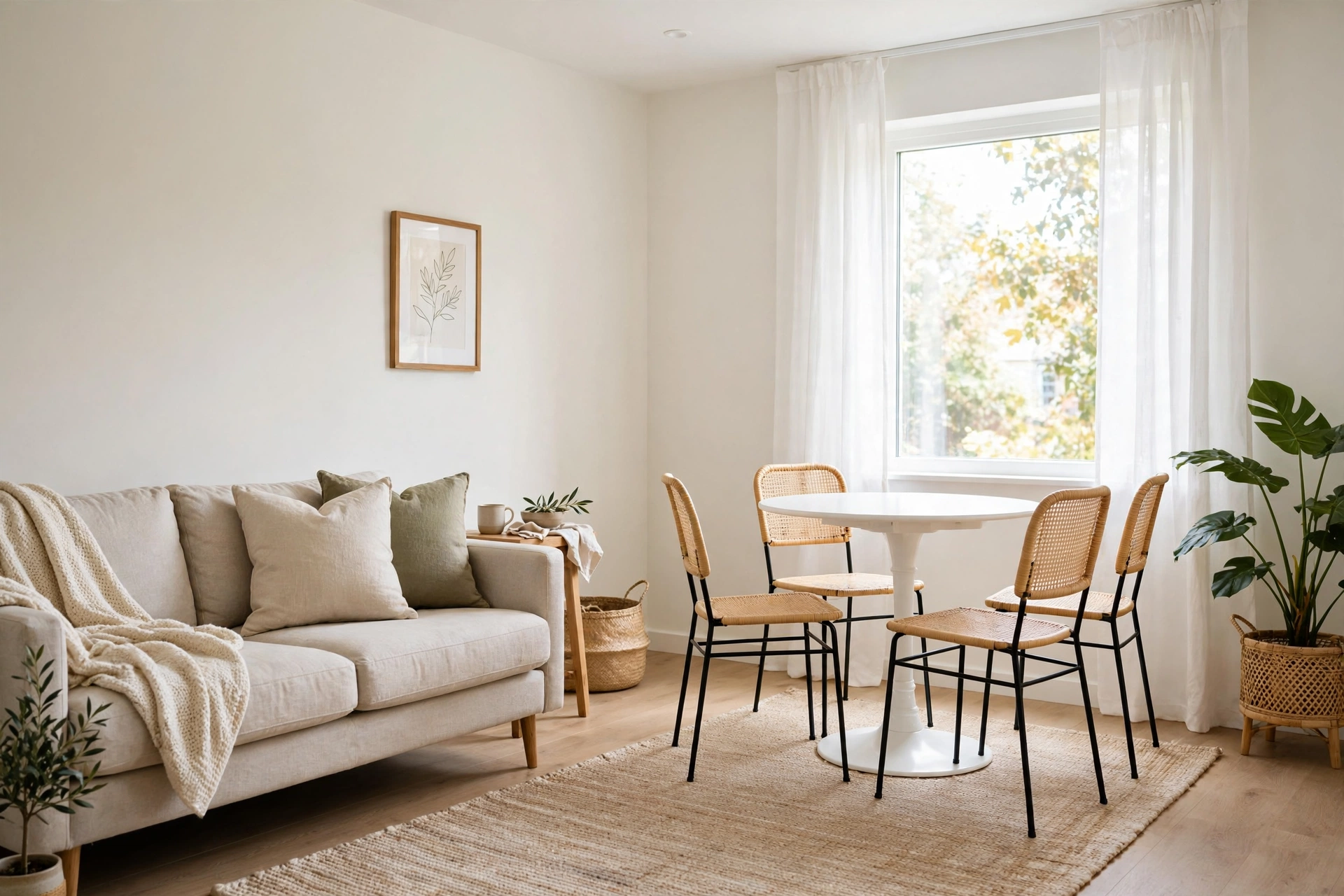
3. Anchor the Dining Set with a Rug
A rug under the dining table carves out the dining zone as clearly as a wall would. Choose a rug that extends at least 24 inches beyond the table on all sides so chairs stay on it when pulled out. The rug gives the dining corner its own stage.
Pick a low-pile, washable rug since dining areas see spills. Pattern hides crumbs and wear far better than a solid light color, which is a practical win for daily meals.
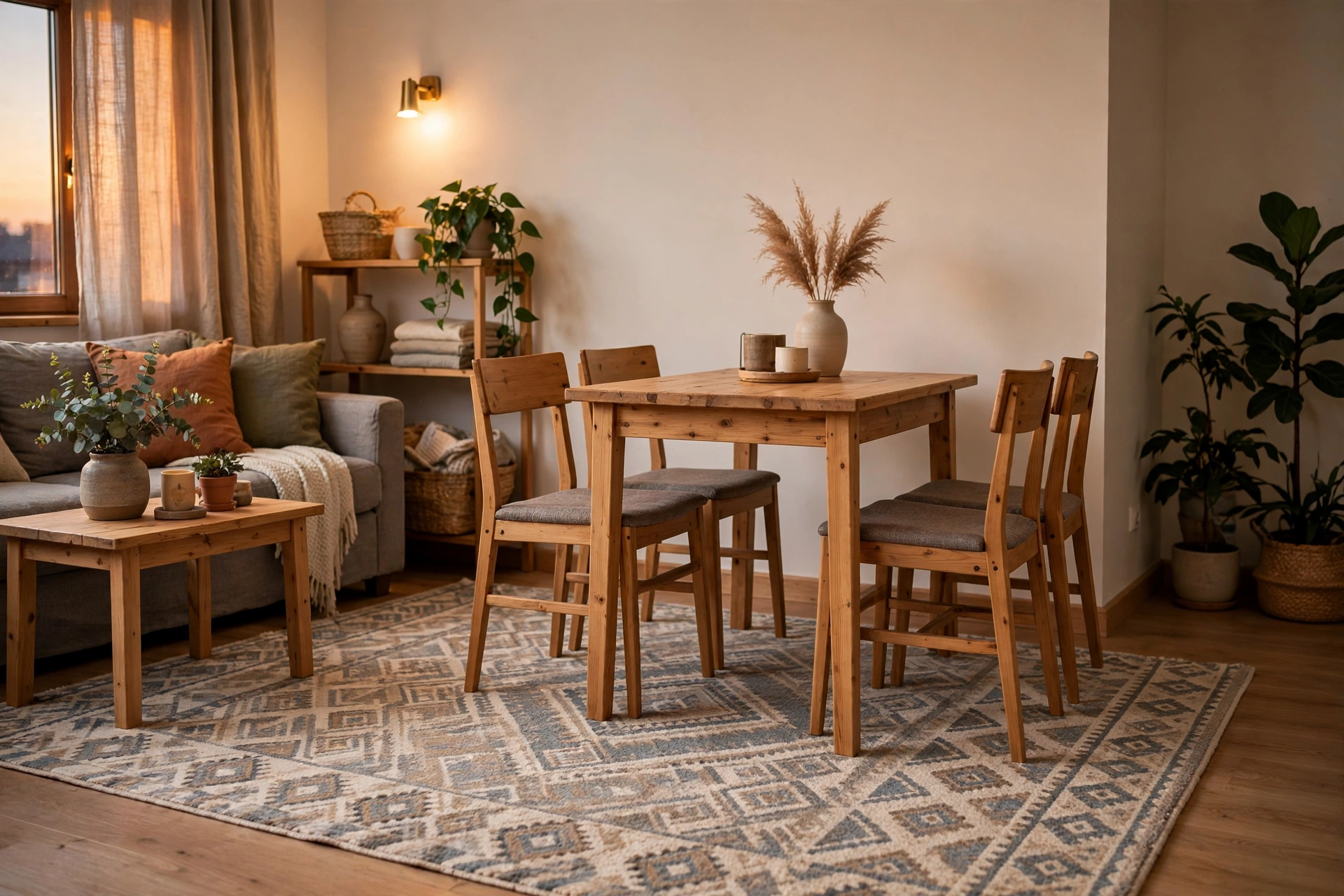
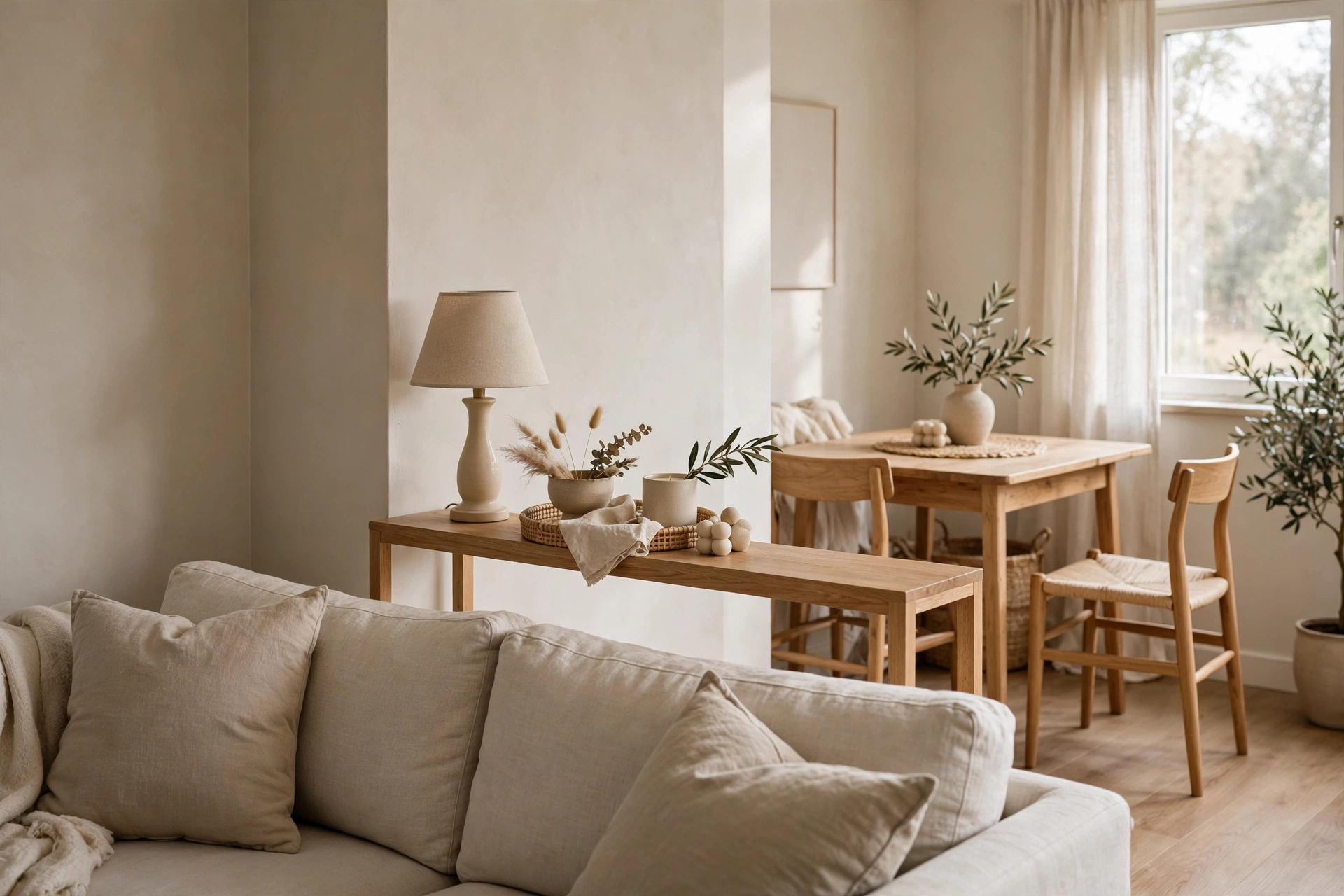
4. Place a Slim Console Behind the Sofa
A narrow console table, 10 to 12 inches deep, behind a floating sofa doubles as a room divider and a landing spot for lamps, remotes, and keys. It finishes the back of the sofa visually, which matters when the sofa faces away from the dining zone.
Style the console with a small lamp and a tray for everyday items. The lamp adds a warm lighting layer that makes the living zone feel cozy at night while the dining side stays task-lit.
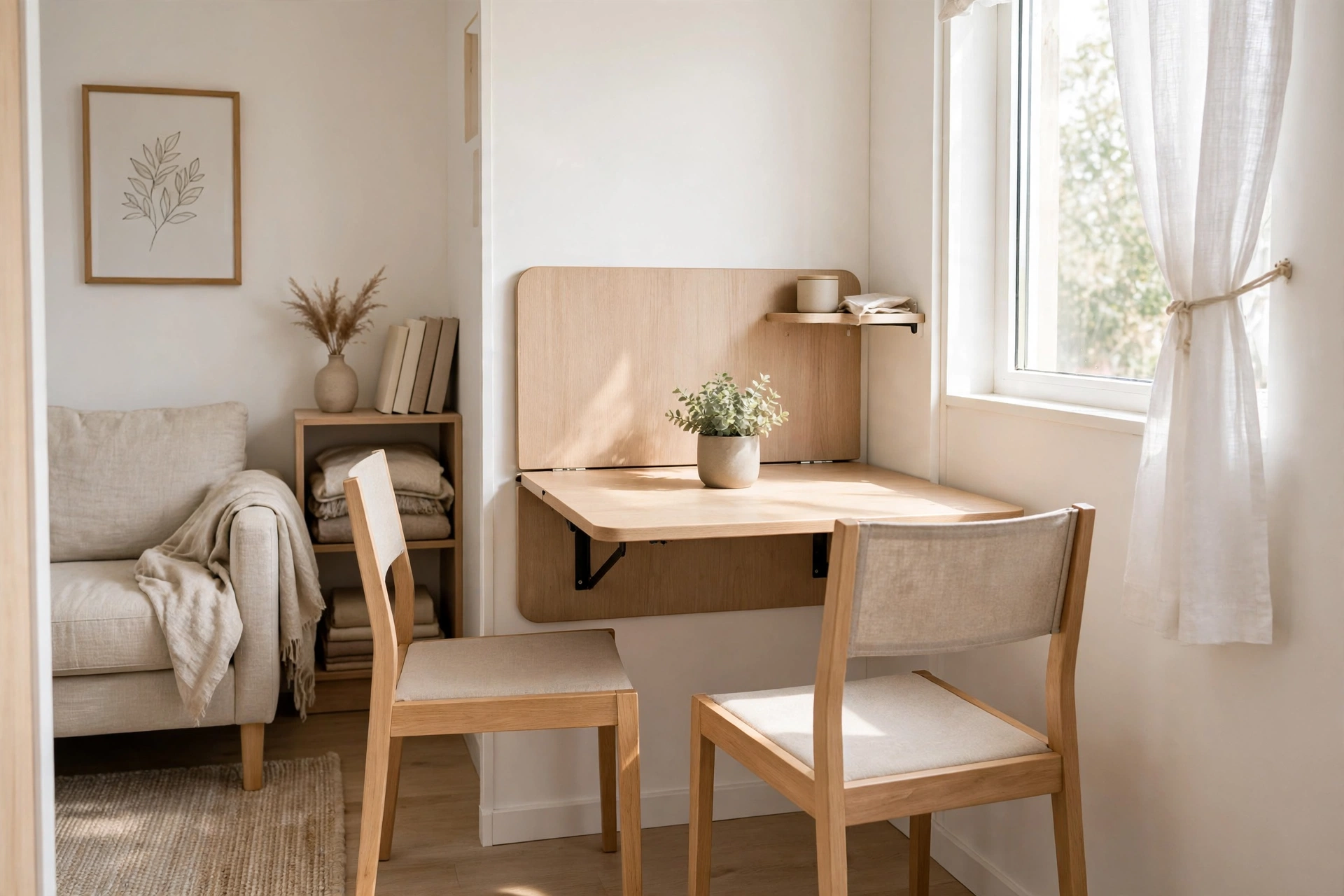
5. Install a Wall-Mounted Drop-Leaf Table
A drop-leaf table that mounts to the wall gives you a full dining surface for two or four and folds to nearly zero depth when you need the room back. It is one of the hardest-working pieces you can buy for a combo space that must sometimes be all living room.
Mount it on the wall nearest the kitchen path for the shortest food-travel distance. When folded up, it can hold a small plant or candles, so it never looks like a compromise.
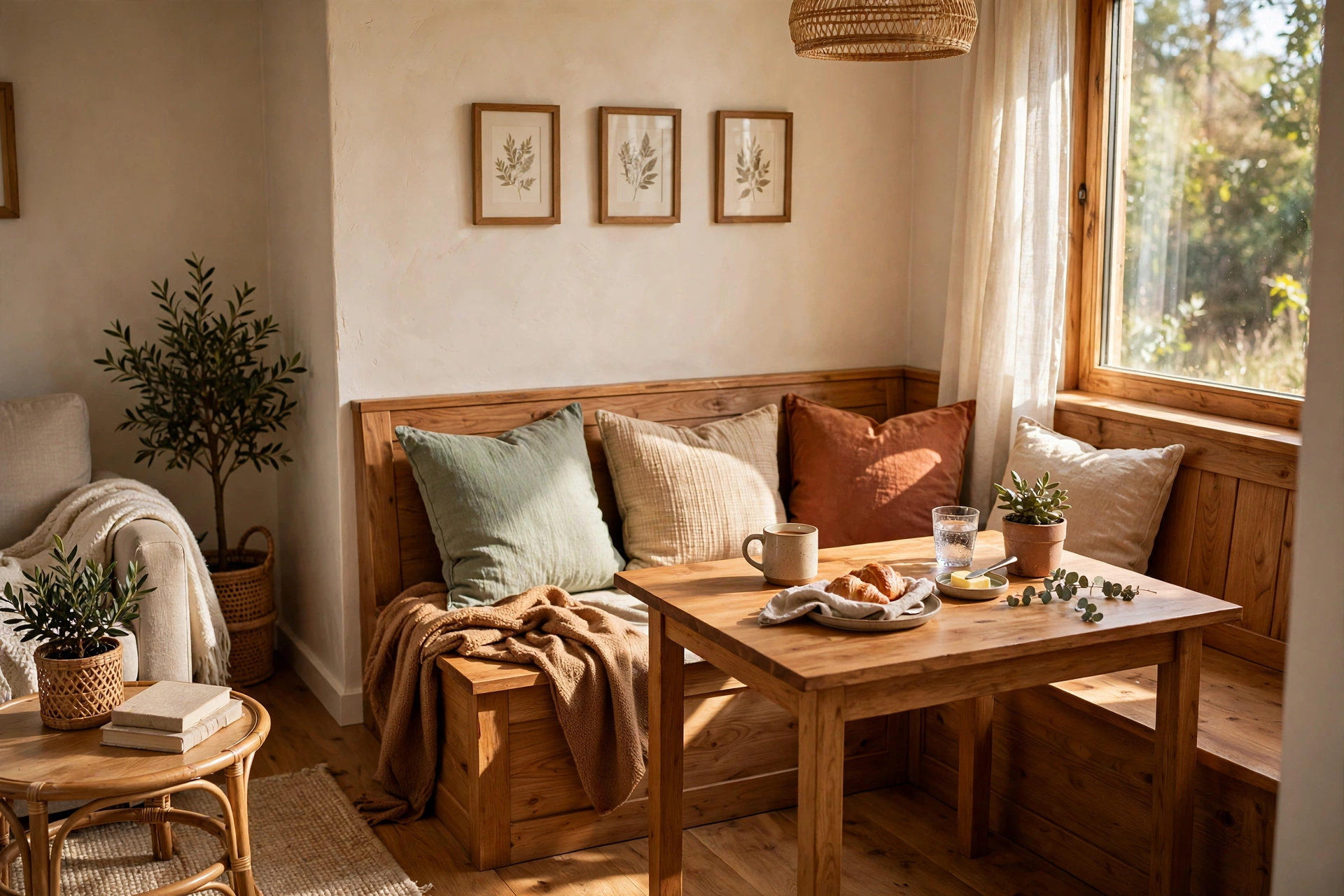
6. Build a Banquette Bench Nook
A banquette bench along one wall turns a narrow slice of room into a full dining nook for three or four. Benches seat more people per inch than chairs and slide flush under the table when not in use. The nook feels like a designed feature, not a workaround.
Add lift-up seat storage for linens, placemats, or board games. The bench’s footprint stays fixed while the chairs on the other side can be borrowed for the living area when guests arrive.
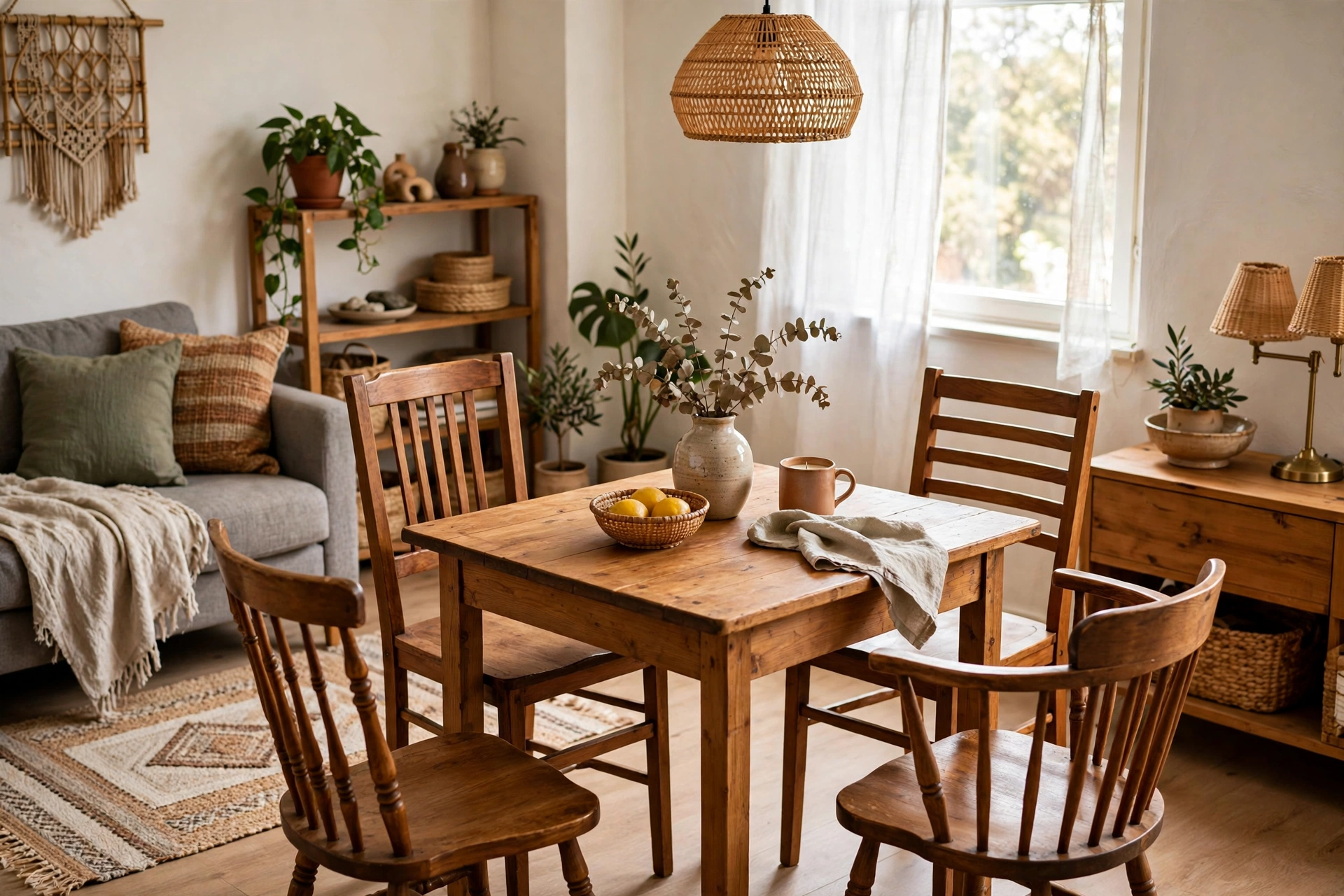
7. Mix Chair Styles in One Color
Mismatched dining chairs look intentional when they share one color or finish. This trick adds personality without the visual noise of clashing pieces, and it lets you use what you already own. The shared color reads as a deliberate design choice.
Keep the silhouettes slim with narrow profiles so the mix does not eat up floor space. A set of light wood chairs in one finish feels airy even around a table with a different base.
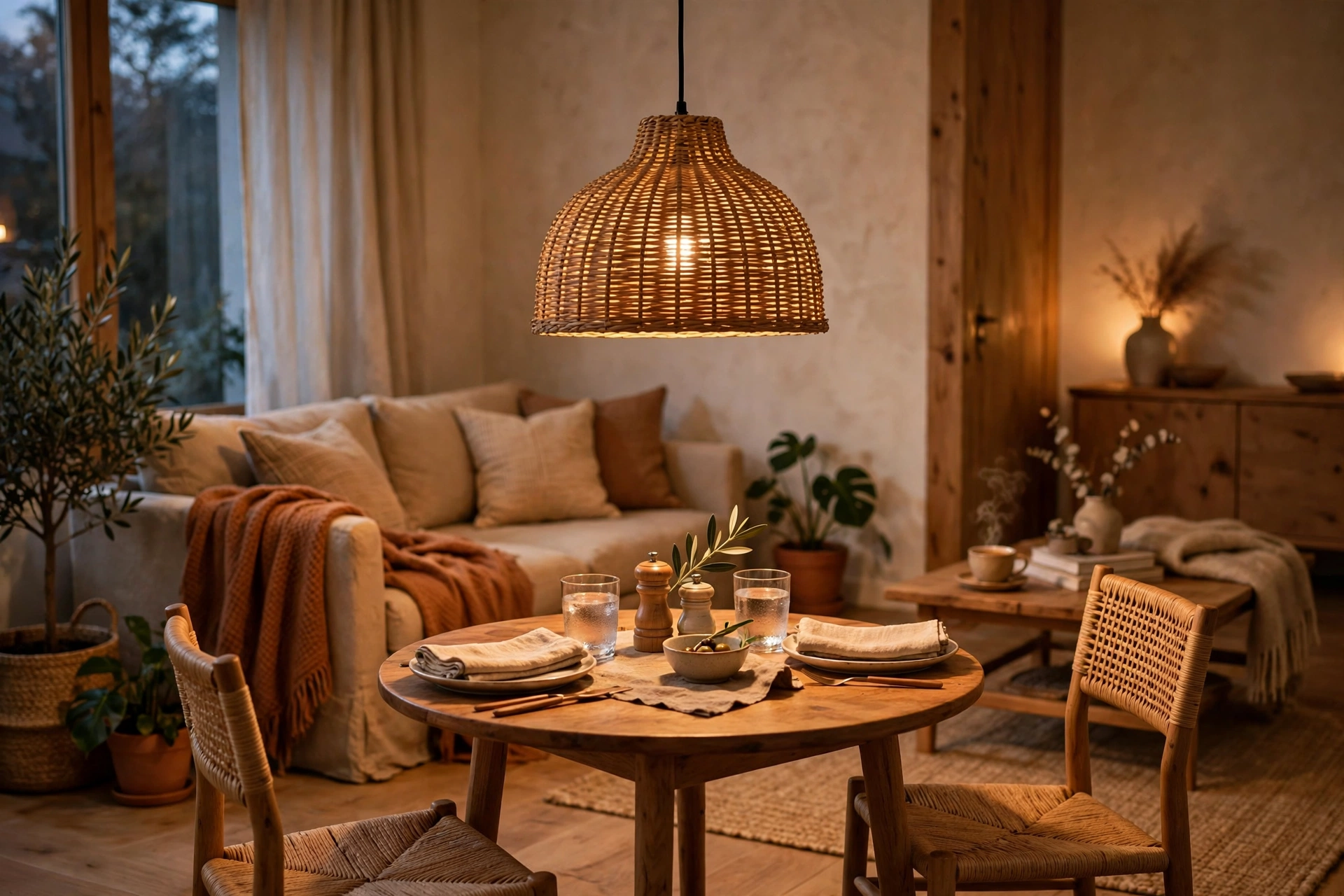
8. Hang a Pendant Over the Dining Table
A pendant light hung 30 to 34 inches above the dining table marks the dining zone like an exclamation point. It gives the table a sense of place even when the rest of the room is open plan. One statement fixture does more zoning work than a wall ever could.
Choose a pendant with a dimmer so the same table works for bright family dinners and moody evening lounging. A woven or paper shade adds texture without visual weight.
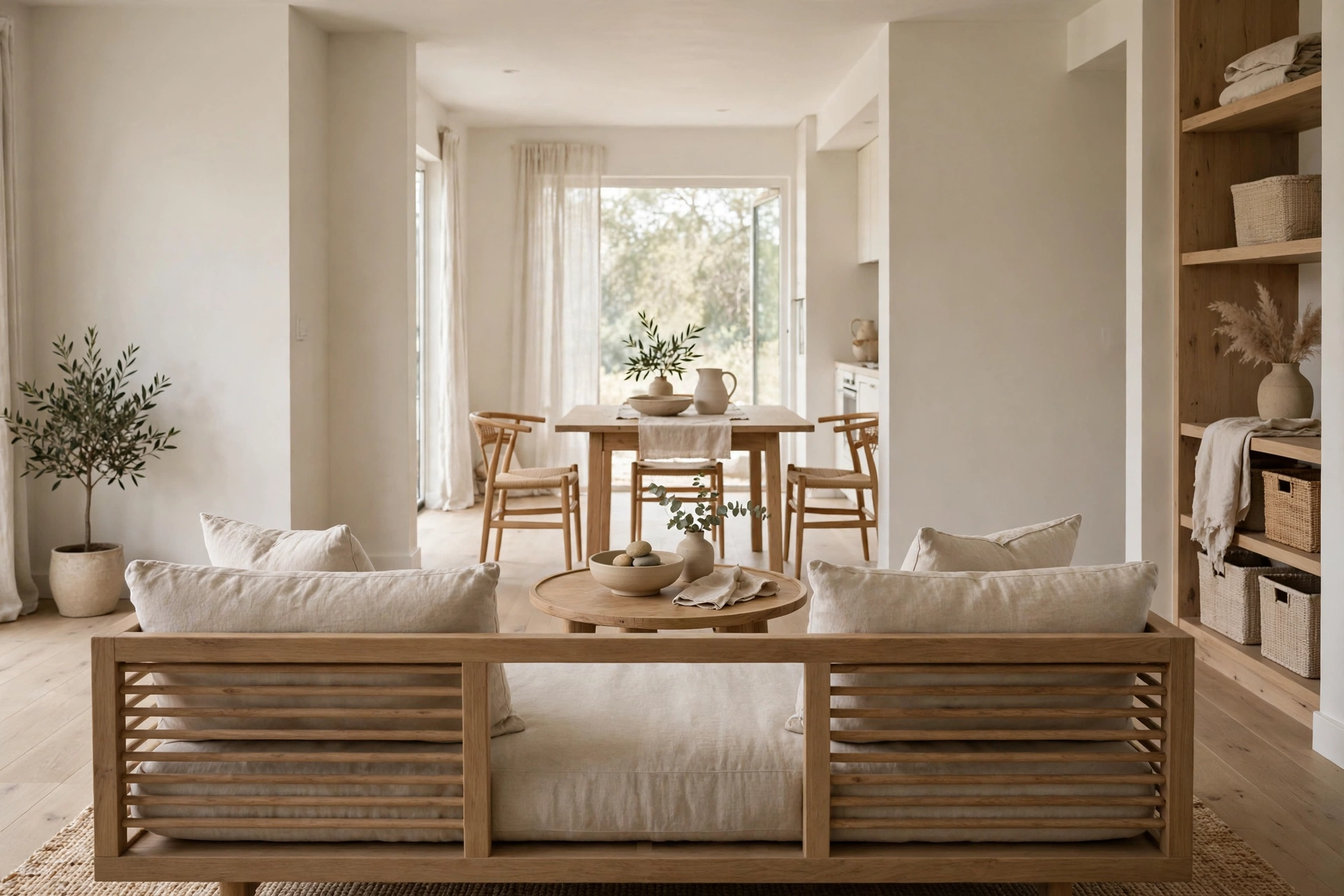
9. Use an Open-Back Sofa
A sofa with an open or low back lets you see straight through to the dining area, which keeps the whole room feeling connected. It defines the living zone without creating a visual wall. This is the floating-sofa idea taken one step lighter.
Style it with cushions in the room’s accent color to tie both zones together. The open back also makes it easier to chat with people seated at the dining table.
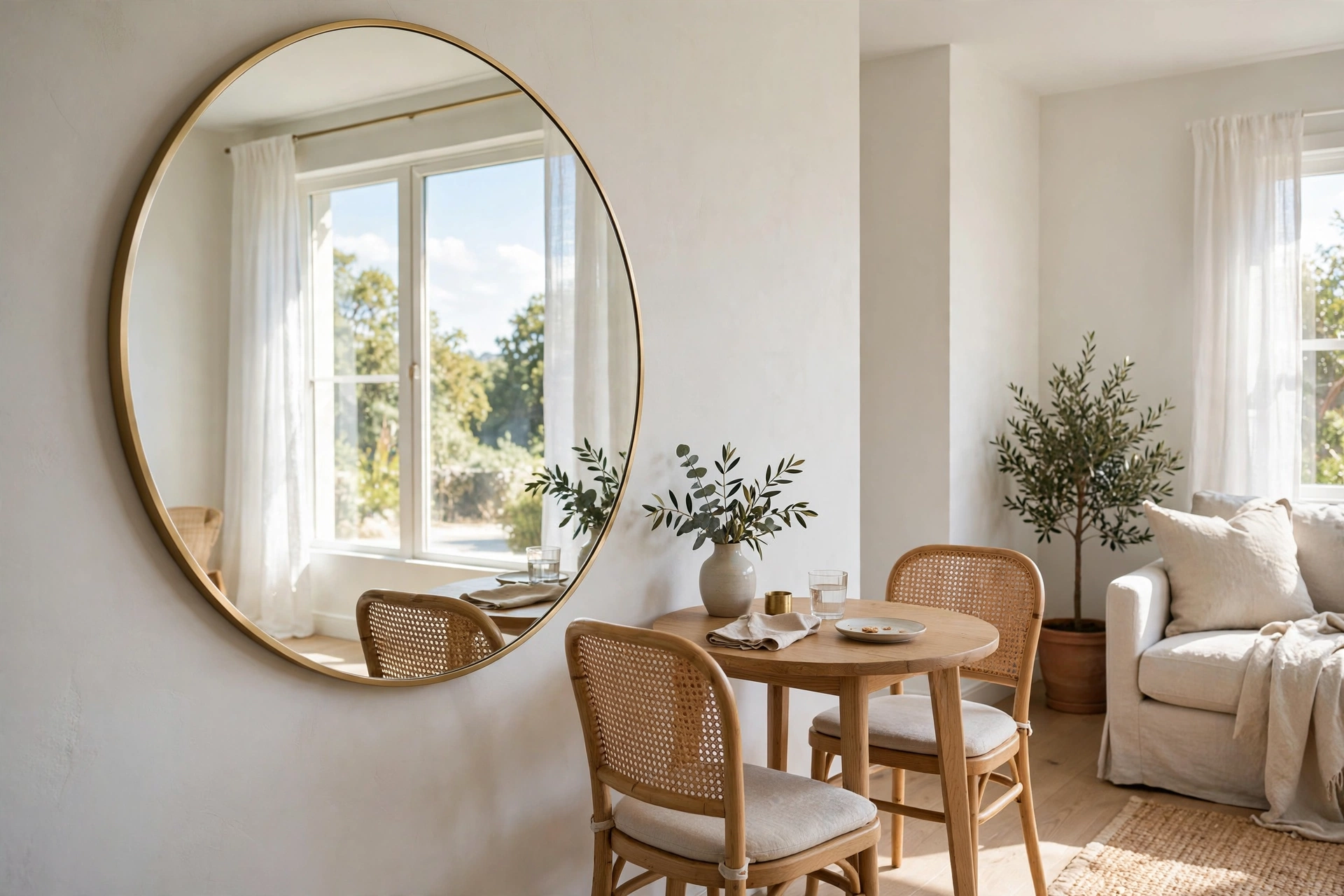
10. Hang a Mirror on the Dining Wall
A large mirror on the dining wall bounces light and visually doubles the depth of the room. Hang it opposite a window if you can, or beside the dining table to stretch the sightlines. Mirrors are the cheapest square footage you can buy.
Pick a frame that echoes the room’s palette so the mirror blends in as decor. A round mirror softens all the straight lines of tables and sofas, which keeps a small room feeling gentle.
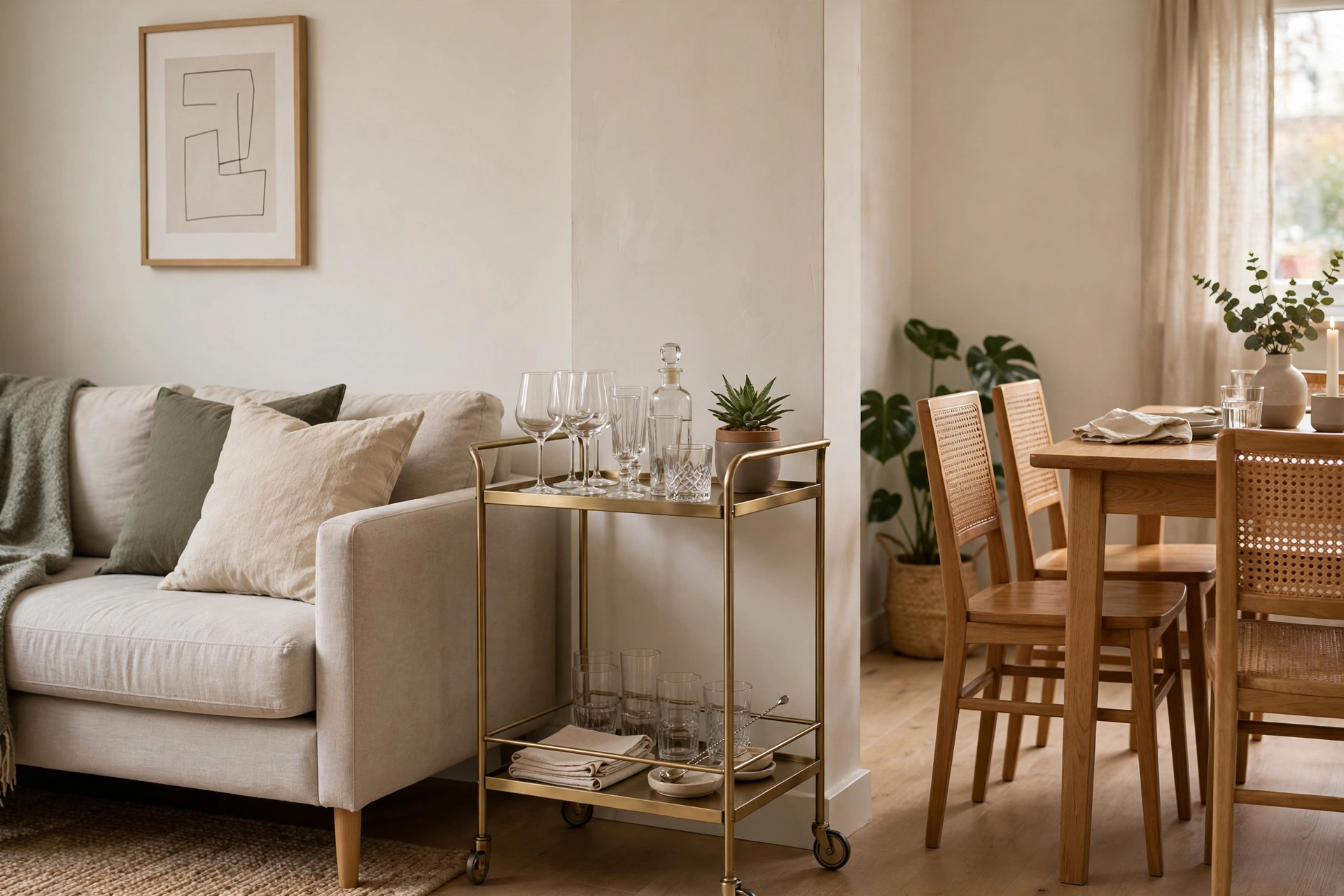
11. Roll In a Bar Cart Between Zones
A bar cart parked between the living and dining areas acts as a mobile divider that earns its keep. It holds glassware, a decanter, and a small plant while softly separating the two zones. Roll it wherever you need serving support.
Choose a cart in metal or slim wood with a small footprint, around 18 by 30 inches. When it is not dividing zones, it tucks against the wall as a pretty serving station.
12. Pick a Bench That Tucks Under
A backless dining bench slides completely under the table when not in use, freeing up real floor space. Two people fit on a 48-inch bench, and it disappears when dinner is over. This is the simplest way to keep a combo room walkable.
Look for a bench with a storage shelf underneath for placemats or trays. Upholstered bench tops add comfort for long dinners without the bulk of chair backs.
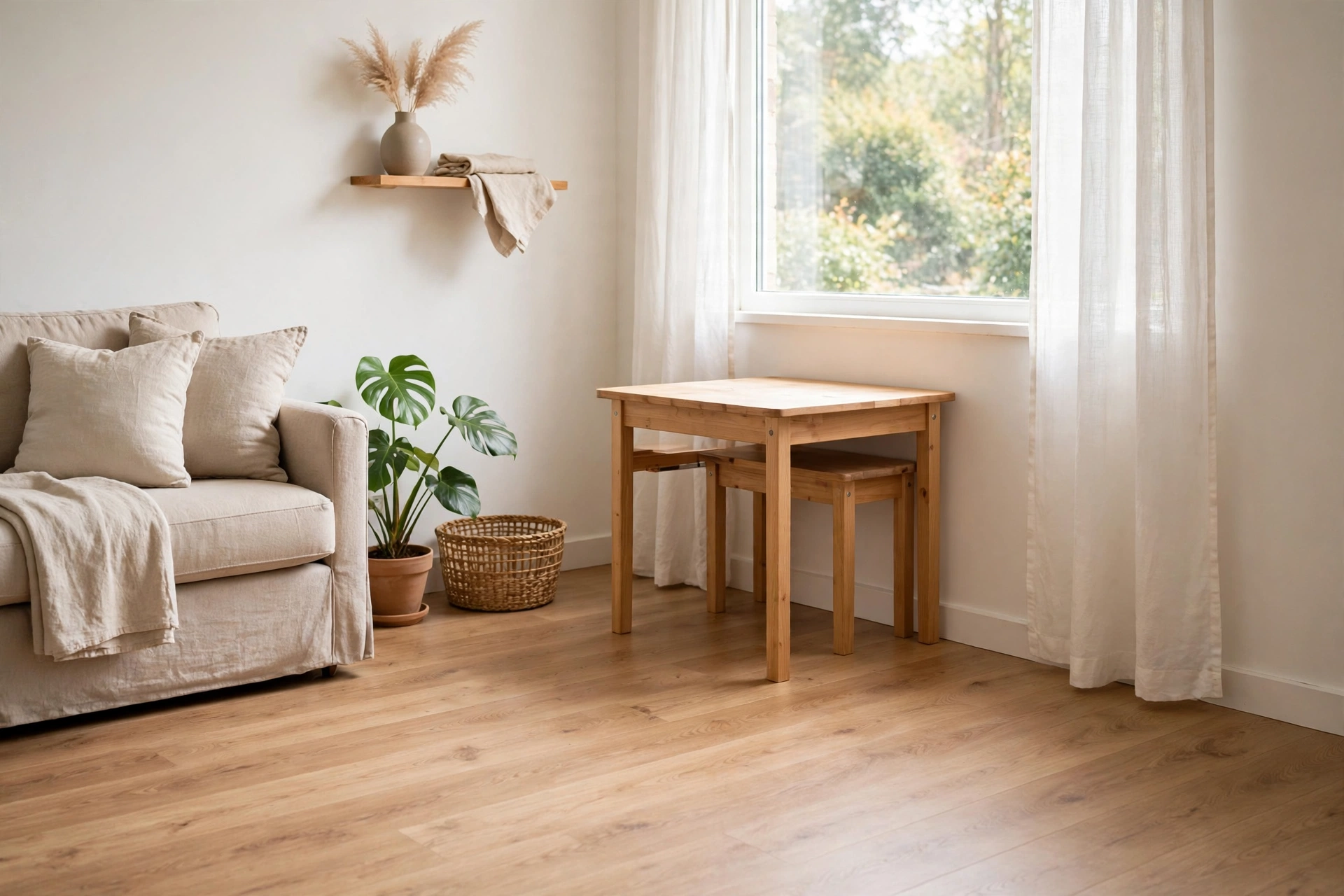
13. Keep One Cohesive Color Palette
One palette across both zones erases visual boundaries and makes the whole room read larger. Warm whites, soft greys, and one or two accent colors repeated on both sides create instant cohesion. The room feels calm because nothing fights.
Bring the accents in through textiles and art so the base furniture stays neutral. When both zones share the palette, the eye glides across the room instead of stopping at every furniture change.
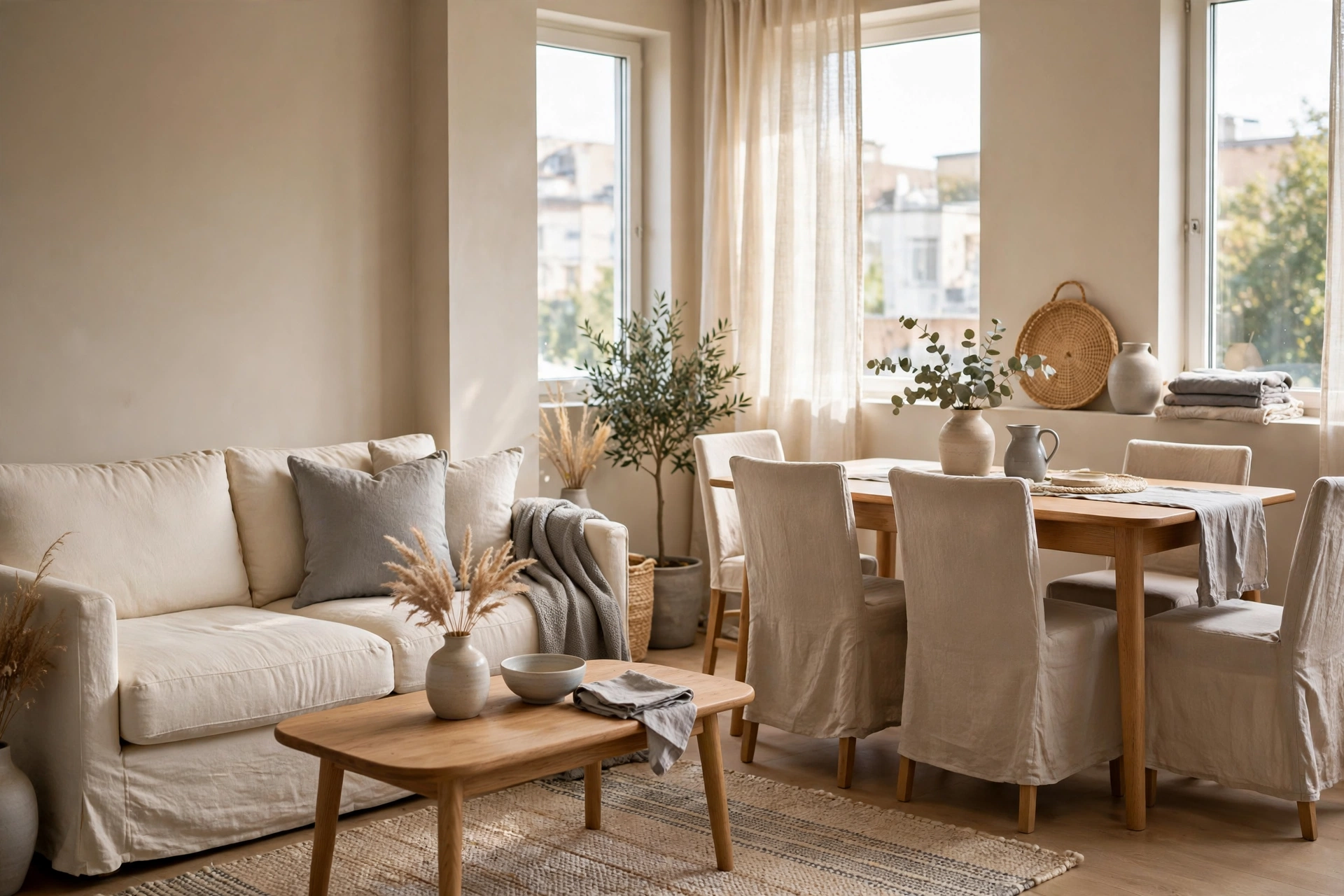
14. Style the Coffee Table to Tie Both Zones Together
A coffee table styled with the same accent color as the dining zone turns the living area into a visual echo of the dining area. Stack two books, add a small tray, and finish with one green plant. These little repeats make the combo feel planned.
Keep the styling minimal so the table stays usable every day. If you want more small-space table ideas, our summer coffee table decor ideas guide has seasonal styling inspiration that works year round.
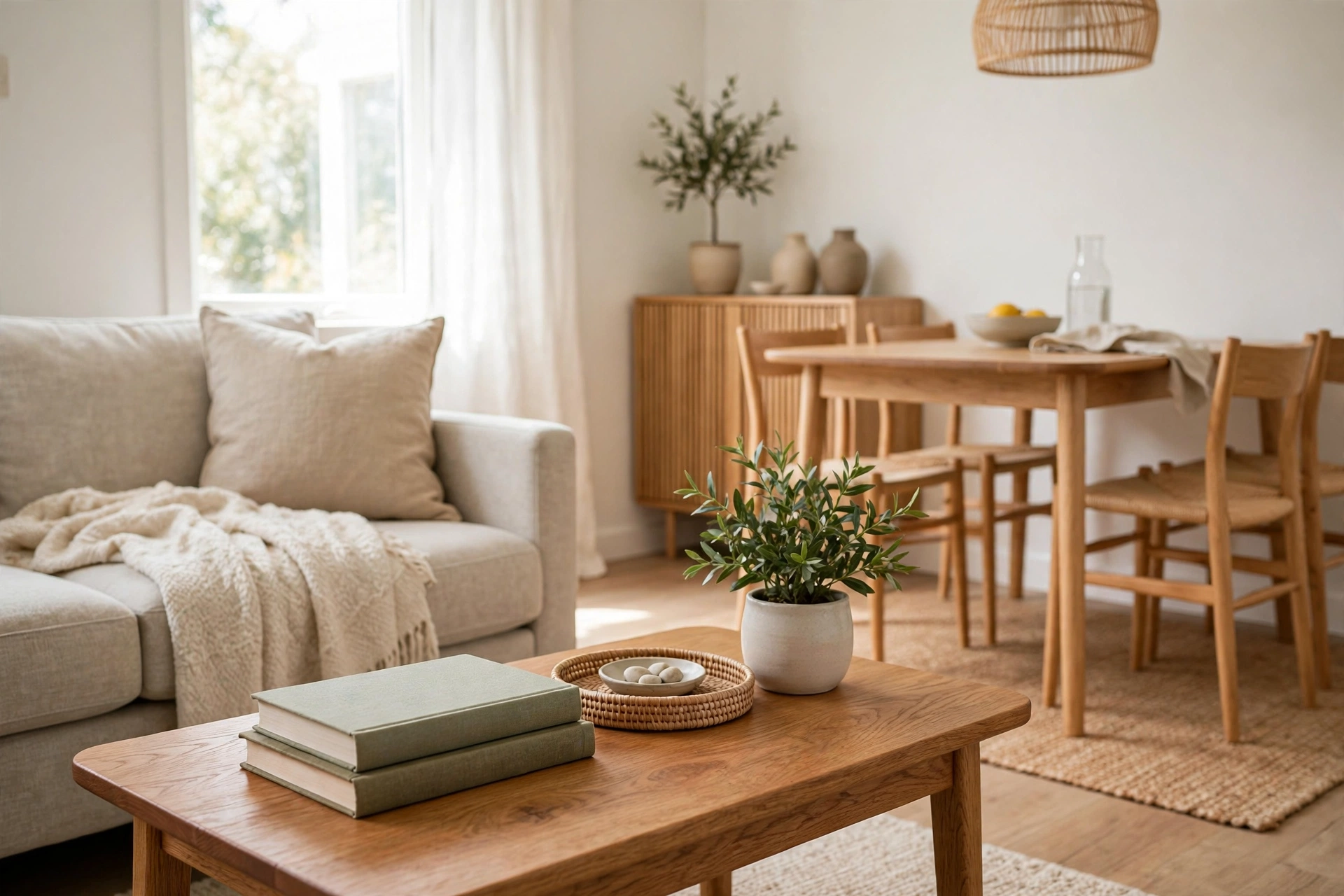
15. Choose an Extendable Dining Table
An extendable dining table lives small for everyday meals and stretches for guests, which is perfect for a combo room that hosts both. A table that grows from 36 to 60 inches covers daily life and dinner parties. You get flexibility without a permanent footprint.
Store the extension leaves in a closet or under the bed so the small mode stays truly small. Pair it with stackable or folding chairs so seating scales with the table.
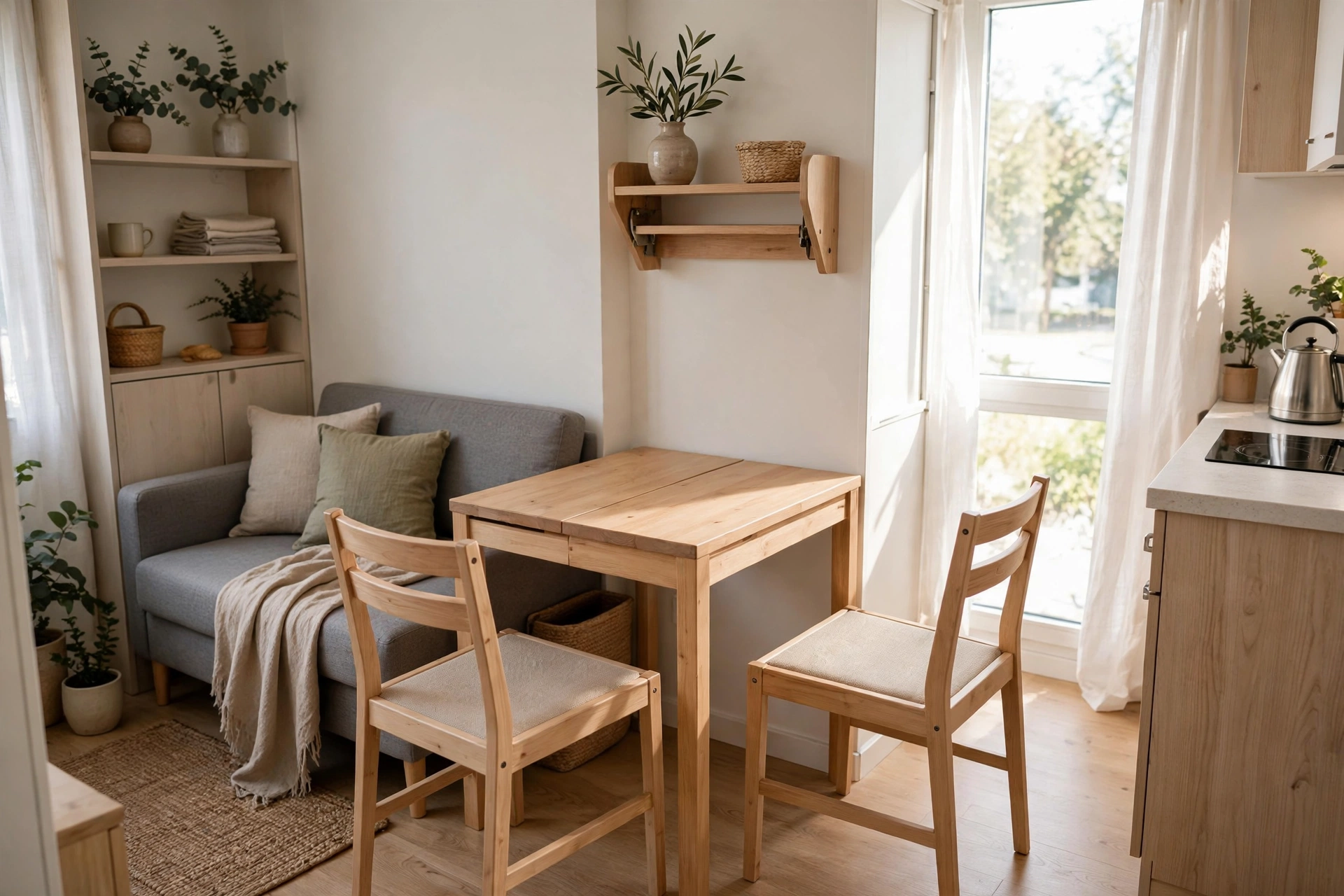
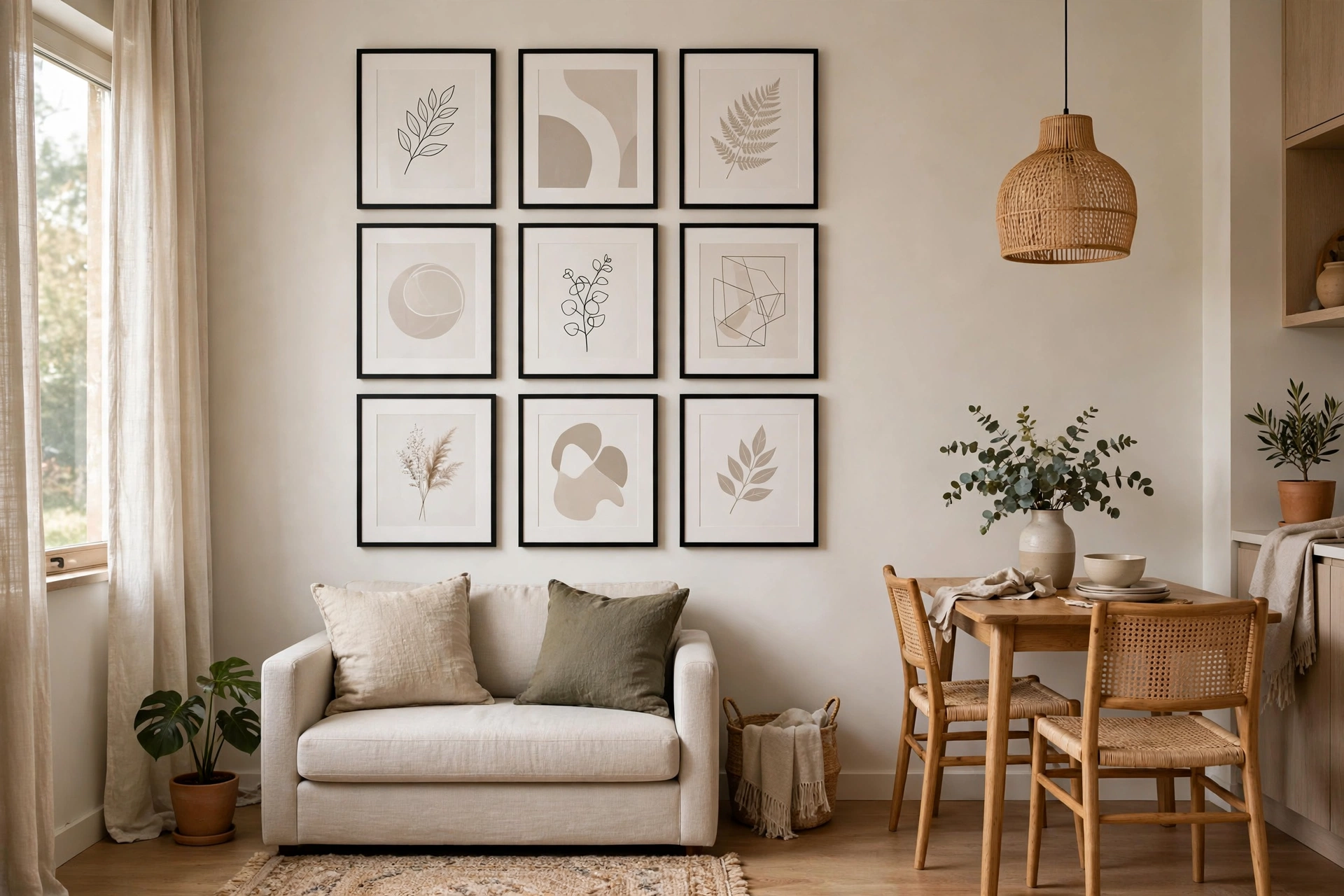
16. Build a Gallery Wall Over the Sofa
A gallery wall over the sofa gives the living zone a focal point that anchors it like a headboard anchors a bed. Group frames tightly in a grid or organic cluster within one imaginary border. The wall of art says living room clearly, even in a combo.
Repeat one frame color or mat color to keep the gallery cohesive. This single project can carry the whole living zone so the furniture around it can stay simple and small.
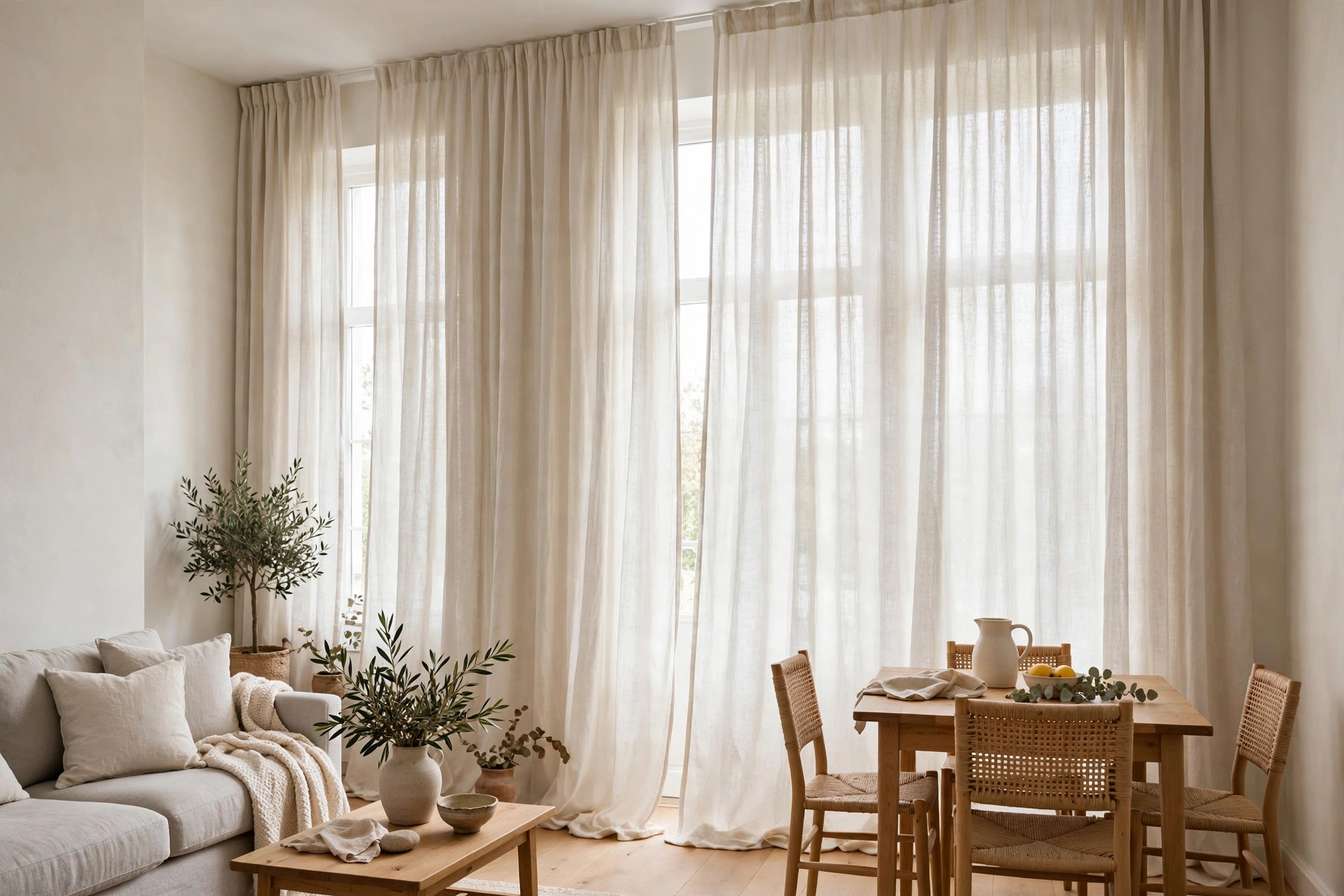
17. Let Dining Chairs Double as Living Room Seating
In a combo room, dining chairs should earn a second job as extra living room seating. Pull two chairs to the coffee table for movie night or board games, then return them for dinner. Slim, comfortable chairs make this swap painless.
Pick chairs with upholstered seats if you want them to read as lounge seating too. The more dual-purpose each piece is, the fewer pieces you need in a small footprint.
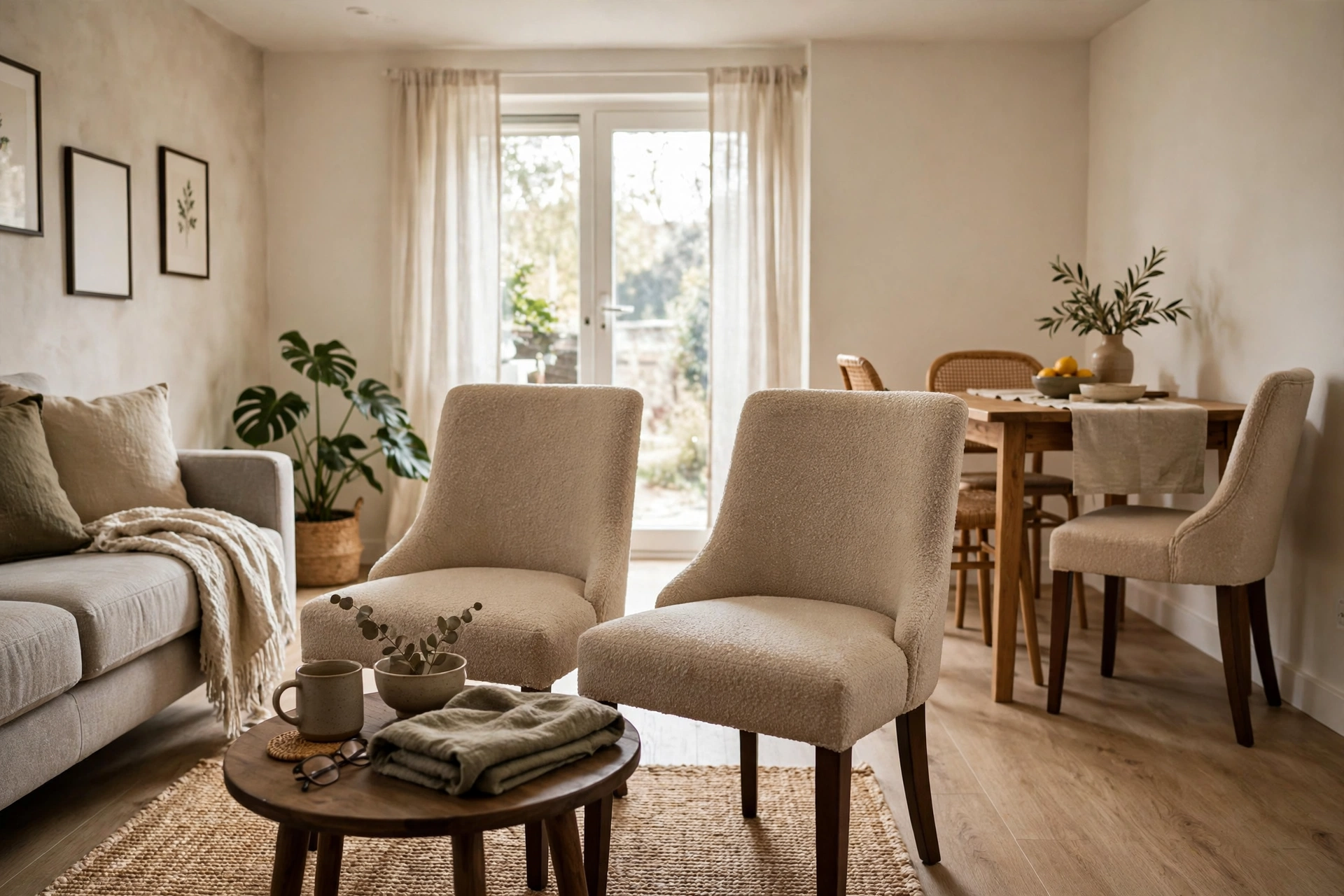
18. Anchor the Living Corner with a Floor Lamp
A floor lamp in the living corner creates a warm pool of light that marks the lounging zone after dark. It is zoning by lighting: the dining table gets the pendant, the sofa gets the floor lamp. Each zone gets its own mood.
Choose an arc or slim pharmacy lamp with a small base so it tucks into a corner. A lamp with a dimmer lets the living corner shift from reading bright to evening soft.
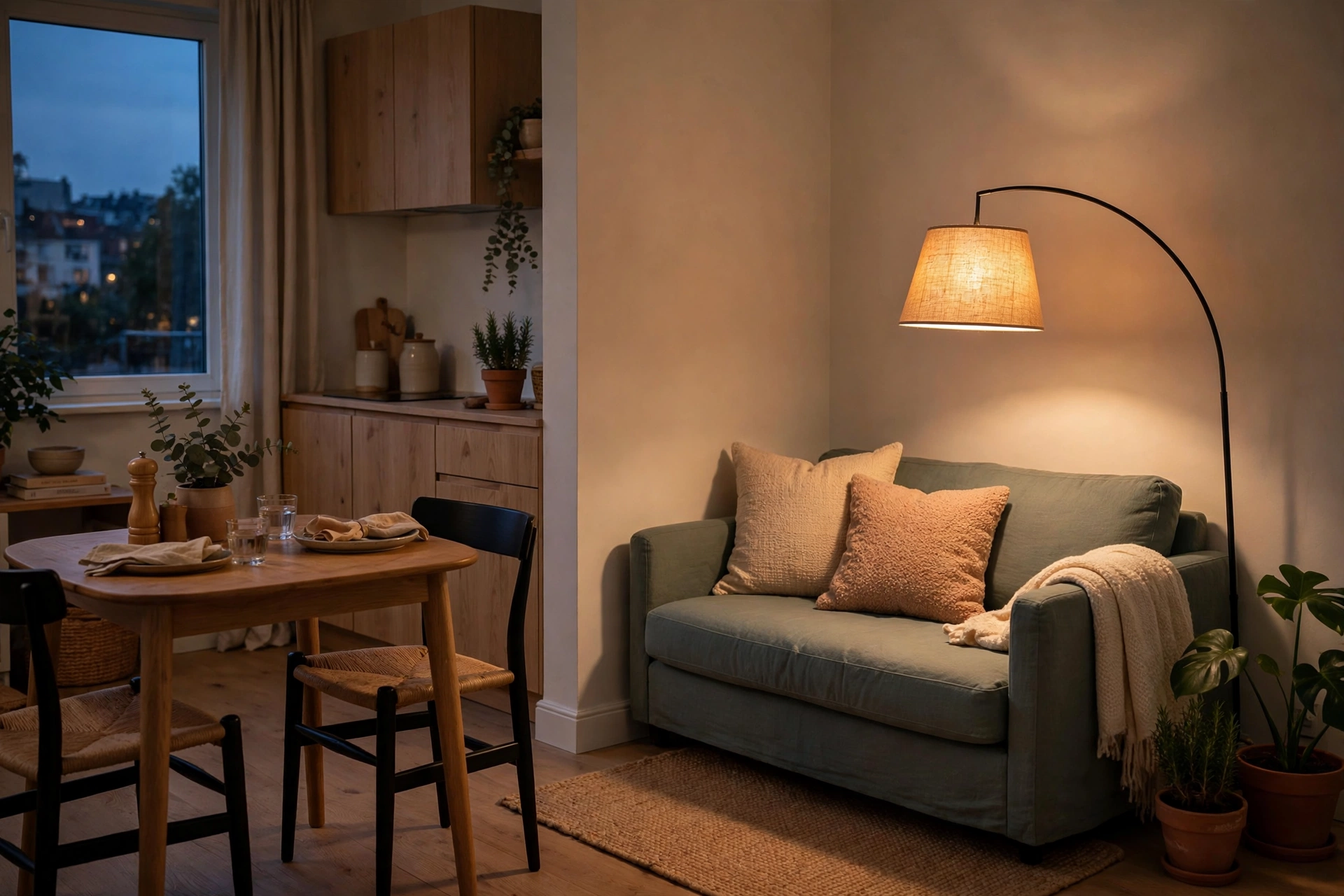
19. Hang Curtains That Unify the Space
Floor-to-ceiling curtains on one window wall make the whole combo room feel taller and more finished. Use the same fabric on any second window so the room reads as one space. Curtains are soft architecture for small rooms.
Hang the rod close to the ceiling and let the fabric just kiss the floor. A light, flowing fabric in a solid color adds height without the visual chop of blinds or short curtains.
20. Try a Glass-Top Dining Table
A glass-top dining table nearly disappears visually, which keeps a small combo room feeling open. You see the rug and floor through it, so the floor area reads as continuous. It is the airiest dining option you can choose.
Soften the modern look with warm wood or upholstered chairs. A glass top also pairs beautifully with patterned rugs since it never hides the pattern.
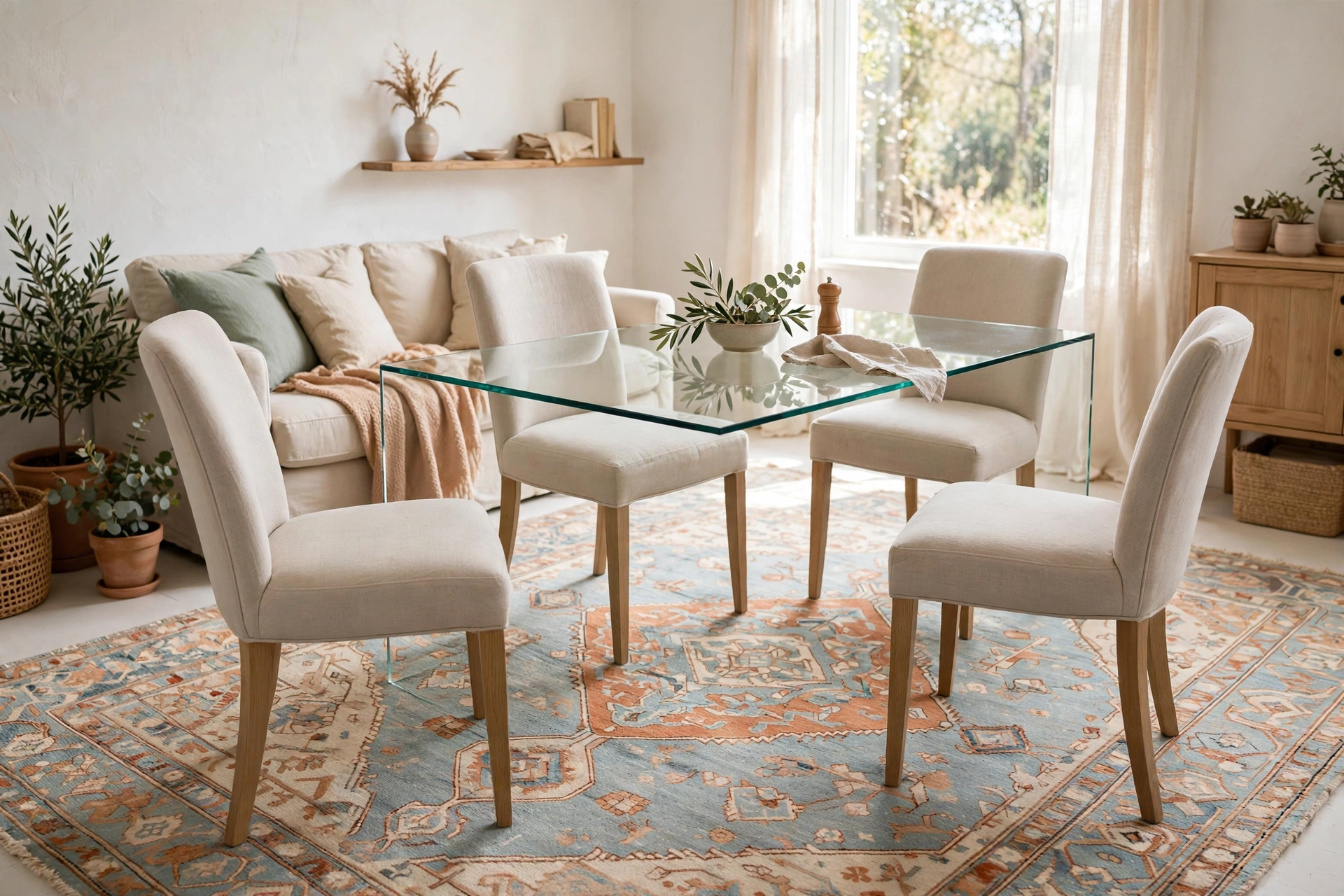
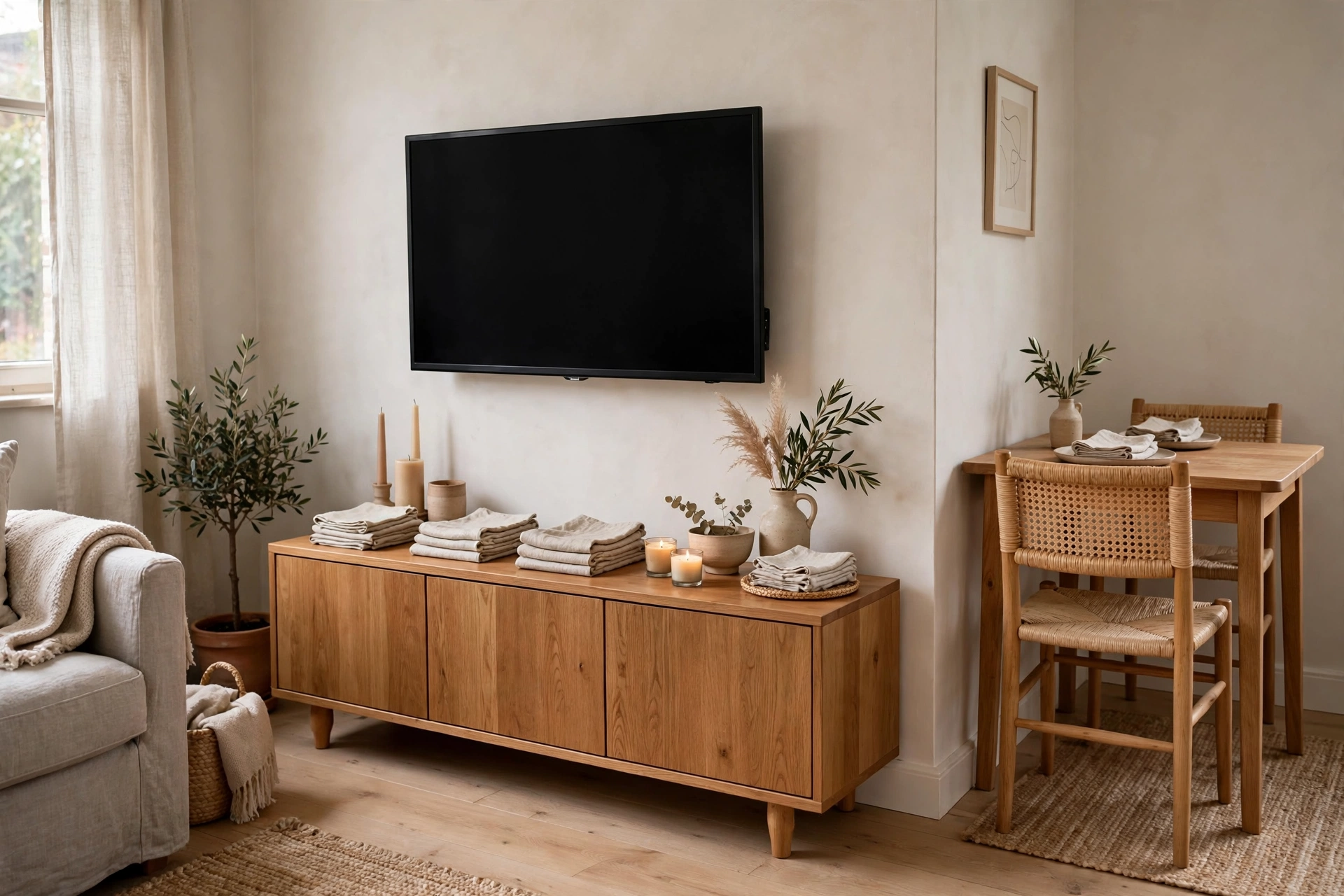
21. Use a Media Console as a Sideboard
A low media console under the TV doubles as a dining sideboard, holding serving dishes, linens, and candles in its drawers. In a combo room, every long low piece should serve both zones. One console, two jobs.
Style the top with a mix of living and dining items: a small speaker, a candle, and a folded runner. When guests come, clear the top and it becomes your serving station.
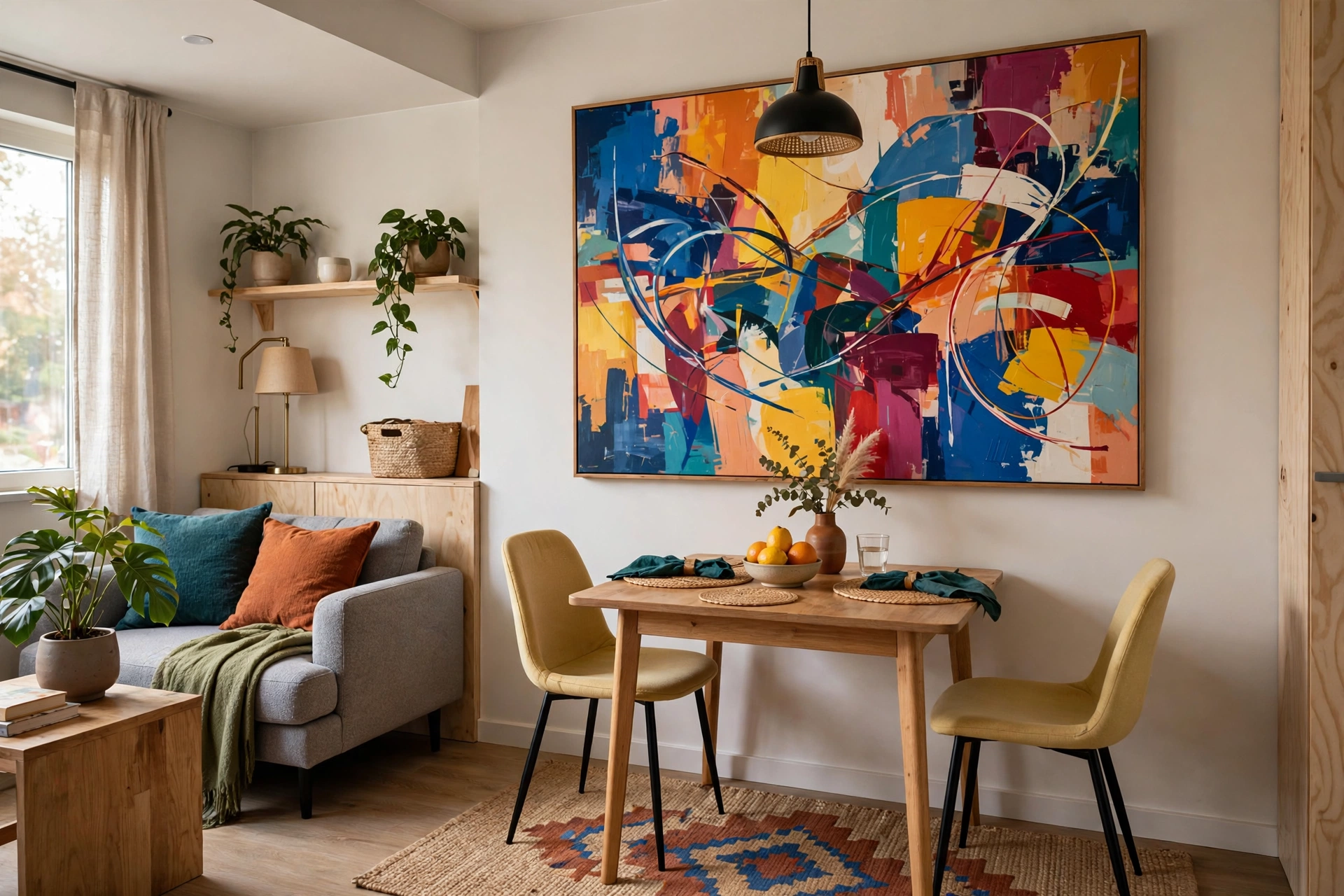
22. Mark the Dining Zone with Statement Art
One bold piece of art above the dining table gives the dining zone its own identity. The living side gets the gallery wall or the TV wall; the dining side gets the statement. Each zone reads as its own room through what hangs on its walls.
Size the art generously, about two-thirds the width of the table, so it holds its own. A large canvas or a framed textile adds color and personality right where people gather to eat.
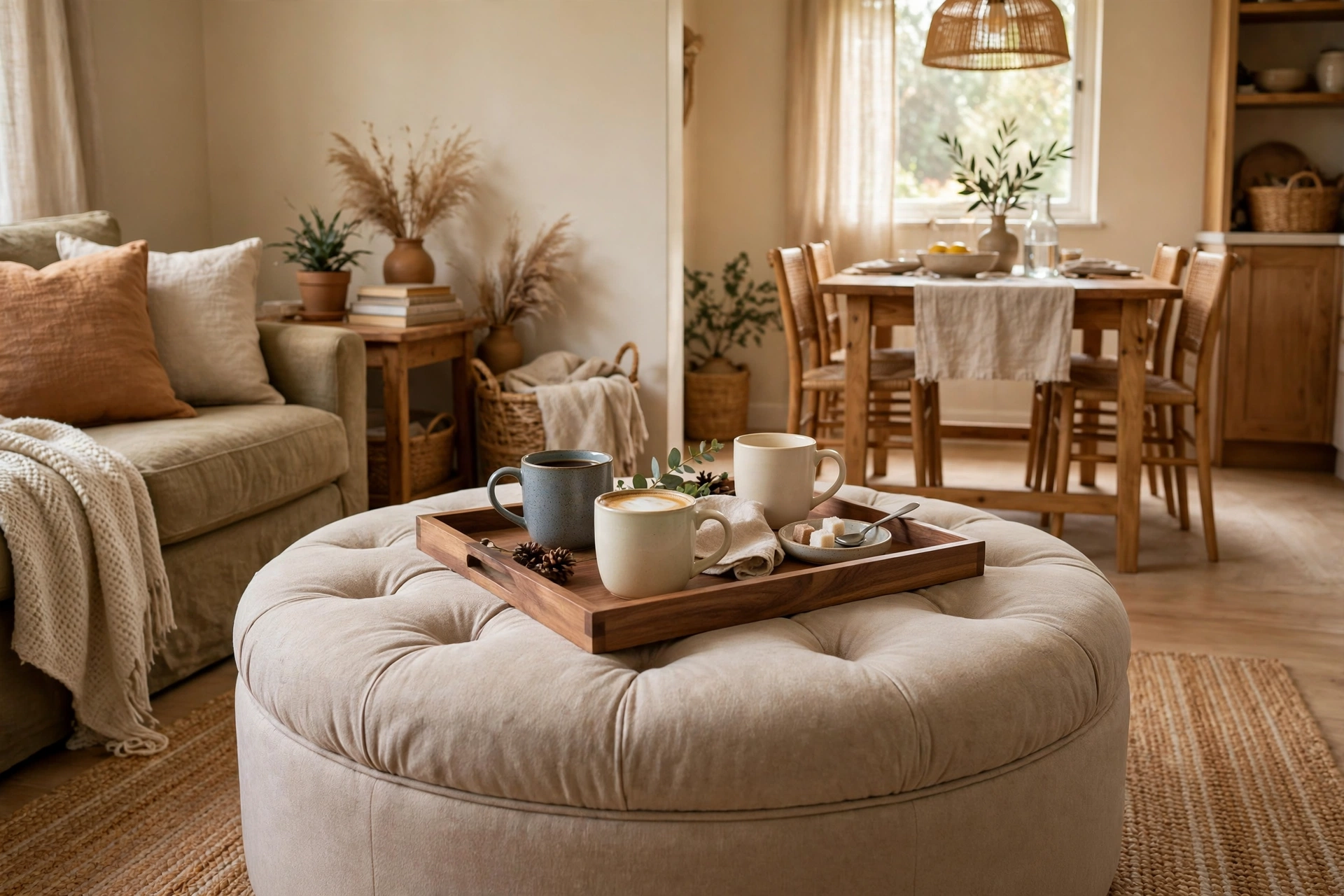
23. Swap the Coffee Table for a Storage Ottoman
A large upholstered ottoman works as coffee table, extra seat, and hidden storage all at once. Add a tray on top for drinks and lift the lid for blankets or games. In a combo room, this triple-duty piece beats a single-use table.
Choose an ottoman on small legs so the floor shows beneath it, which keeps the room feeling light. A wipeable fabric or leather-look finish handles daily life in a small space.
24. Choose Armless Dining Chairs to Save Space
Armless dining chairs take up far less visual and physical space than armed versions, and they tuck fully under the table. In a tight combo, every inch of saved width matters. Armless chairs also slide sideways more easily for flexible seating.
Look for chairs with a comfortable seat curve since you lose the arm support. A row of slim armless chairs reads as elegant and intentional, never sparse.
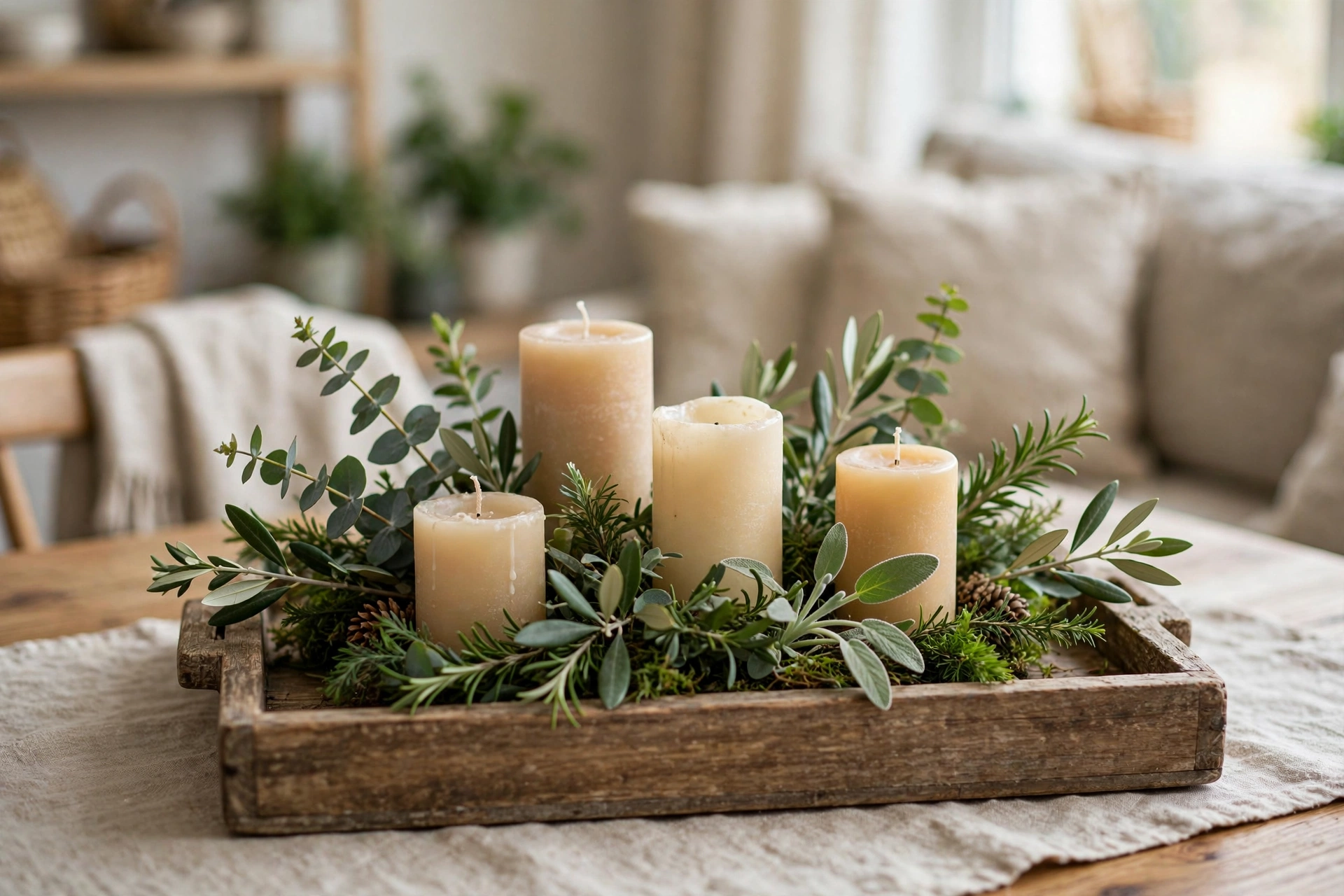
25. Refresh with Seasonal Centerpieces
Swapping the dining table centerpiece with the seasons keeps the whole combo room feeling fresh without buying new furniture. A simple tray lets you restyle in minutes: greenery, candles, or a bowl of seasonal fruit. The dining table is your easiest display surface.
For a fall refresh, our thanksgiving centerpiece ideas has gorgeous seasonal styling you can adapt to any dining table, no holiday required.
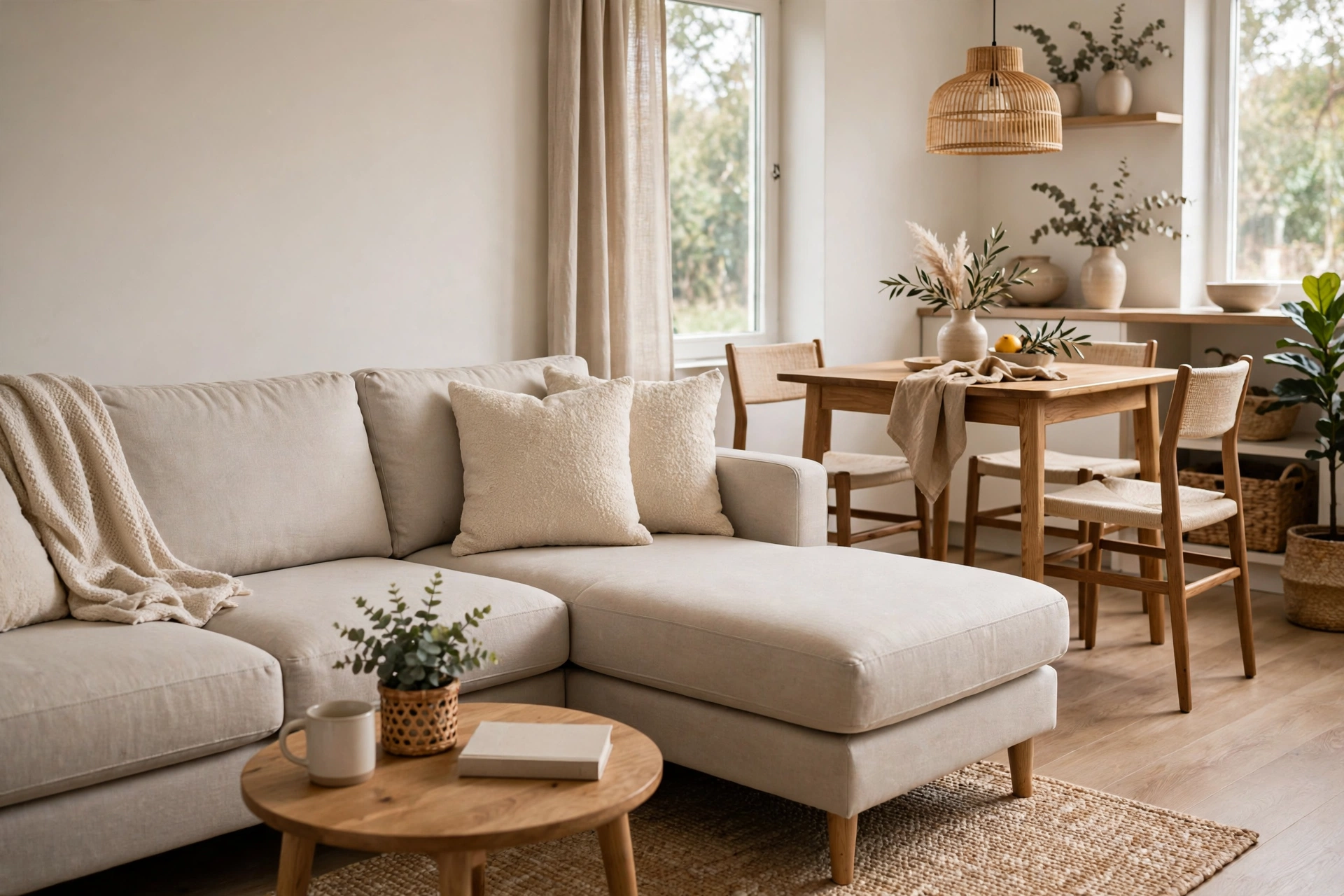
26. Pick a Compact Sectional with a Chaise
A small-scale sectional with a chaise end defines the living zone decisively while offering real lounging comfort. The L-shape naturally faces the dining area’s edge, marking the boundary. Choose a compact two-piece sectional, not a sprawling one.
Keep the chaise toward the window or wall so it does not block circulation to the dining table. A light-colored sectional keeps the boundary soft and airy.
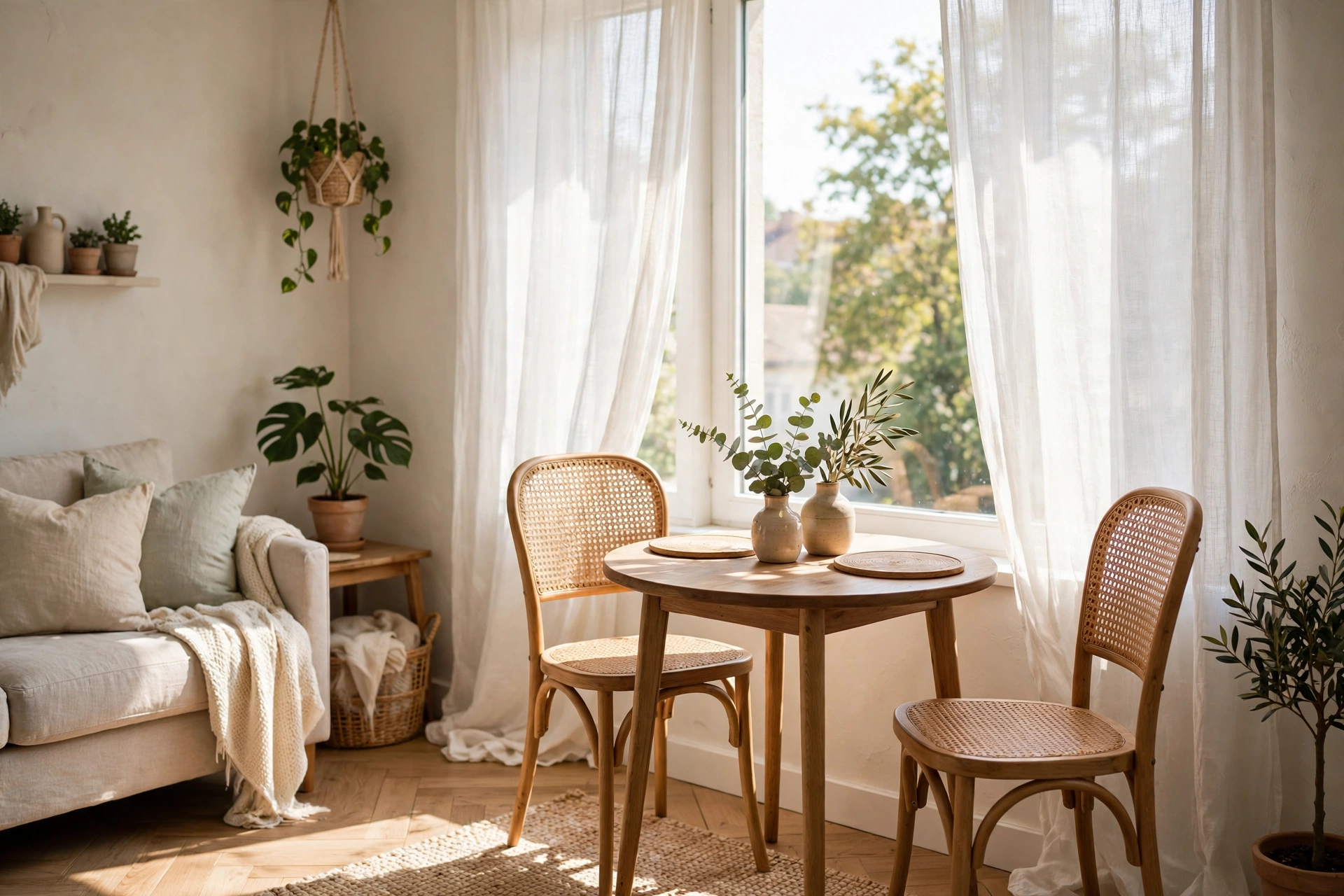
27. Place the Dining Table by the Window
The brightest spot in the room belongs to the dining table, where morning light makes breakfast better and evening sunsets add free ambiance. A window-side table also keeps the darker living corner for the TV and sofa. Natural light becomes your dining decor.
A small bistro or round table fits most window walls. Add a sheer curtain for softness and you have the most charming seat in the apartment.
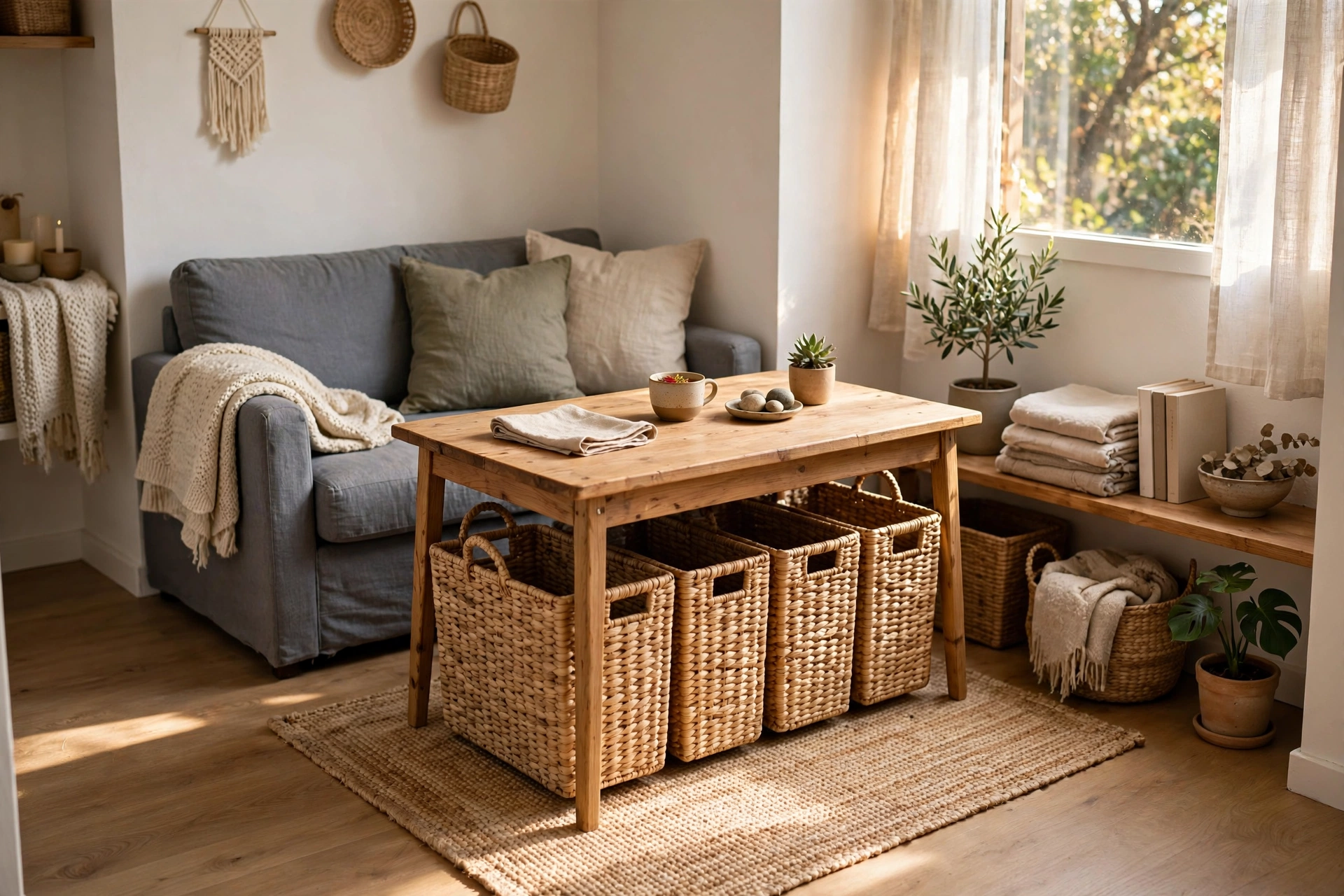
28. Stash Baskets Under the Dining Table
Low baskets slid under the dining table hold napkins, placemats, kids’ art supplies, or charging cables out of sight. The space beneath a table is dead floor until you put it to work. Matching baskets keep it looking tidy.
Choose baskets that fit the table’s height with a few inches to spare so feet stay comfortable. This hidden storage keeps dining essentials close without a bulky hutch.
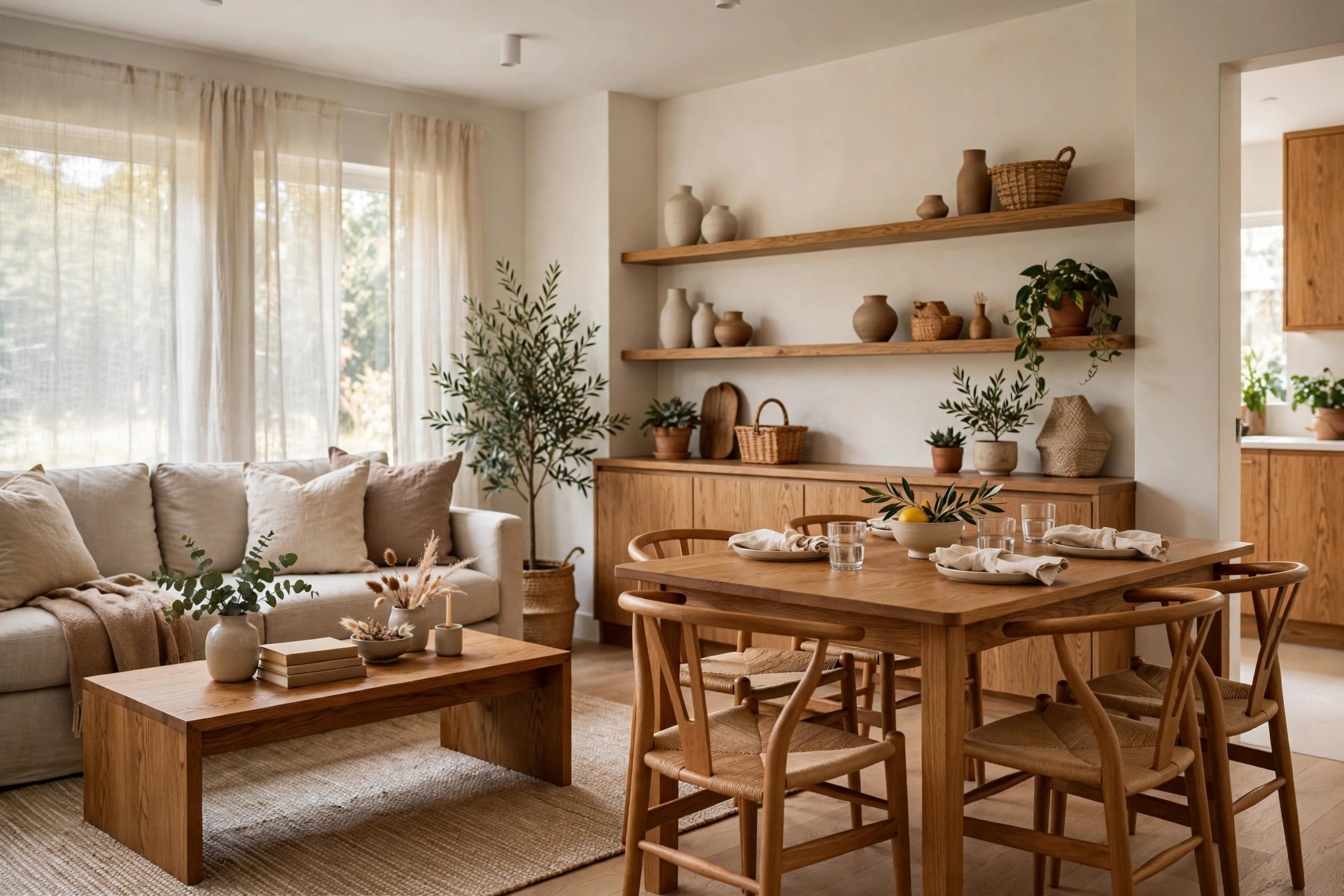
29. Match Wood Tones Across Both Zones
Repeating the same wood tone on the dining table, coffee table, and shelves stitches the two zones together. When the woods match, the room reads as one designed space instead of two squeezed halves. Consistency is the shortcut to cohesion.
If your pieces already clash, a unifying runner or matching trays in the shared tone can bridge them. Even small repeats, like wood frames on the gallery wall, reinforce the link.
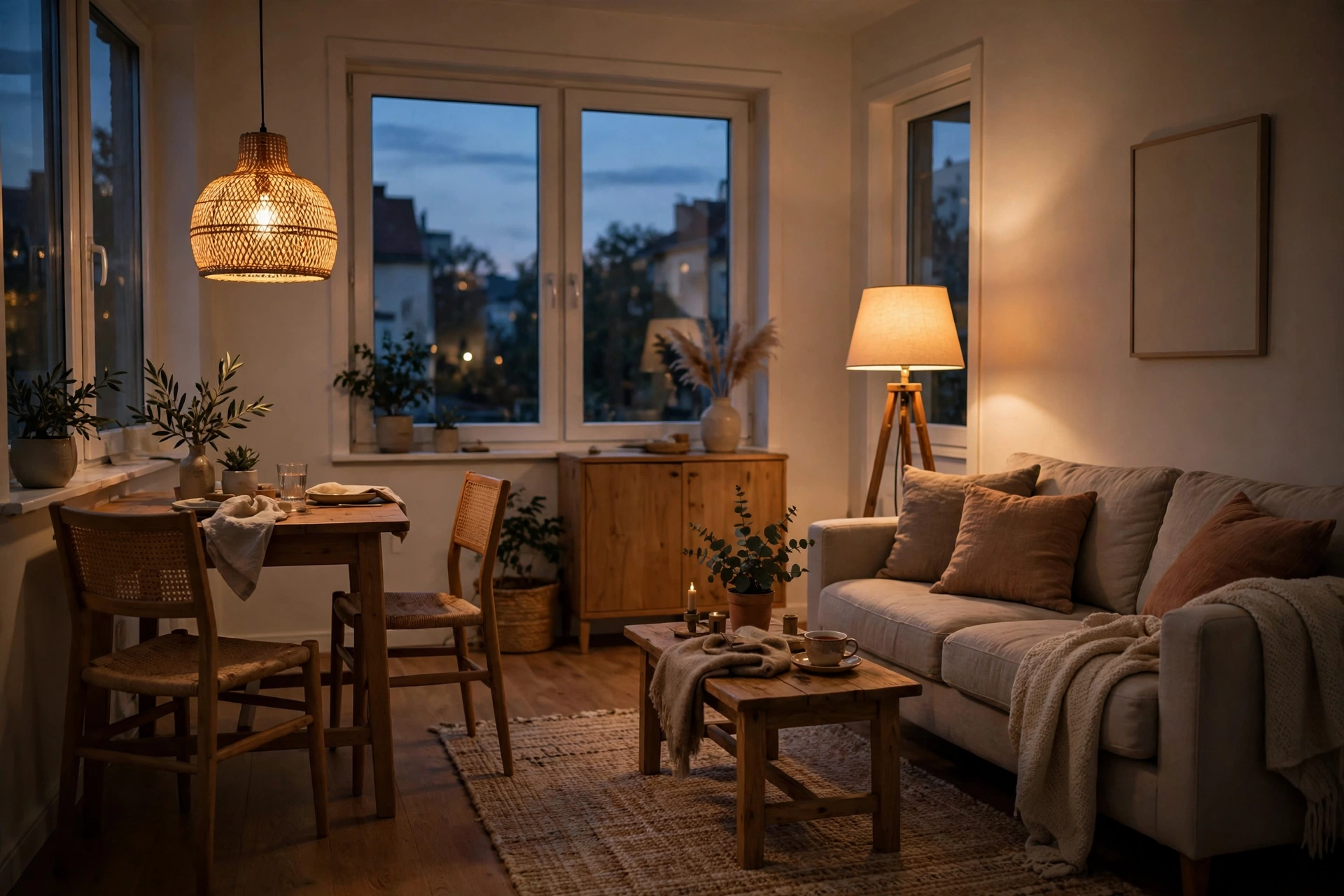
30. Add Dimmers for Dual-Mood Lighting
Dimmers on every switch let one room shift from bright dining mode to soft living-room mode in seconds. Layer the pendant, floor lamp, and any overheads on separate dimmers. Lighting is the fastest way to change a combo room’s job.
Smart dimmers or plug-in dimmer modules make this an easy retrofit in rentals. Set a brighter scene for meals and a low warm scene for movie night, and the room truly lives two lives.
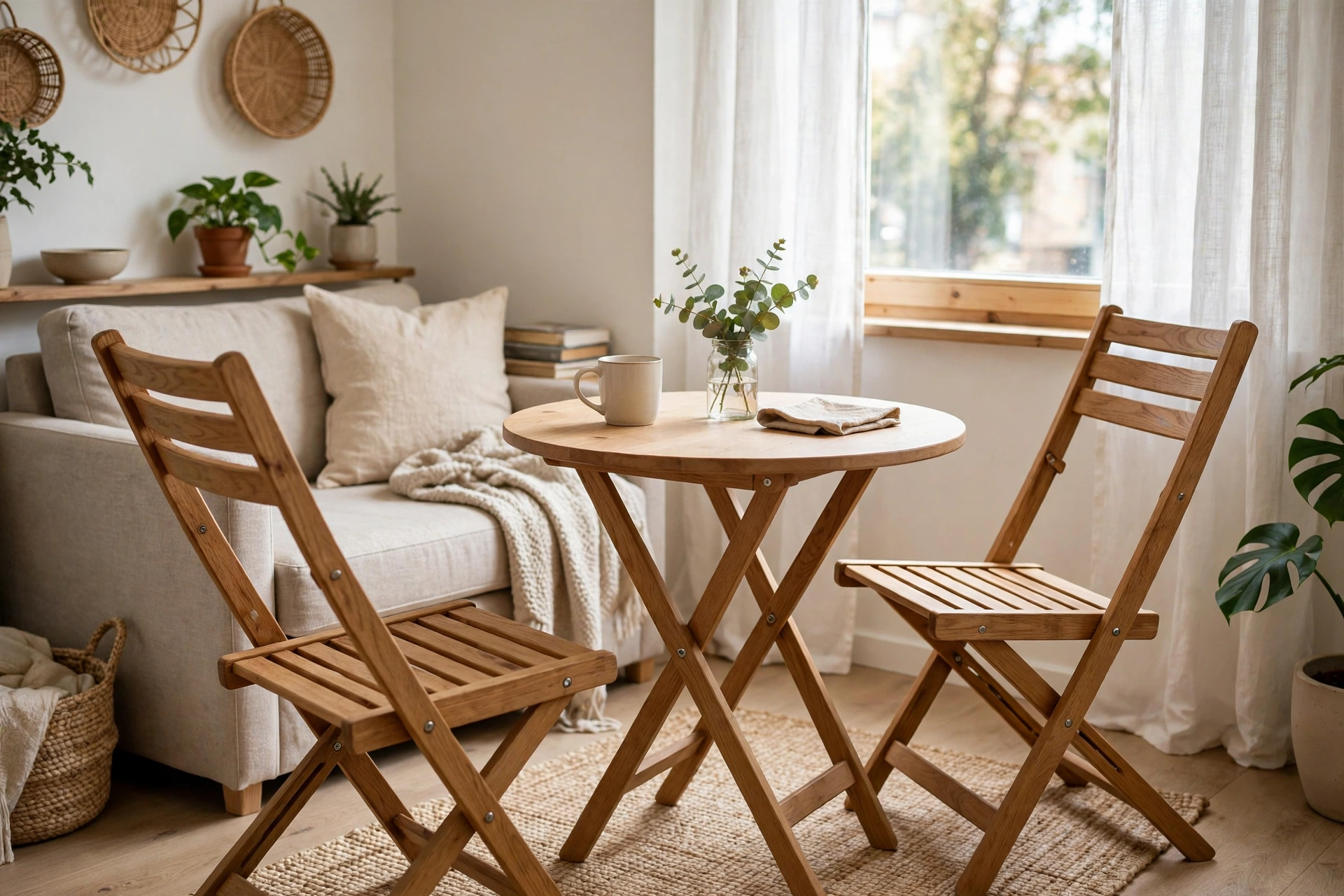
31. Keep Fold-Away Chairs for Guests
A pair of folding chairs stored in a closet or behind the sofa gives you instant extra seating for both zones. Modern folding chairs come in wood and upholstered styles that look like real furniture. Guests never need to know they fold.
Pull them to the dining table for dinner or to the coffee table for games. When the party ends, they disappear, and your small combo goes back to its calm everyday self.
Styling Tips
- Zone with furniture, not walls: float the sofa, add a rug, or hang a pendant to mark each area without closing the room in.
- Repeat one accent color and one wood tone across both zones so the combo reads as a single designed room.
- Choose double-duty pieces: storage ottomans, console sideboards, and dining chairs that moonlight as lounge seating.
- Keep sightlines open with low backs, glass tops, and armless chairs so the room feels connected and airy.
- Light each zone separately: a pendant for dining, a floor lamp for lounging, and dimmers to shift the mood.
- Hide storage in plain sight with under-table baskets, bench seats, and ottomans that swallow everyday clutter.
FAQs
How do you separate a living room and dining room in a small space? Use furniture and lighting instead of walls: float the sofa between the zones, anchor the dining table with a rug, hang a pendant over the table, and place a slim console behind the sofa. Each of these marks a boundary without blocking light or sightlines.
What size dining table works in a small living room combo? A 36-inch round table seats four and fits most small combos; pedestal bases tuck chairs in closer. If you host often, choose an extendable table that lives small daily and stretches for guests.
Can a small living dining combo still feel cozy? Yes. Layer lighting with a floor lamp and dimmers, use warm textiles like curtains and a soft rug, and style a storage ottoman as your coffee table. Cozy comes from layers and warm light, not square footage.
Where should the dining table go in a combo room? Place it near the window for the best natural light, or against a wall with a banquette bench to save floor space. Keep a clear walkway of at least 30 inches around the table so the room stays easy to move through.
Final Thoughts
A small living room dining room combo works best when every piece has a purpose and every zone has a marker. Float the sofa, light the table, repeat your palette, and let furniture do double duty. With these 31 ideas, your one room will feel like two beautifully connected spaces that handle everyday life and dinner guests with equal ease.

