


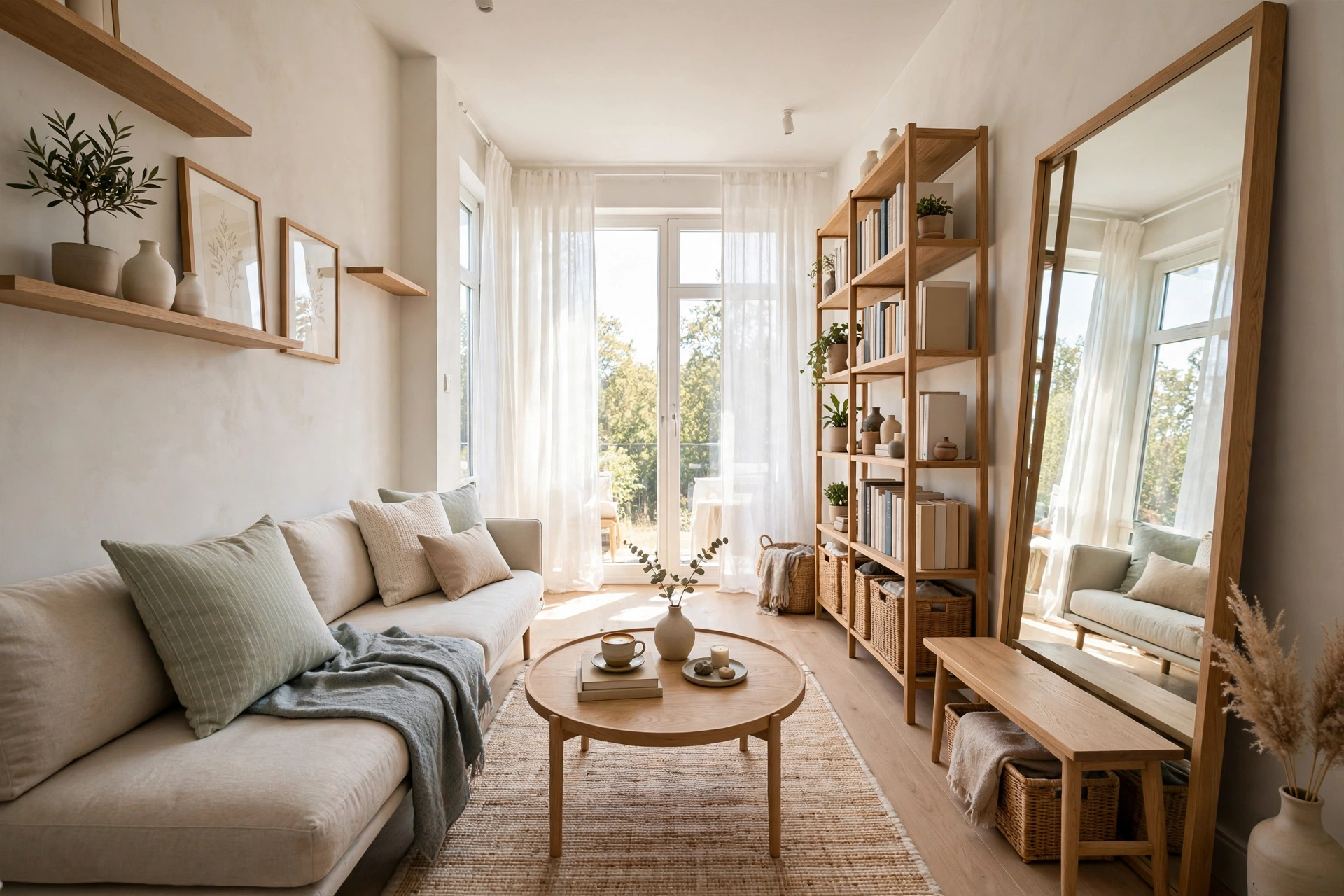
A narrow living room can feel like a design puzzle: too skinny for a standard layout, too long to ignore. But with the right approach, that challenging footprint becomes a cozy, stylish space that works harder than a square room ever could.
The secret is learning how to decorate a narrow living room with intention, choosing slim furniture, stretching sightlines, and zoning the length into purposeful areas. These 38 ideas cover layouts, lighting, color, and clever furniture picks that make the most of every inch. Come December, the same slim layout even leaves room for seasonal touches, and our white Christmas tree ideas show how to fit a festive tree into the tightest floor plan.
38 ways to decorate a narrow living room
1. Float the furniture layout
Pulling the sofa a few inches off the wall is the fastest way to make a narrow living room feel wider. It creates breathing room on both sides and makes the whole arrangement look intentional instead of shoved against the perimeter. Even six inches of space behind the sofa changes how the room reads.
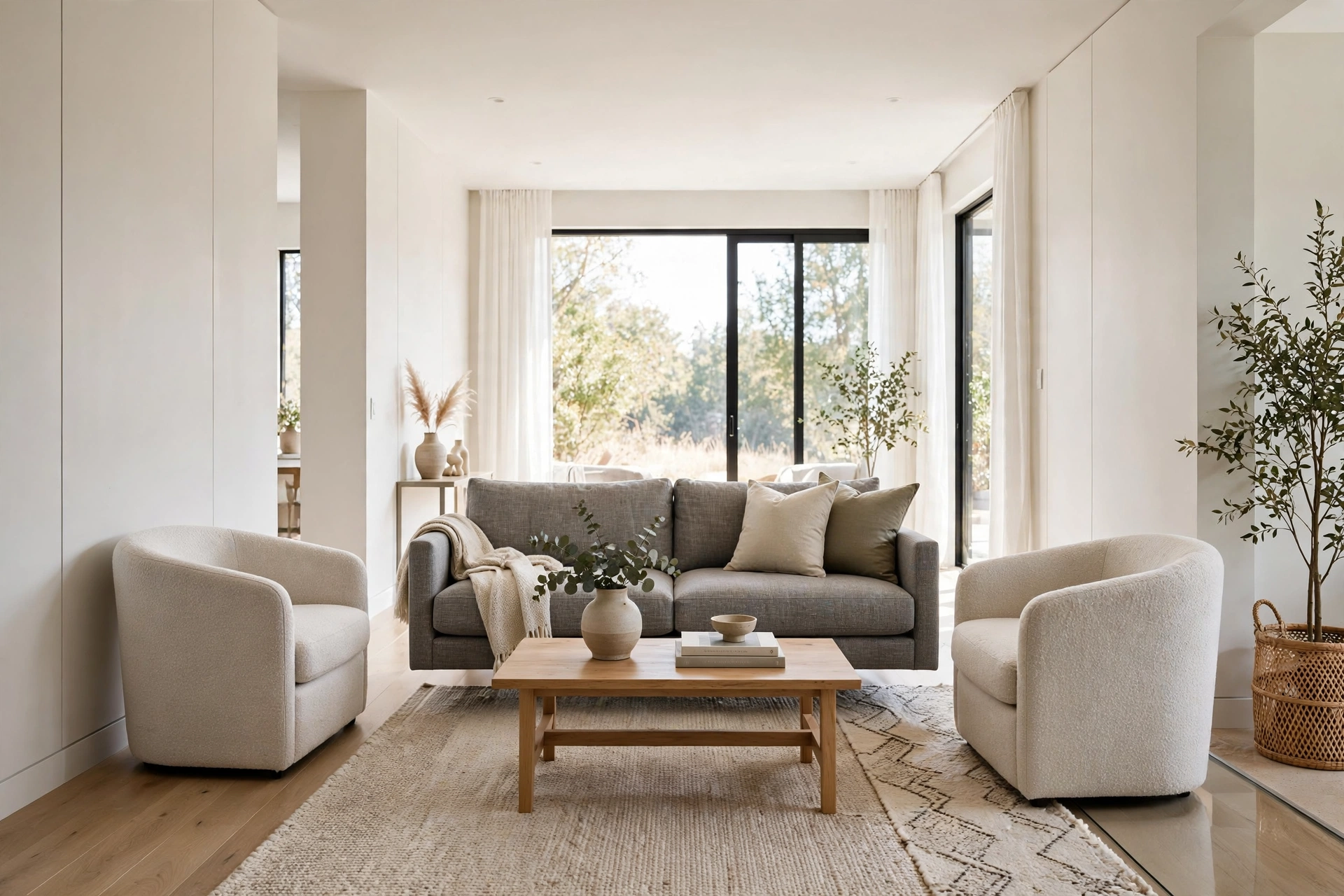
2. Loveseat instead of a bulky sofa
A full-size sofa can swallow a narrow room whole. A well-proportioned loveseat gives you comfortable seating for two while leaving precious inches on each side for side tables or simply open floor. You will be surprised how much bigger the room feels.
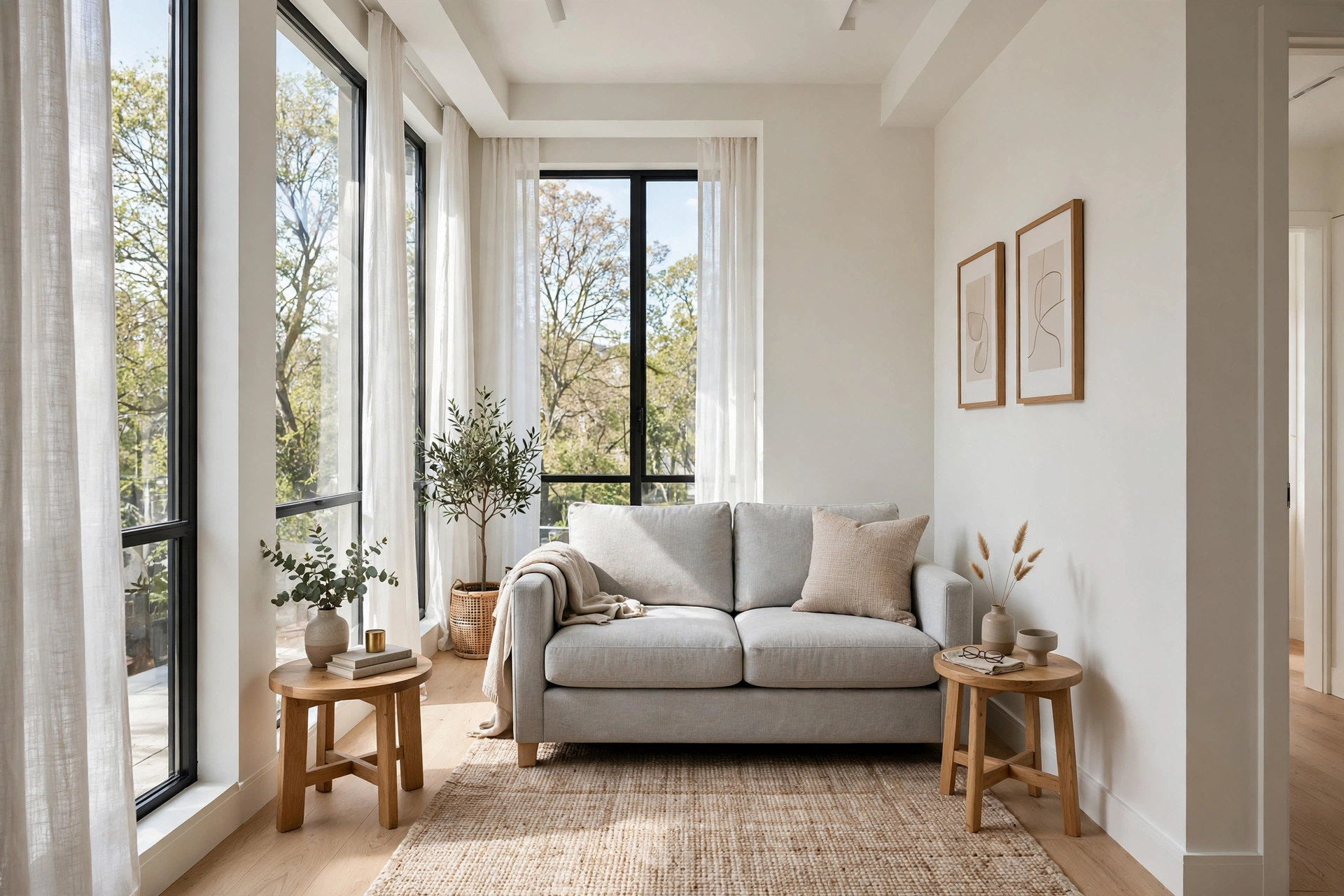
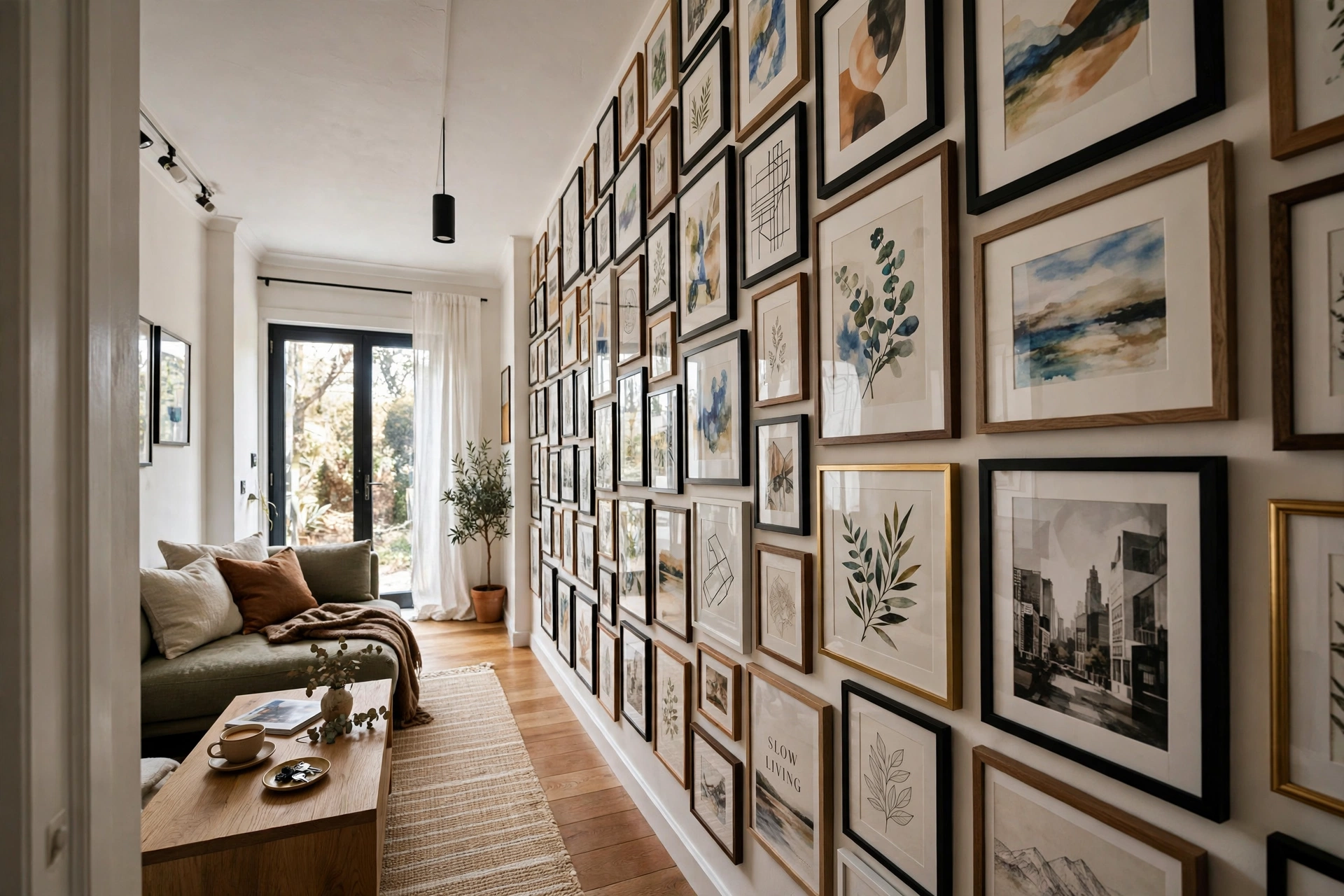
3. Vertical gallery wall
When floor space is tight, take the decor upward. A gallery wall that climbs toward the ceiling draws the eye up and makes the room feel taller and more generous. Keep frames tight together in a grid or organic cluster for maximum impact.
4. Slim console behind the sofa
A narrow console table tucked behind the sofa adds surface space without stealing floor area. Style it with a lamp, a stack of books, and a small plant for a finished look. It also creates a visual boundary that makes the seating zone feel deliberate.
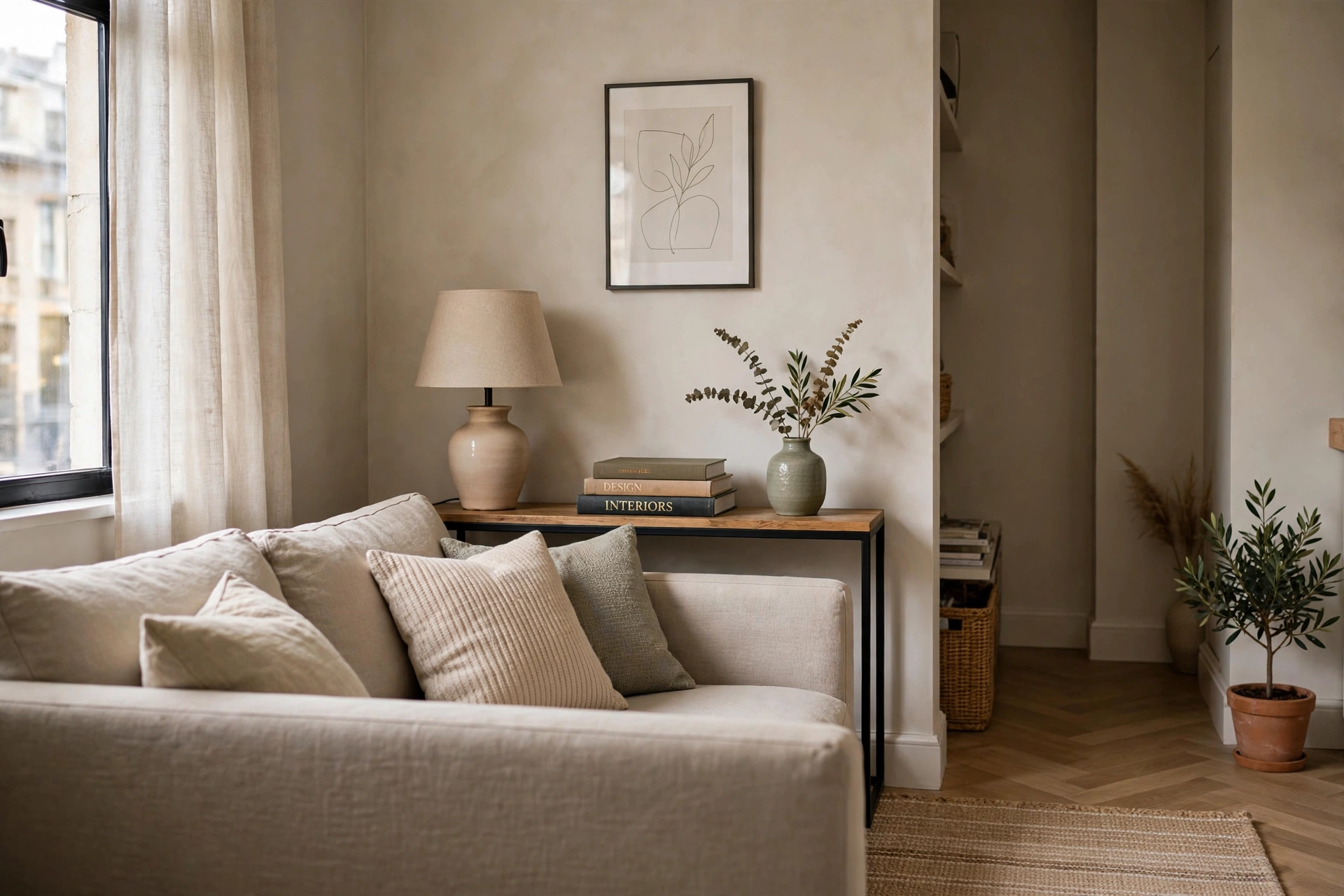
5. Full mirror wall
A large mirror, or a grid of them, on the long wall visually doubles the width of the room. It bounces daylight around and erases that tunnel feeling narrow rooms can have. Lean one oversized mirror or hang a mirrored panel set for a designer effect.
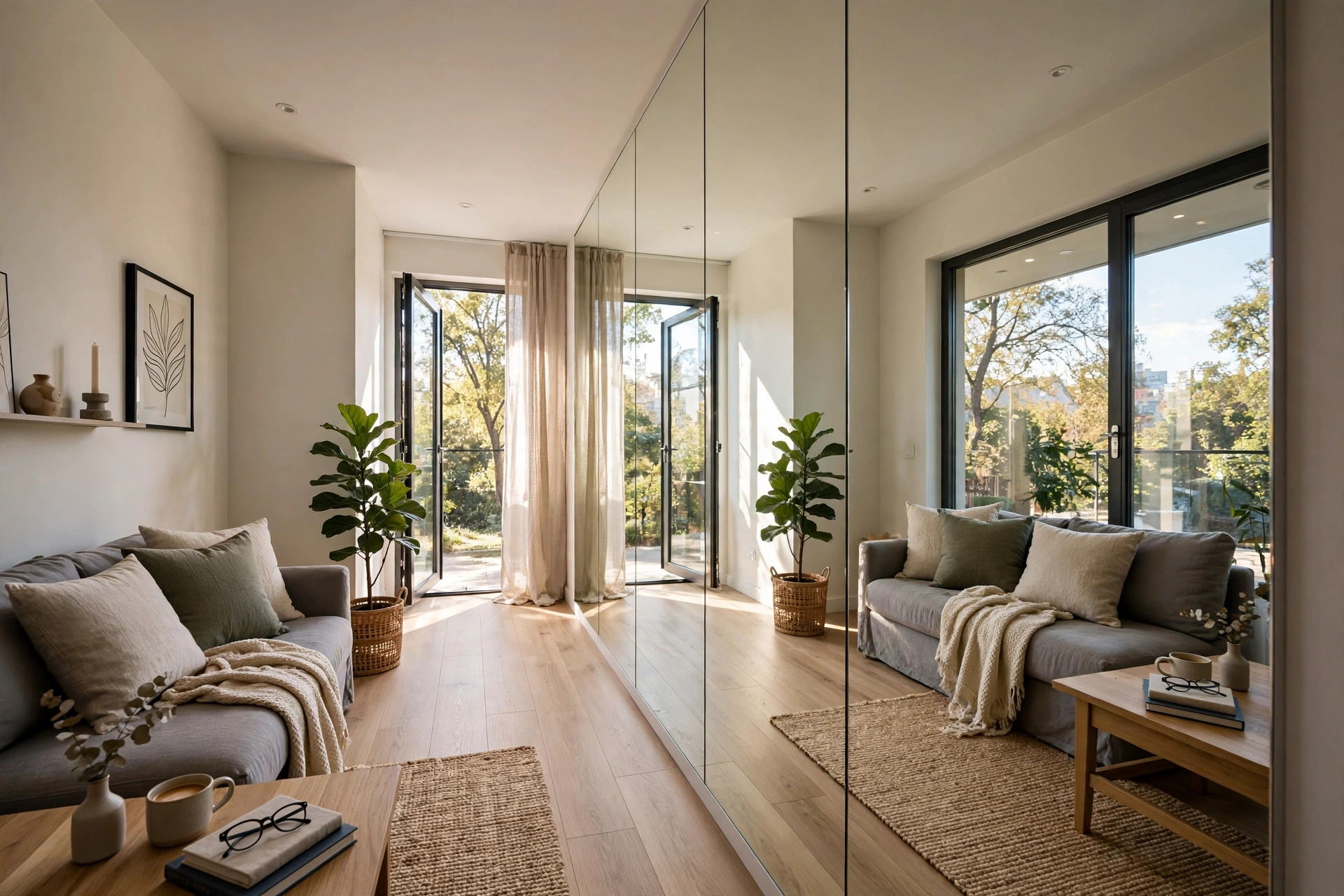
6. Armless accent chairs
Chair arms eat up six to eight inches of width you cannot spare. Armless accent chairs or slipper chairs give you the same seating in a much slimmer footprint. They also tuck neatly under a console when you need the floor clear.
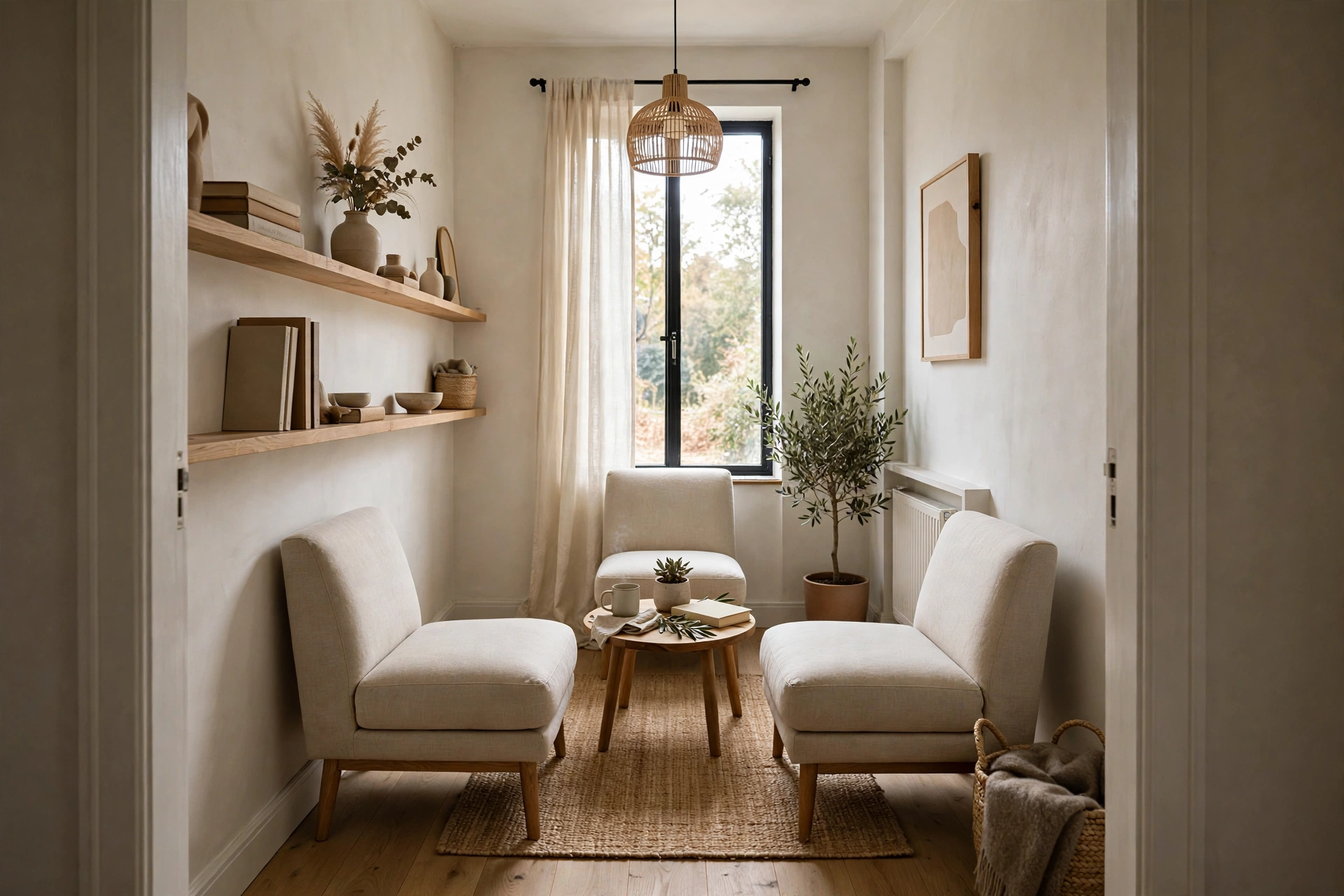
7. Rug runner for zoning
A long runner rug defines the seating area and guides the eye down the length of the room. It adds warmth and pattern without the bulk of a large area rug. Choose one that runs nearly the full length of your furniture arrangement.
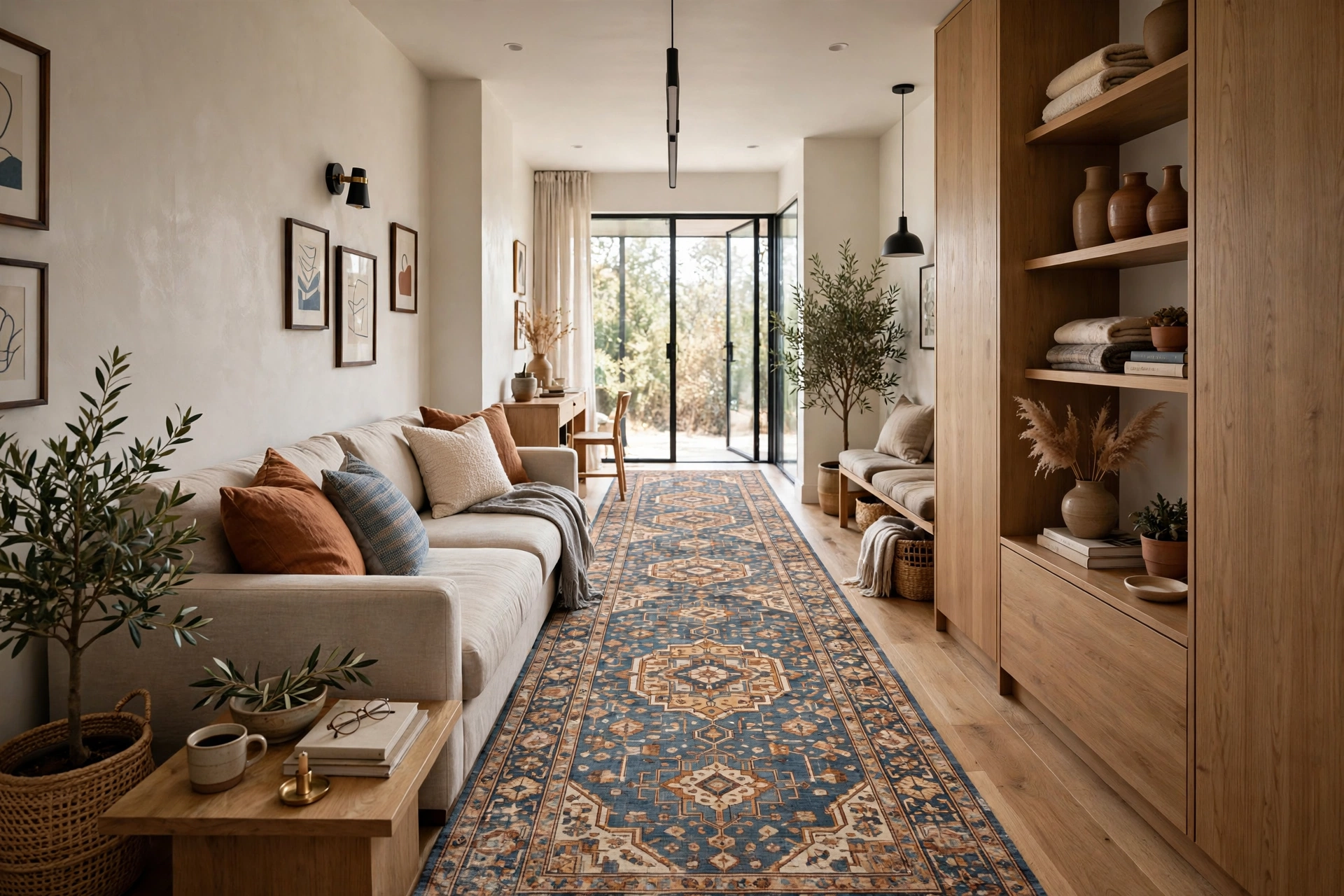
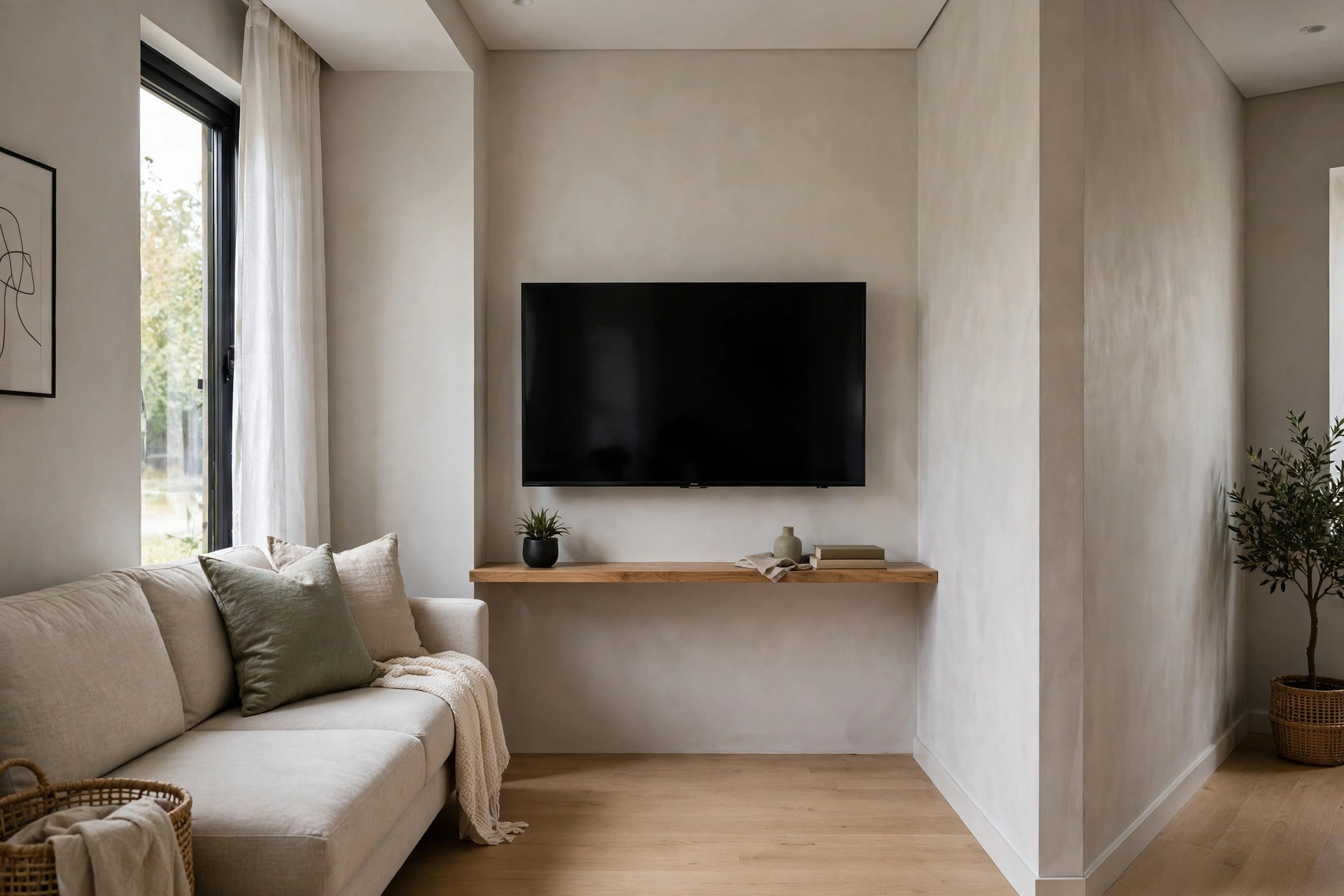
8. Wall-mounted TV
Ditching the media stand frees up serious floor space. Mount the TV on the wall and pair it with a slim floating shelf for components. The wall beneath stays open, which keeps the room feeling light.
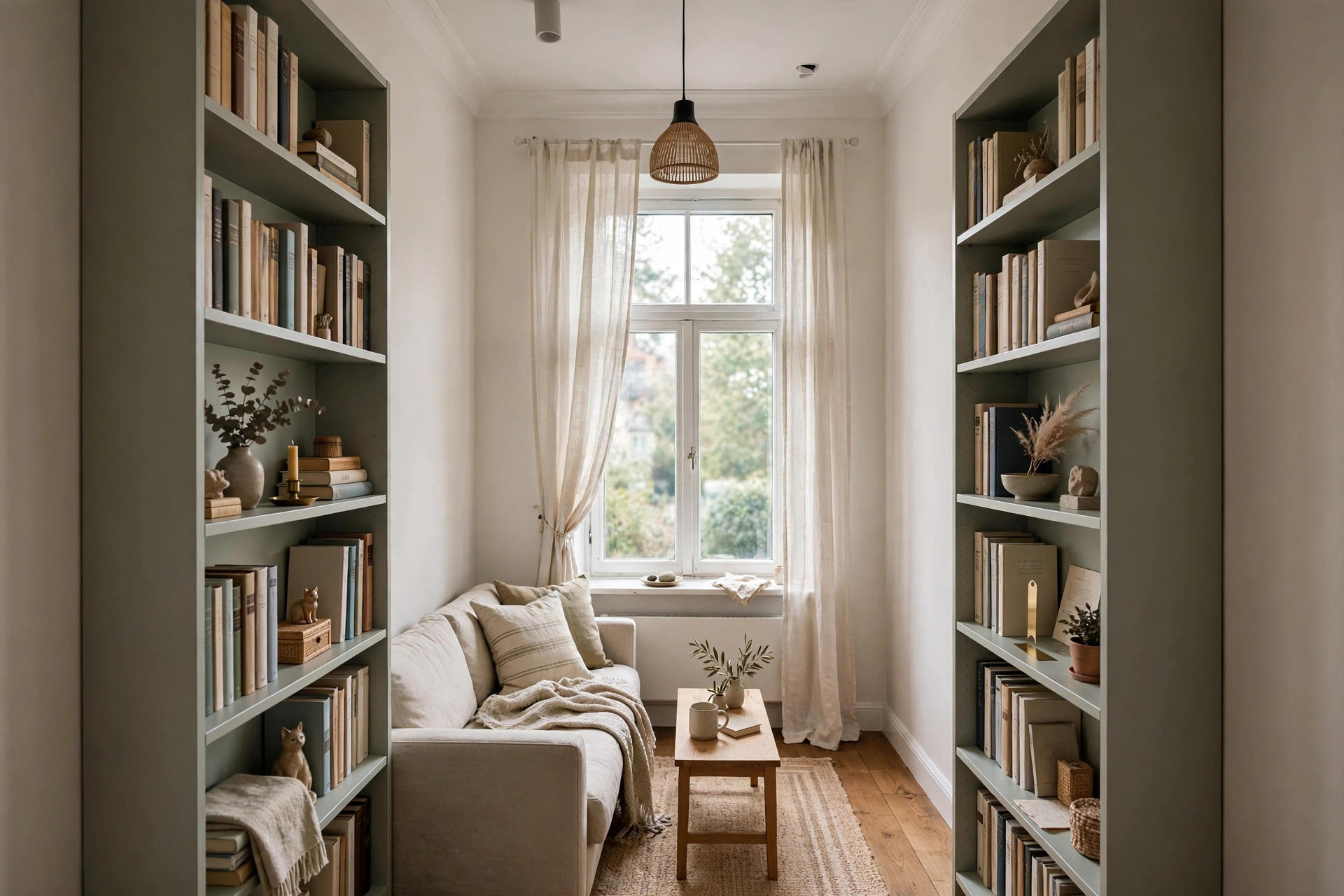
9. Tall narrow bookcases
Skinny bookcases flanking a window or doorway use vertical inches instead of floor inches. They add storage and personality while barely intruding into the room. Keep shelves styled lightly so they do not feel heavy.
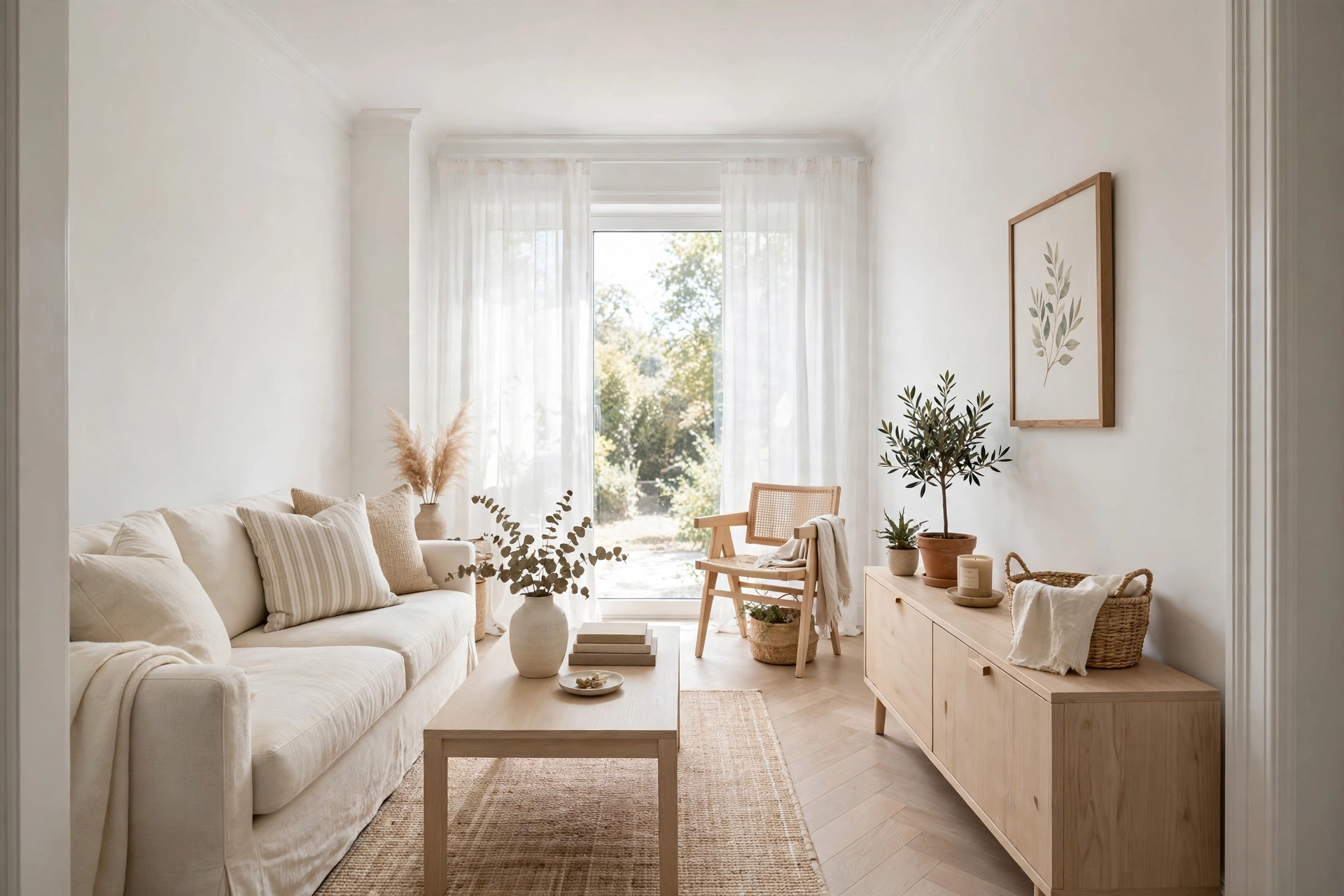
10. Light airy color palette
Whites, creams, and pale grays reflect light and push walls visually outward. A light palette is the single easiest way to make a narrow living room feel open. Add depth with texture rather than dark color: linen, jute, pale wood.
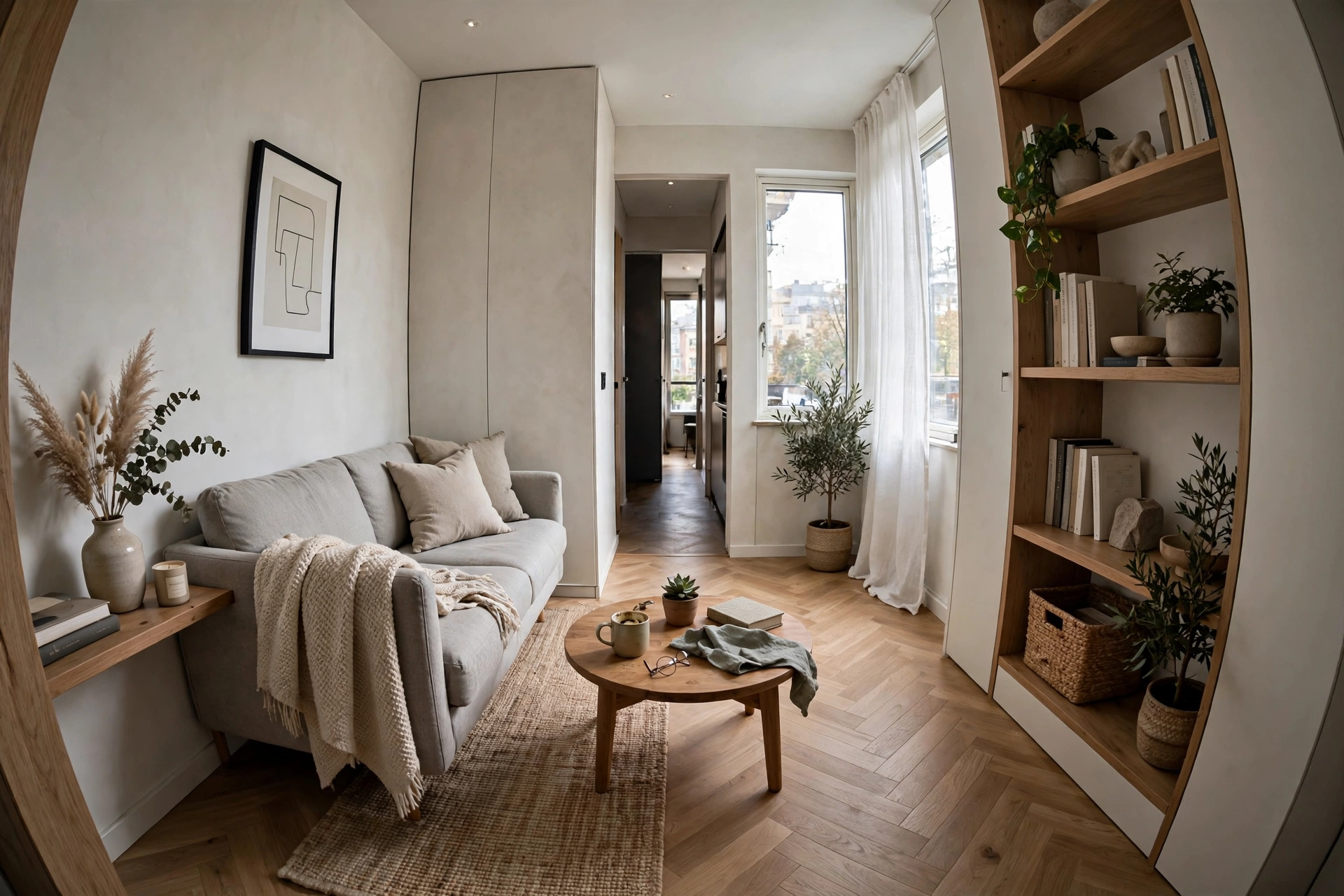
11. Round coffee table
Sharp corners on a rectangular coffee table create awkward pinch points in a narrow room. A round table is easier to move around and its curves keep traffic flowing. A small round ottoman works the same magic.
12. Acrylic ghost furniture
Transparent acrylic chairs and side tables visually disappear, so the eye reads more open space. They are perfect for extra seating that does not add visual weight. Pair one ghost chair with solid pieces so the room still feels grounded.
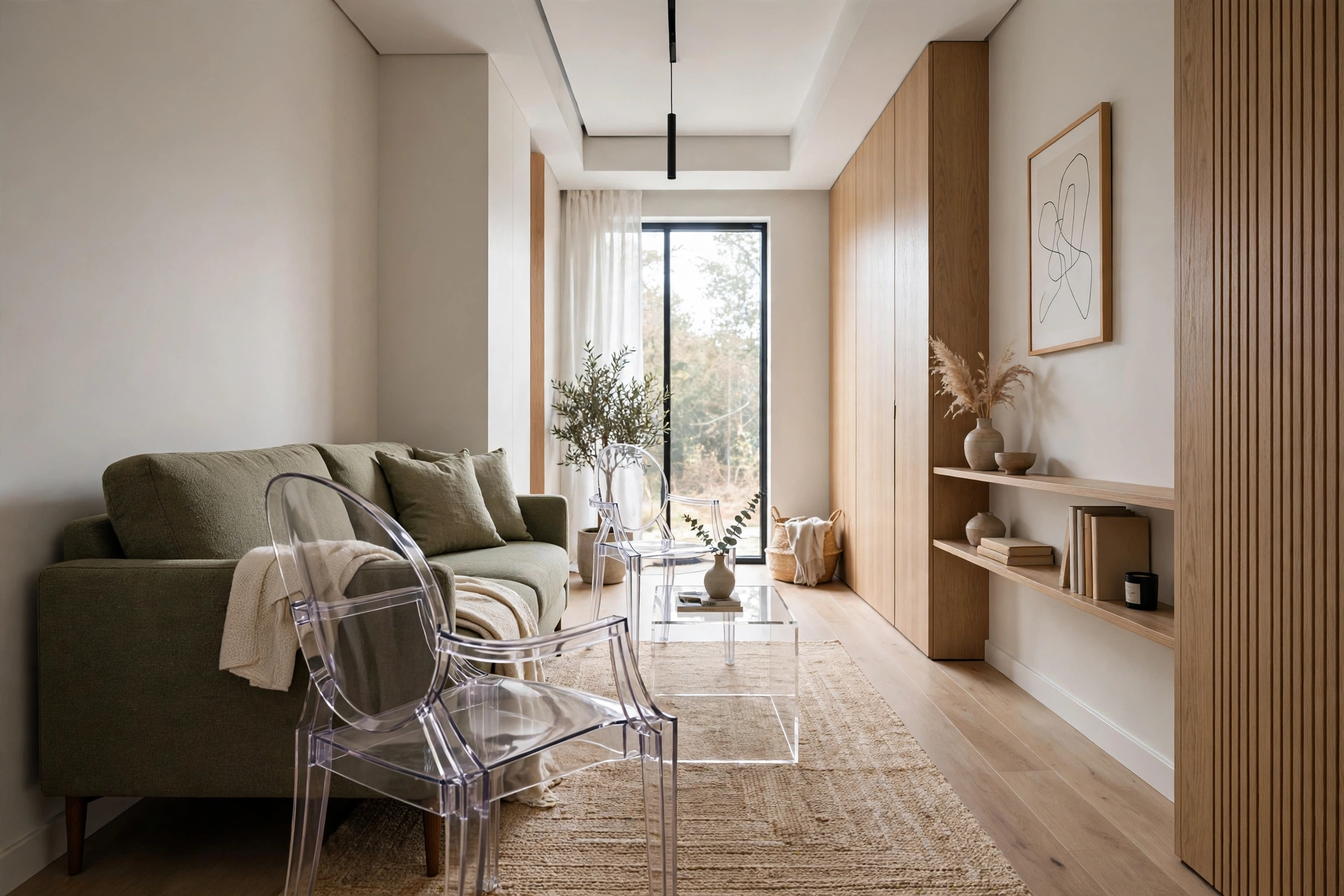
13. Curtains hung high and wide
Mount curtain rods close to the ceiling and extend them well past the window frame. The tall, wide drape makes windows look bigger and ceilings higher, which counteracts the narrow proportions. Sheer or light fabrics keep it airy.
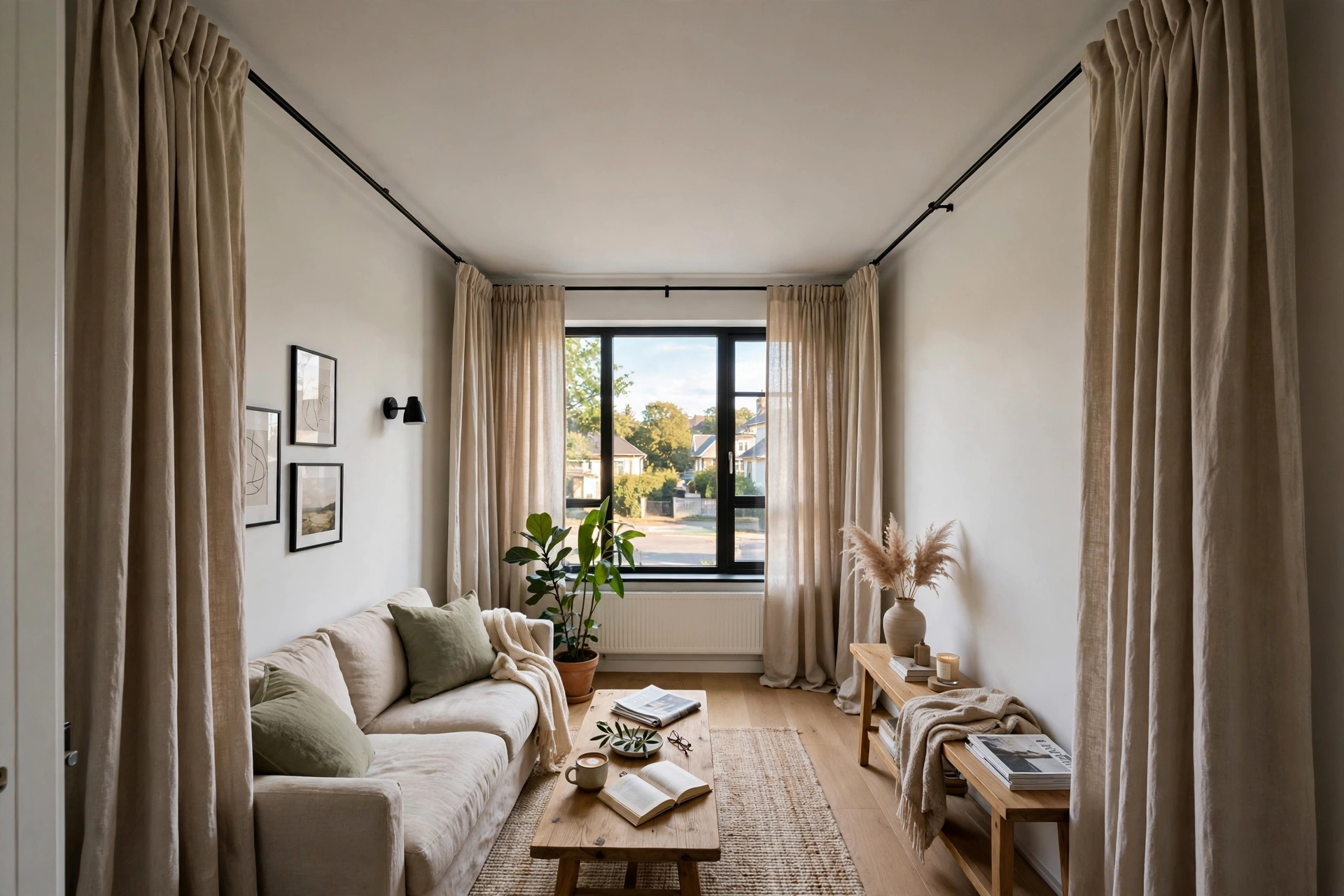
14. Long low media bench
A low, streamlined media bench under a wall-mounted TV keeps the sightline open across the room. Its horizontal line emphasizes length rather than bulk. Choose one with closed storage to hide clutter.
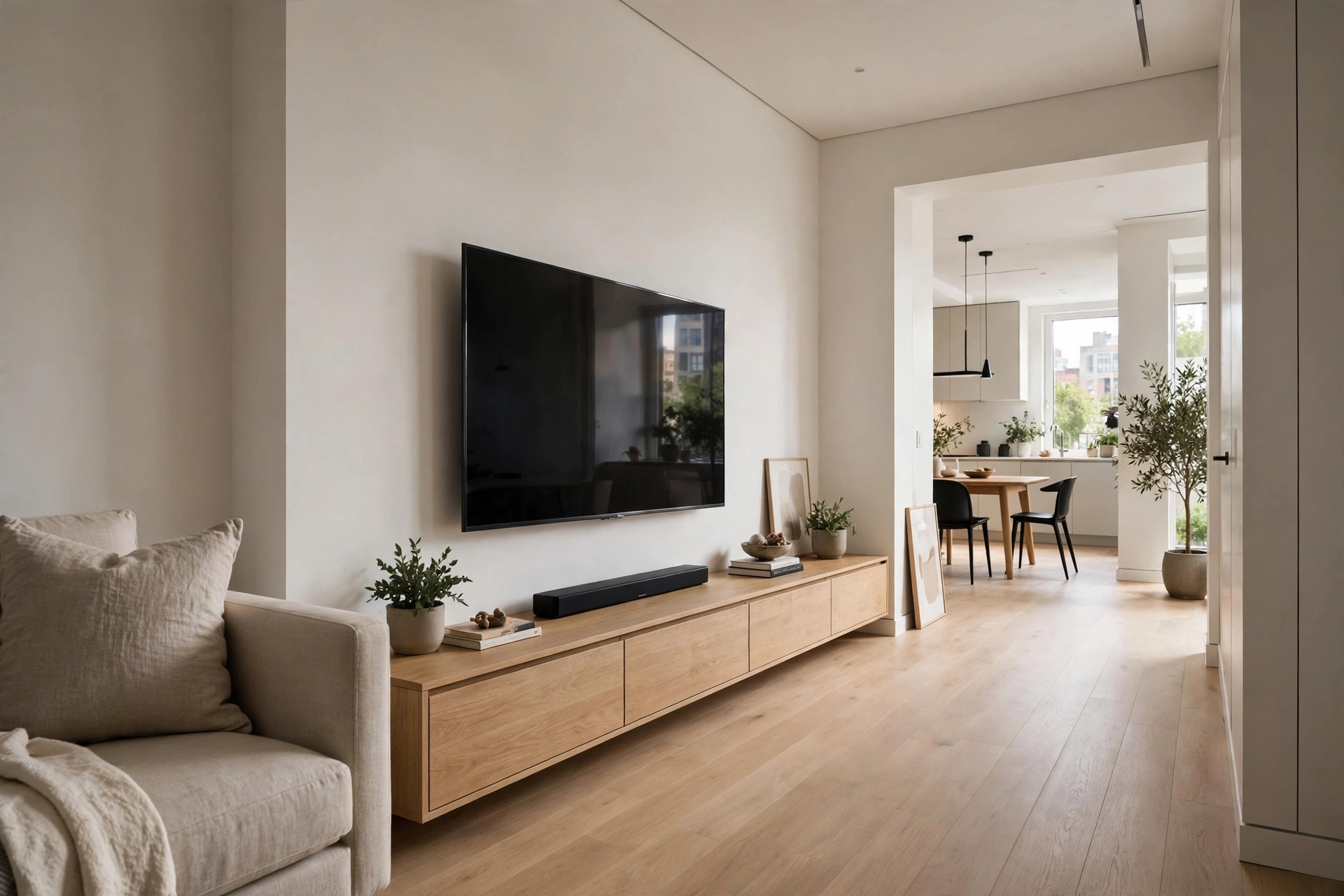
15. Corner sectional anchor
A compact sectional tucked into one end of the room anchors the seating zone and defines where the living area begins and ends. It gives generous seating without pieces scattered down the length of the room. Keep the chaise on the short side.
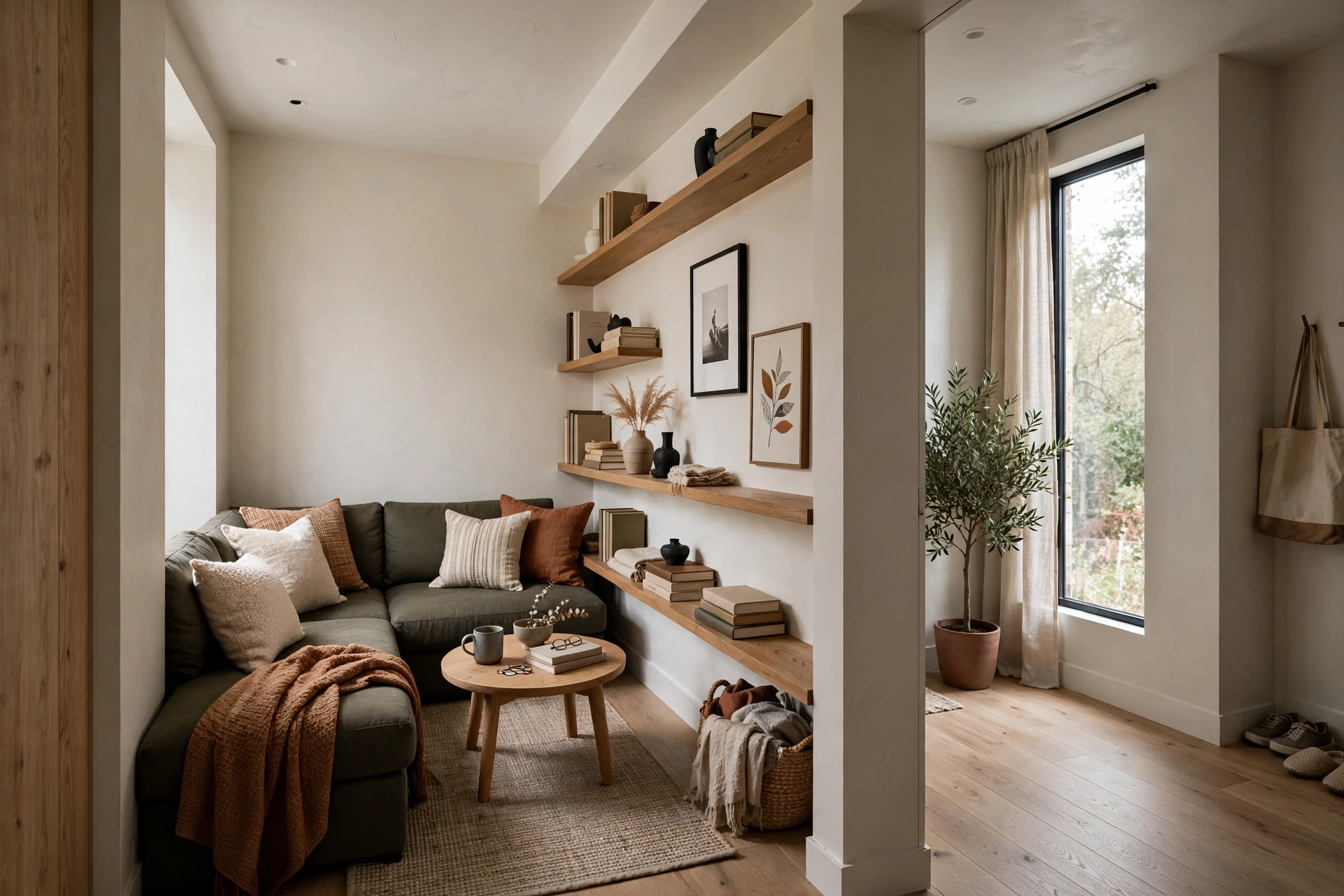
16. Two conversation zones
Instead of fighting the room’s length, embrace it by creating two zones: a main sofa area at one end and a pair of chairs with a small table at the other. The room suddenly feels like it has purpose-built spaces rather than one awkward tunnel.
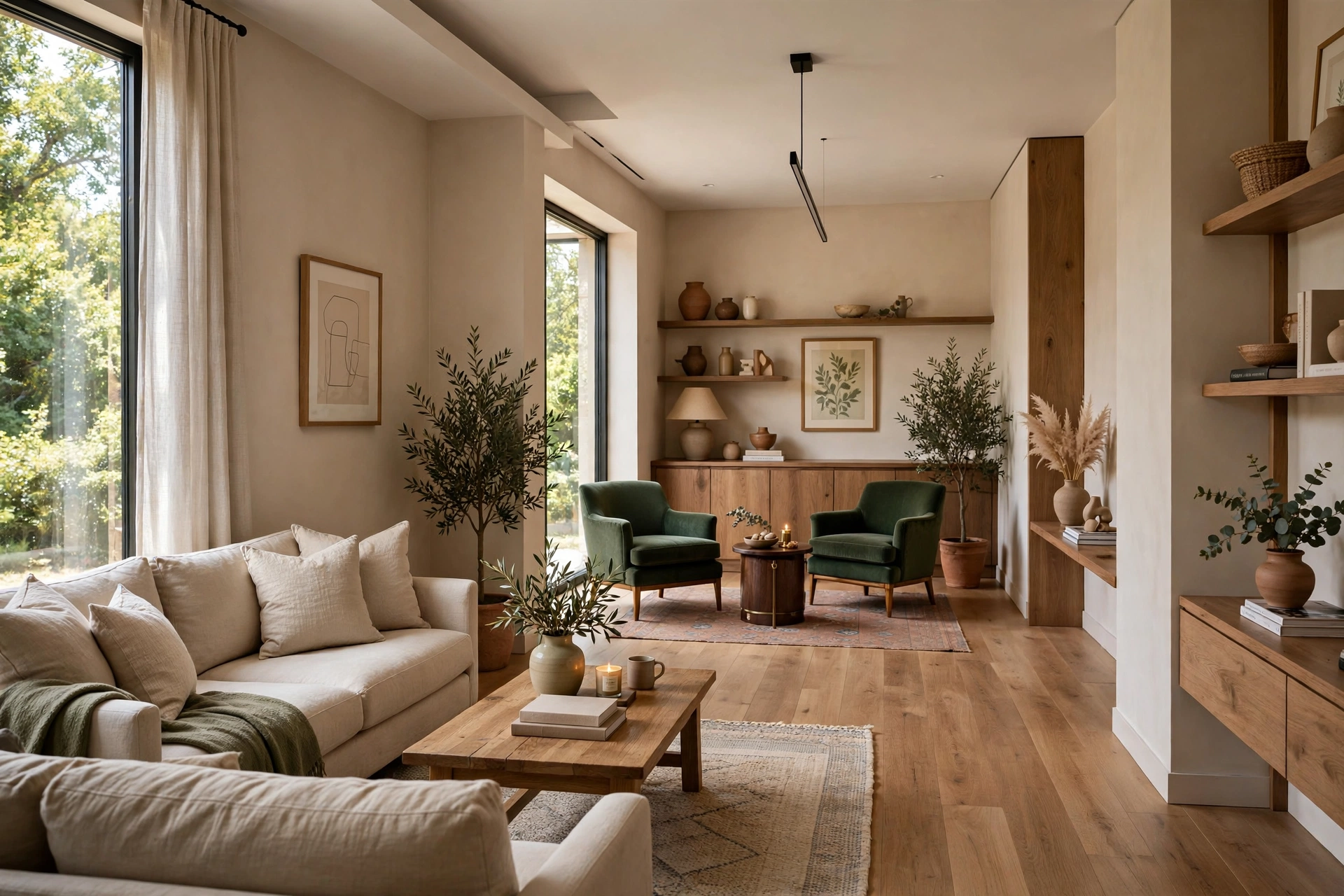
17. Layered three-height lighting
One overhead light flattens a narrow room. Layer ambient, task, and accent lighting at ceiling, table, and floor heights to add depth. Warm bulbs at multiple levels make the space feel cozy rather than corridor-like.
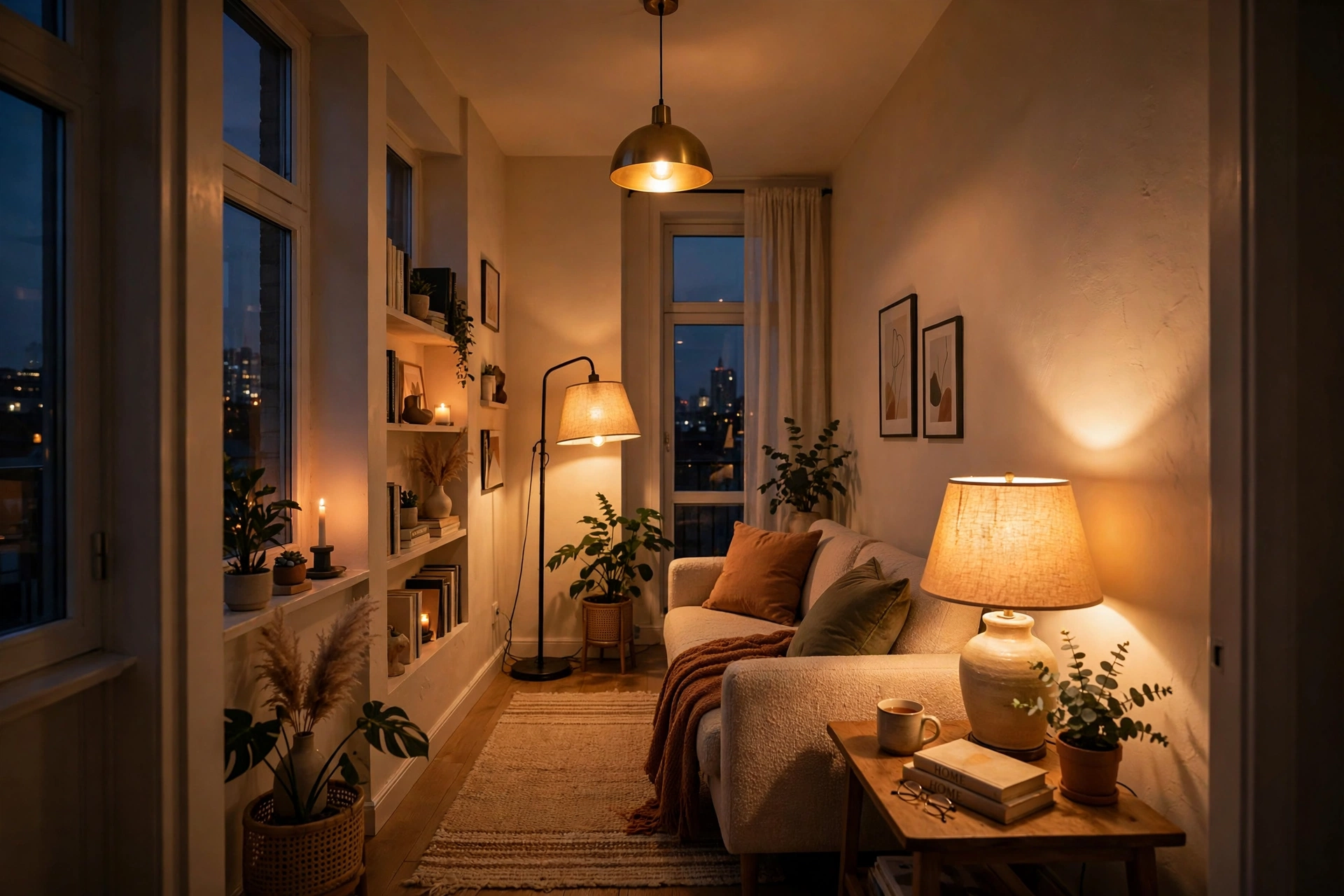
18. Statement pendant light
A single bold pendant over the coffee table draws the eye upward and gives the room a focal point. It adds personality without touching the floor plan. Choose an open or airy design so it does not visually lower the ceiling.
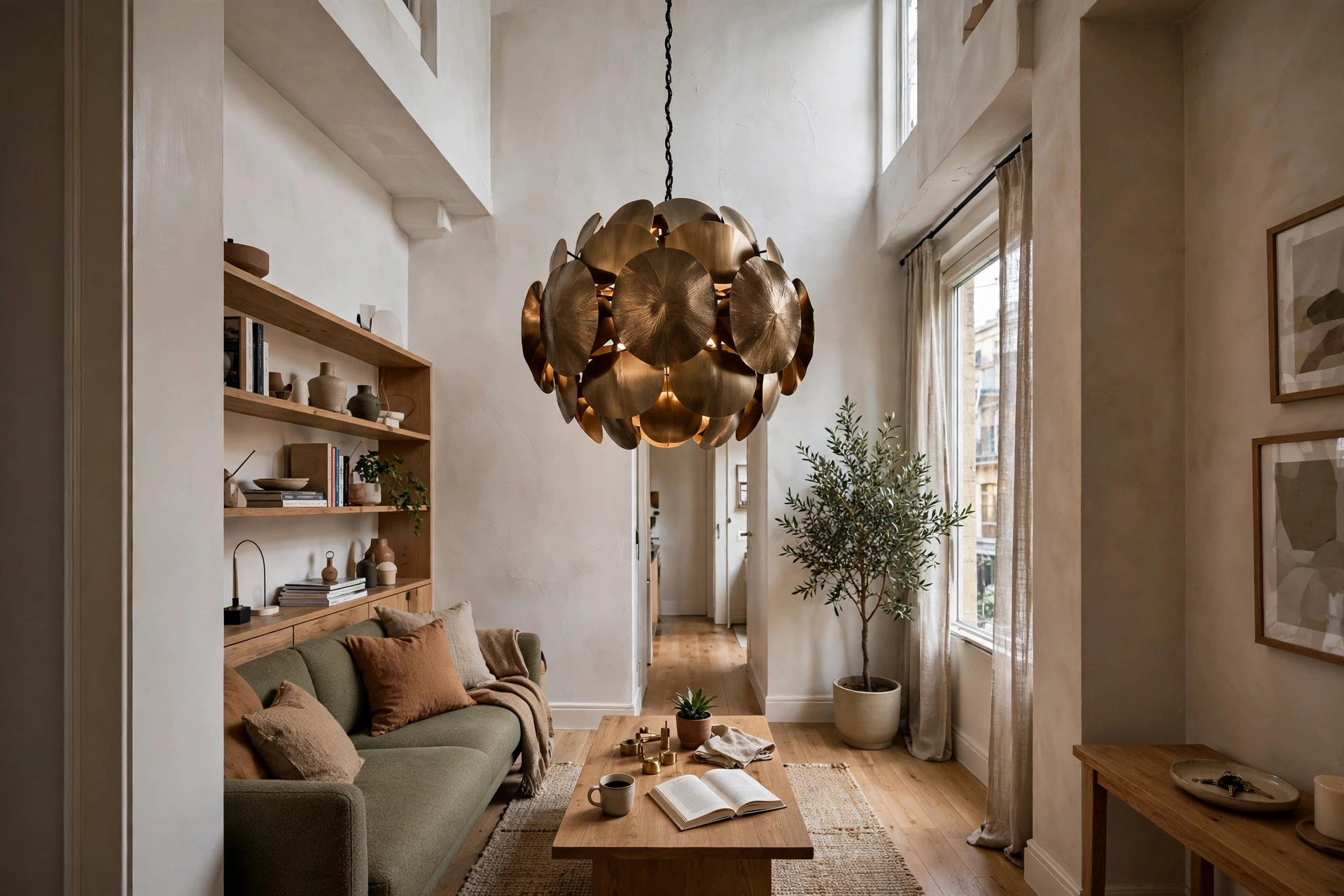
19. Tall arc floor lamp
An arc lamp curves light over the sofa from a single corner footprint, eliminating the need for a side table and lamp on both ends. It is sculptural, practical, and perfect for tight layouts.
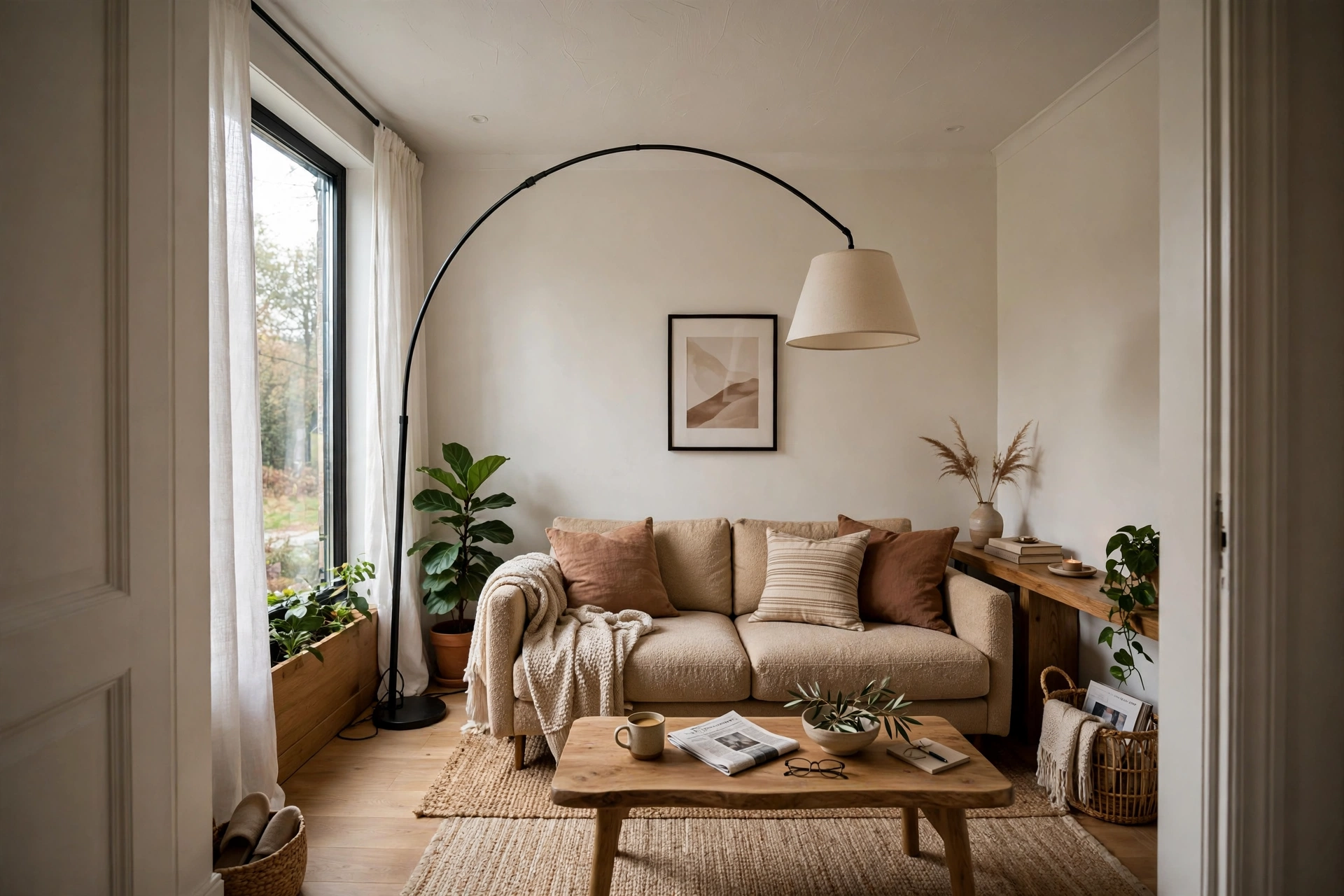
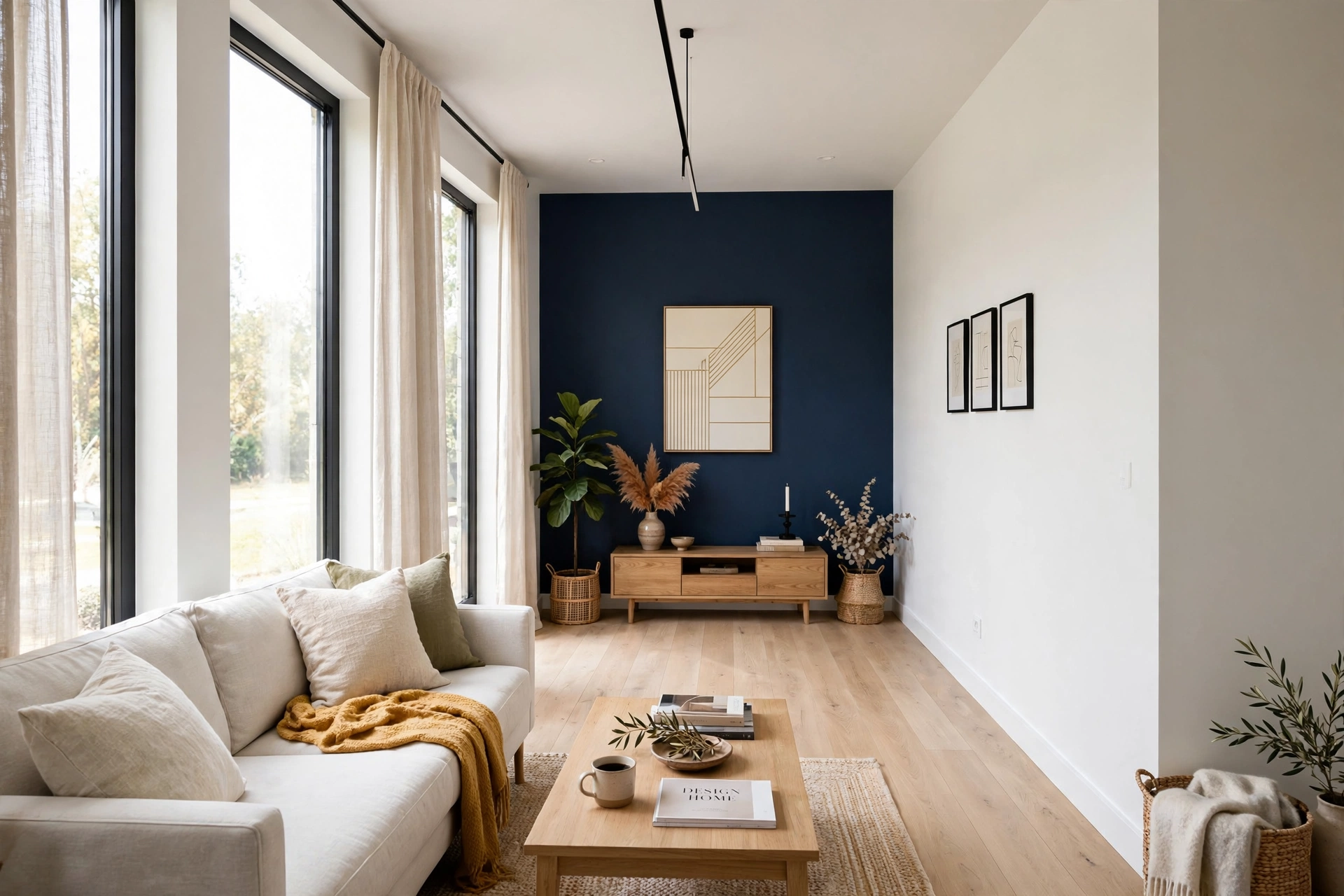
20. Accent wall to shorten the room
Painting the far short wall a deeper color visually pulls it closer, making the room feel less like a hallway. The contrast adds drama and coziness. Keep the long walls light so the width still feels open.
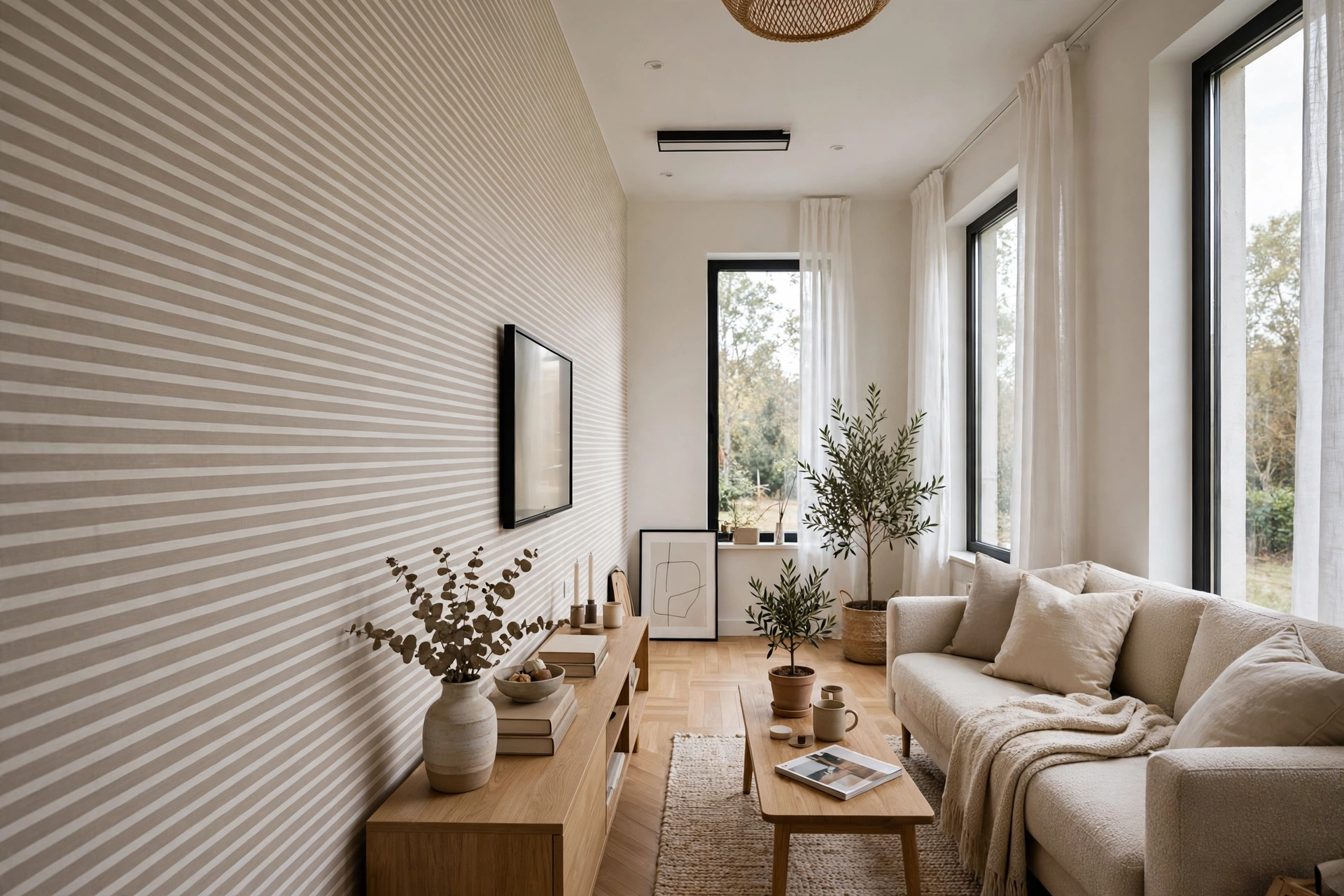
21. Horizontal stripes to widen
Horizontal stripes on the long wall trick the eye into reading the room as wider than it is. Use subtle tone-on-tone stripes for a sophisticated effect or a soft striped wallpaper. Even wide-plank flooring laid across the room works the same way.
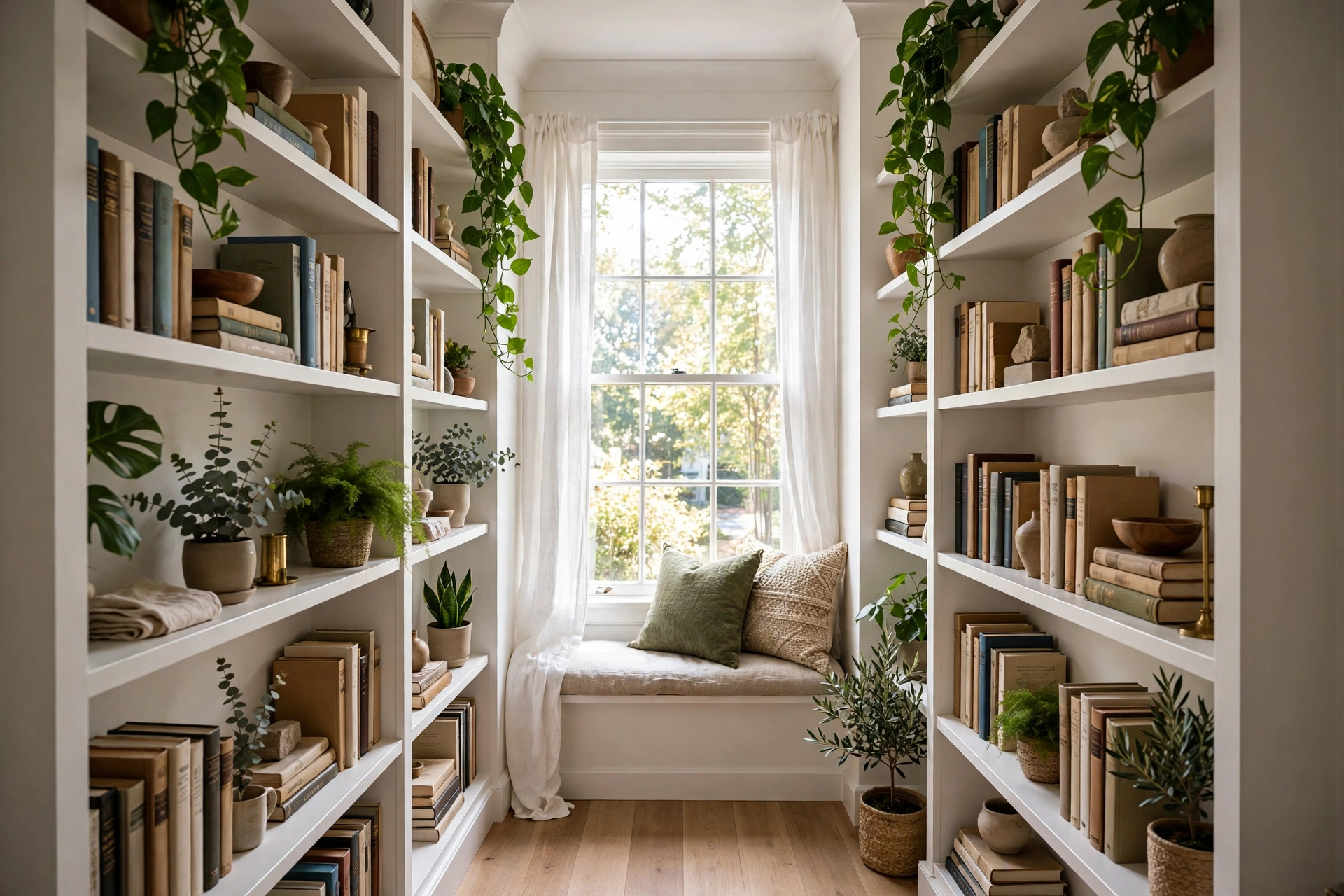
22. Built-in window shelving
Flanking the window with built-in shelves turns dead wall space into storage and display. It frames the natural light source beautifully and keeps the floor clear. Paint the built-ins the same color as the walls for a seamless look.
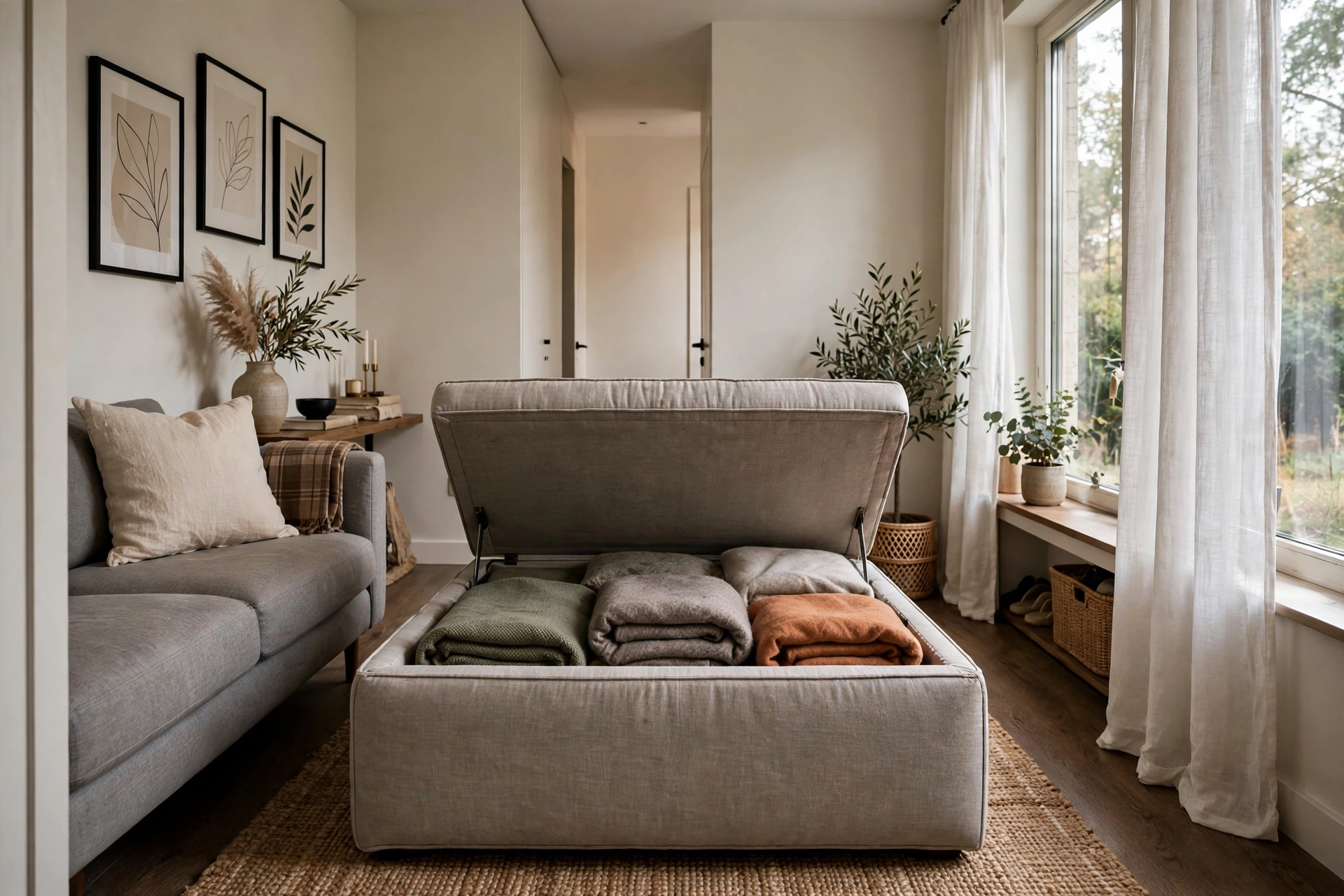
23. Storage ottoman coffee table
Swap the coffee table for a large upholstered ottoman with hidden storage inside. It holds blankets and games, doubles as extra seating, and has no sharp corners. A tray on top makes it serve drinks too.
24. Nesting side tables
A set of nesting tables gives you surface space that tucks away when not needed. Pull one out for guests, slide it back when the room needs to breathe. They are the ultimate flexible furniture for narrow rooms.
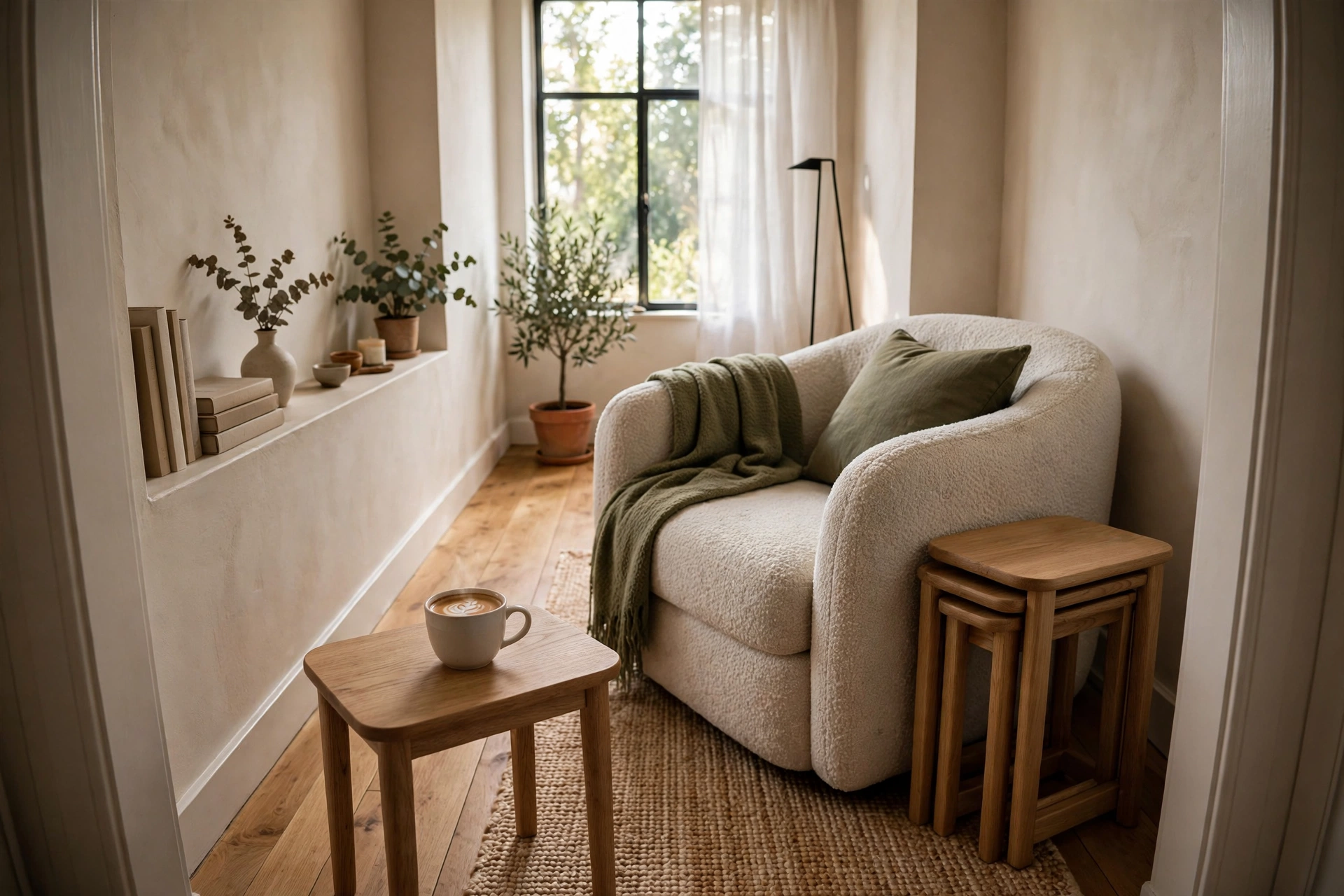
25. Far-end reading nook
Turn the far end of the room into a dedicated reading corner with a comfortable chair, a floor lamp, and a small bookshelf. It gives the room’s length a destination instead of a dead end. A throw and a side table complete the invitation.
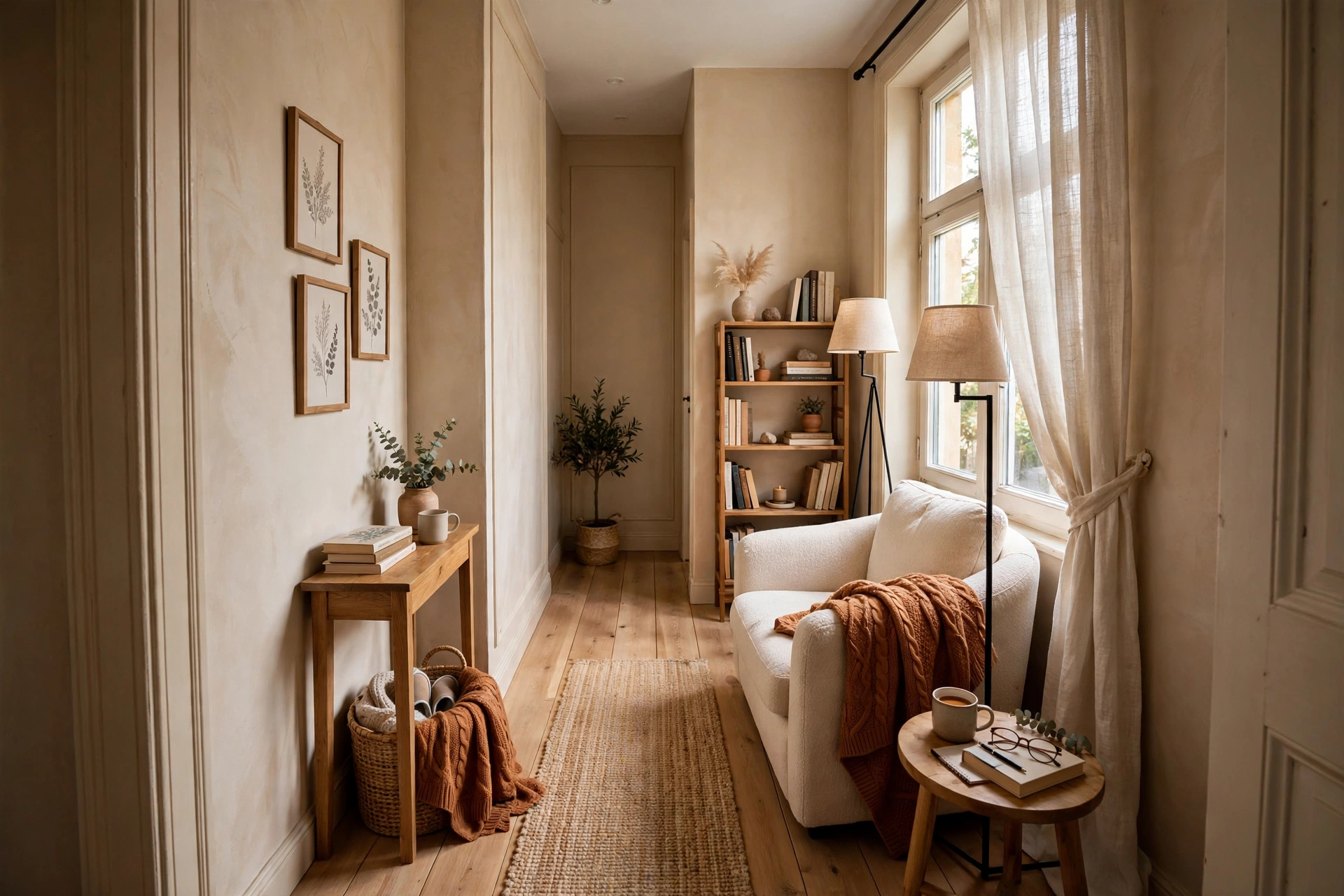
26. Daybed as a sofa alternative
A daybed against the long wall functions as a sofa by day and keeps a slim profile. Dressed with bolsters and throw pillows, it looks completely intentional. It is also a smart pick if the living room doubles as a guest space.
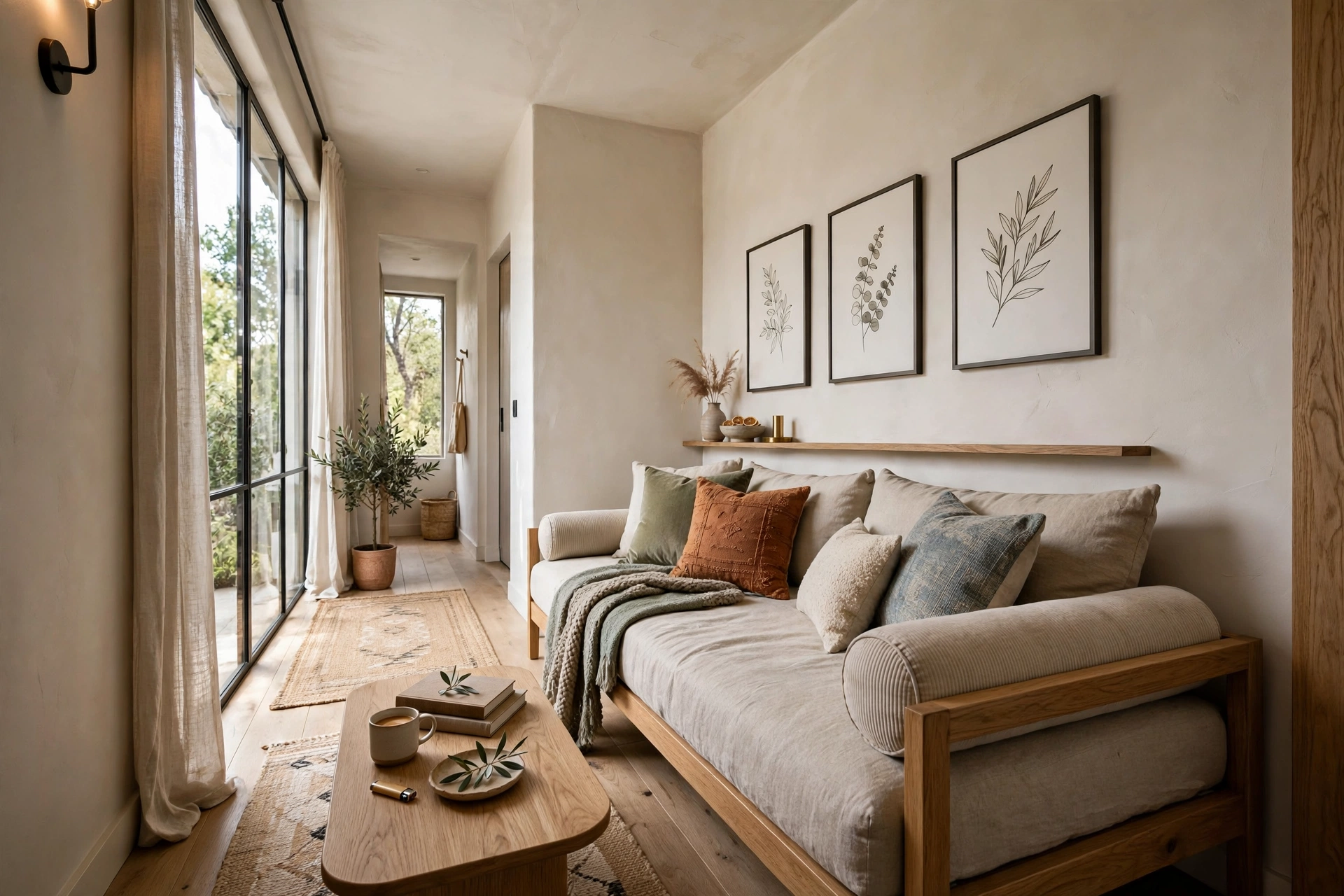
27. Window storage bench
A bench under the window adds seating and hidden storage without protruding far into the room. Top it with cushions for a cozy perch that makes the most of the natural light. It is especially good in rooms where the window sits on the long wall.
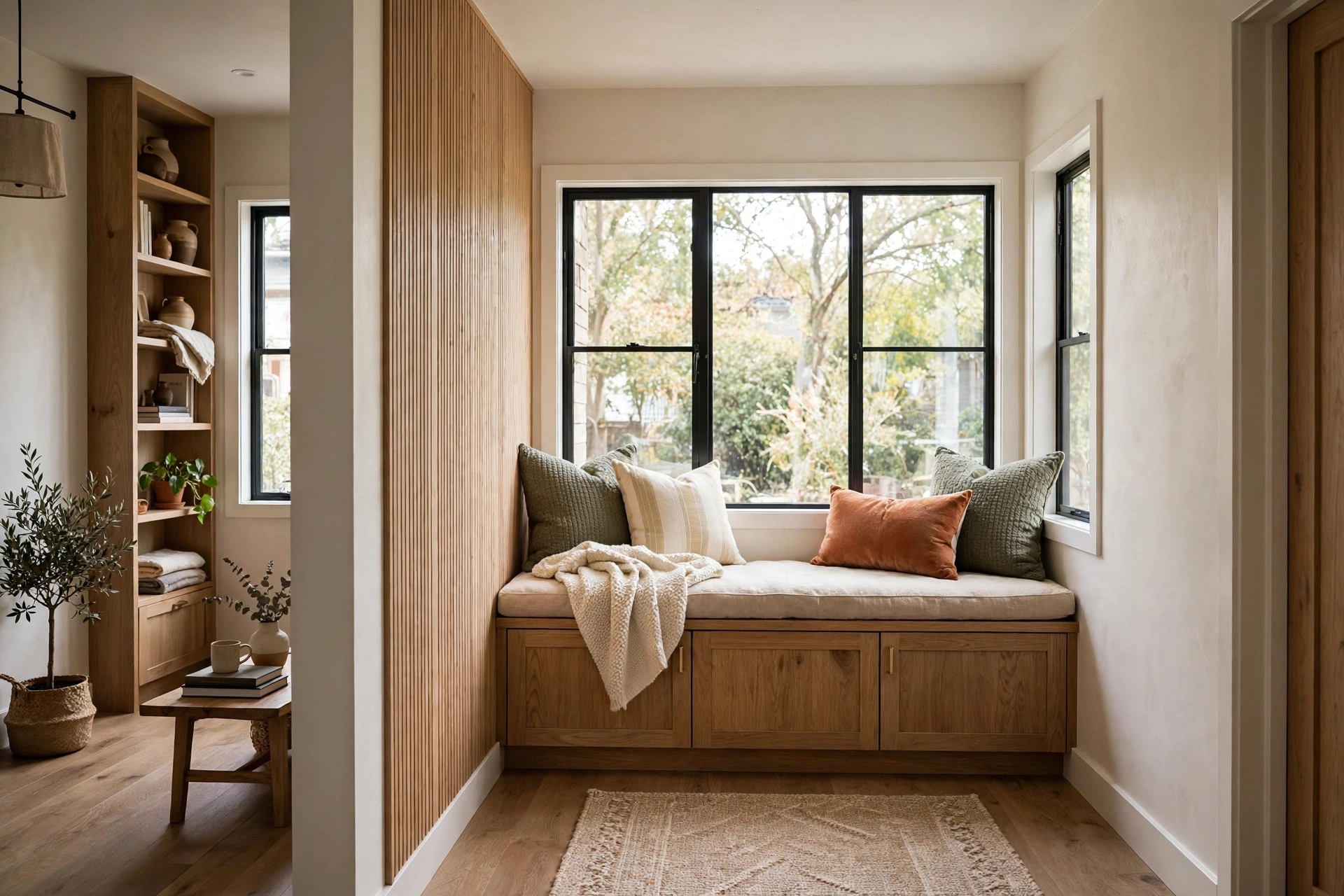
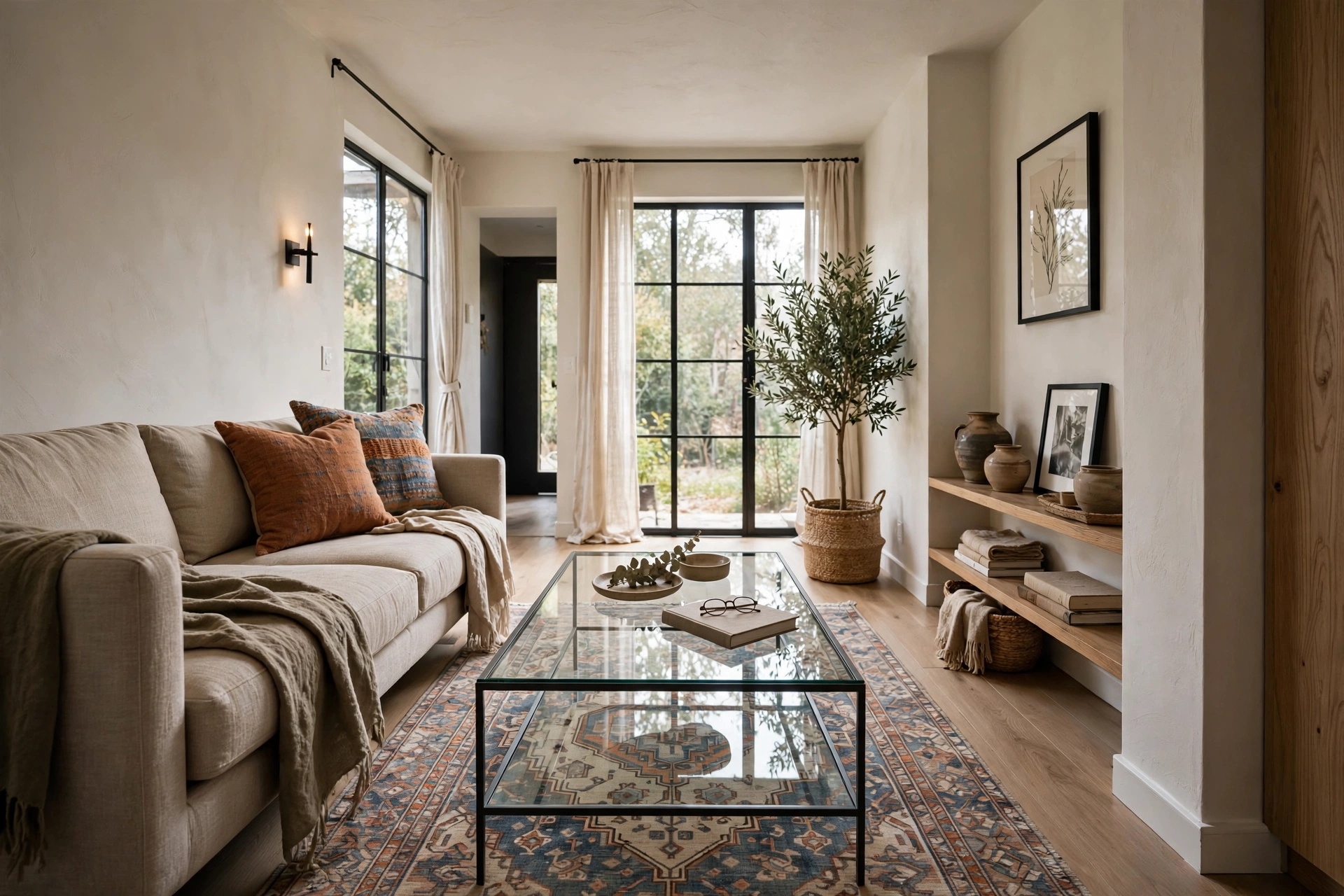
28. Glass-top coffee table
A glass coffee table keeps sightlines open straight through to the rug and floor beyond. The room reads as one continuous surface instead of being chopped up. Pair it with a patterned rug underneath so the transparency shows off the design.
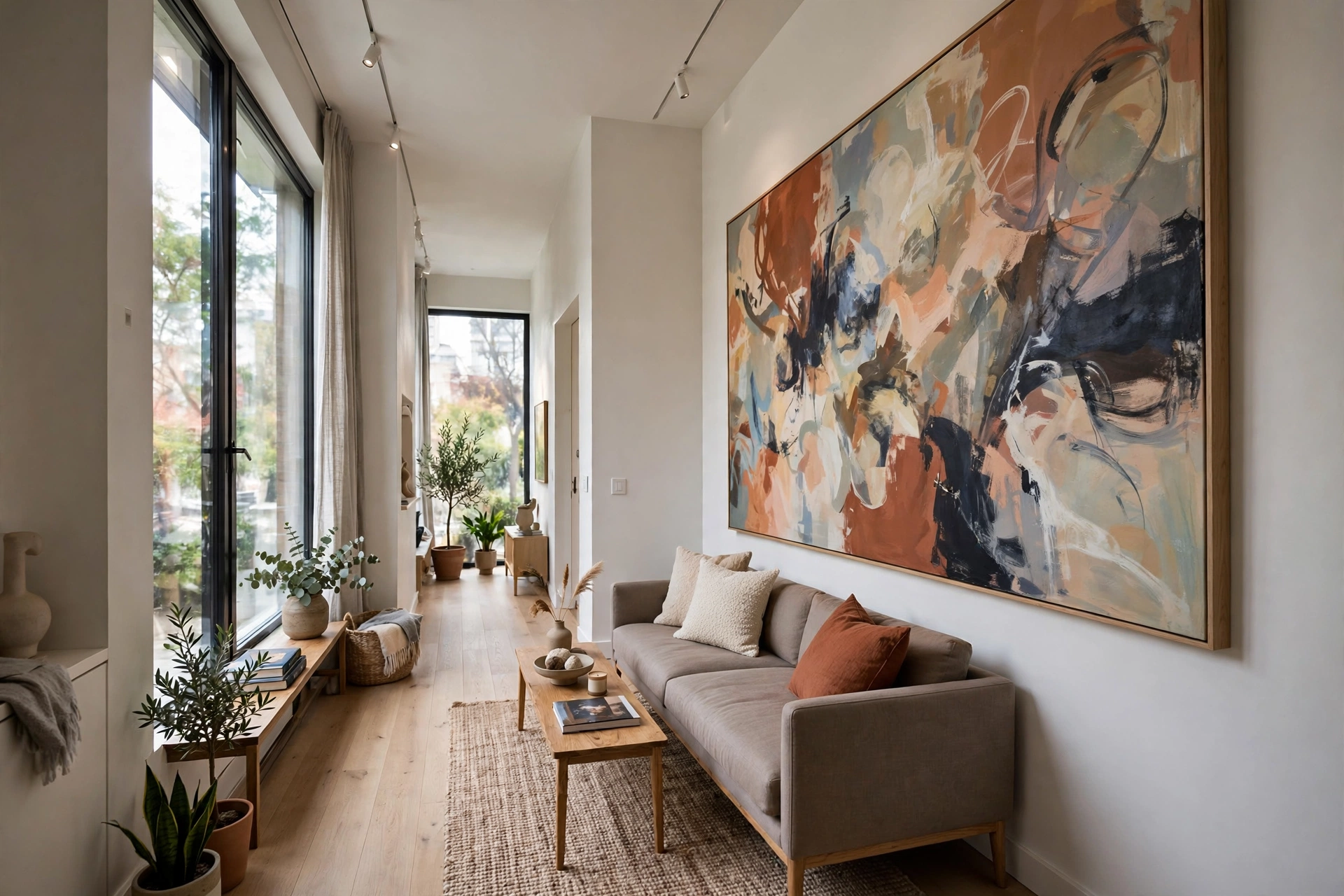
29. Oversized art on the long wall
One large-scale piece of art anchors the long wall better than a scatter of small frames. It gives the eye a single resting place and makes the wall feel purposeful. Hang it at eye level over the sofa for gallery impact.
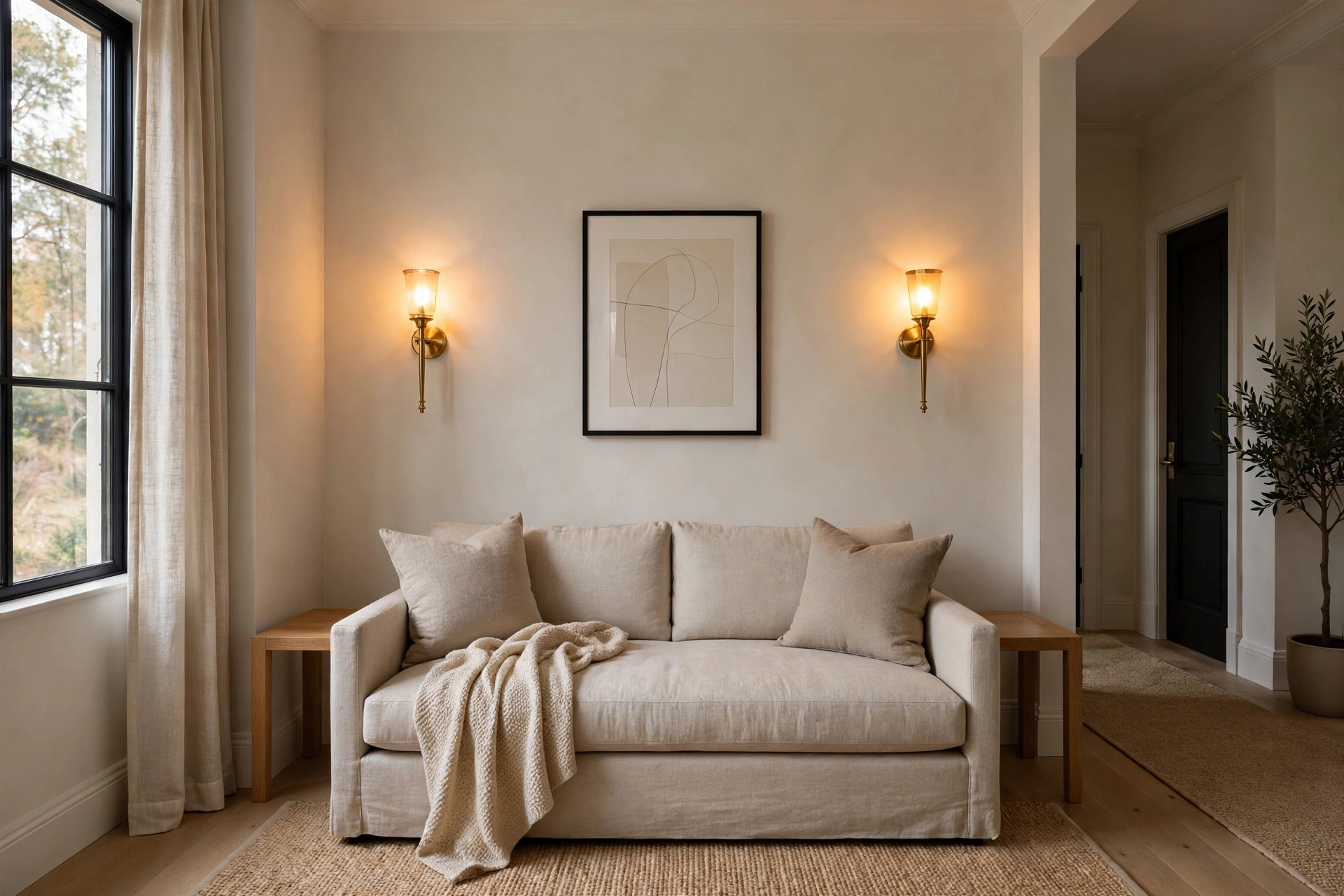
30. Wall sconces instead of table lamps
Sconces flanking the sofa or artwork free up every inch of side-table surface. They add warm, flattering light at exactly the right height. Plug-in sconces mean no electrician required.
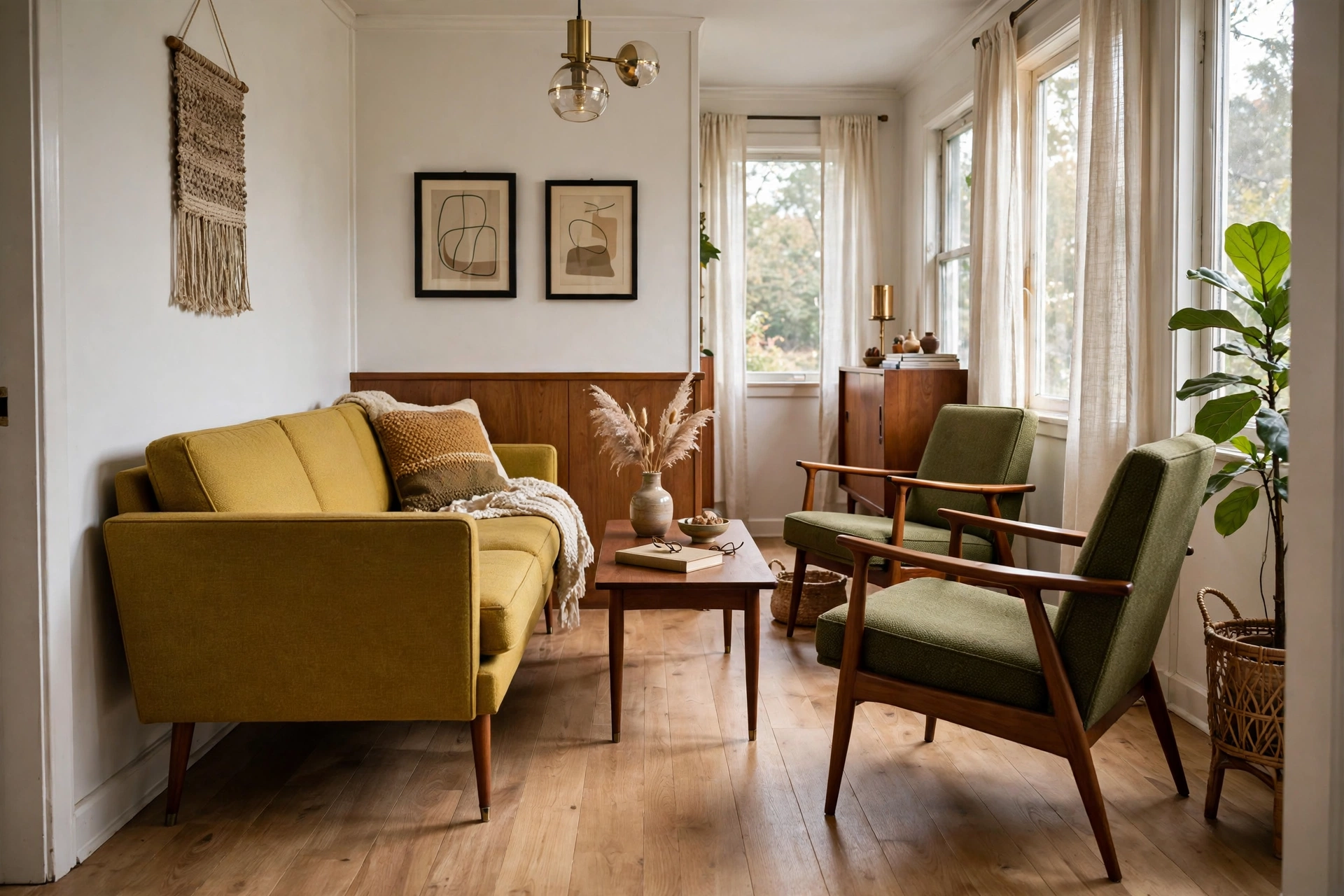
31. Leggy furniture that shows the floor
Sofas and chairs on raised legs reveal the floor beneath, which makes the room feel larger. That glimpse of continuous flooring tricks the eye into reading more square footage. Mid-century styles do this beautifully.
32. Jute runner for texture
A natural jute runner adds warmth and texture while keeping the palette light. Its linear weave reinforces the room’s length in a flattering way. Layer a smaller patterned rug on top at the seating end for extra coziness.
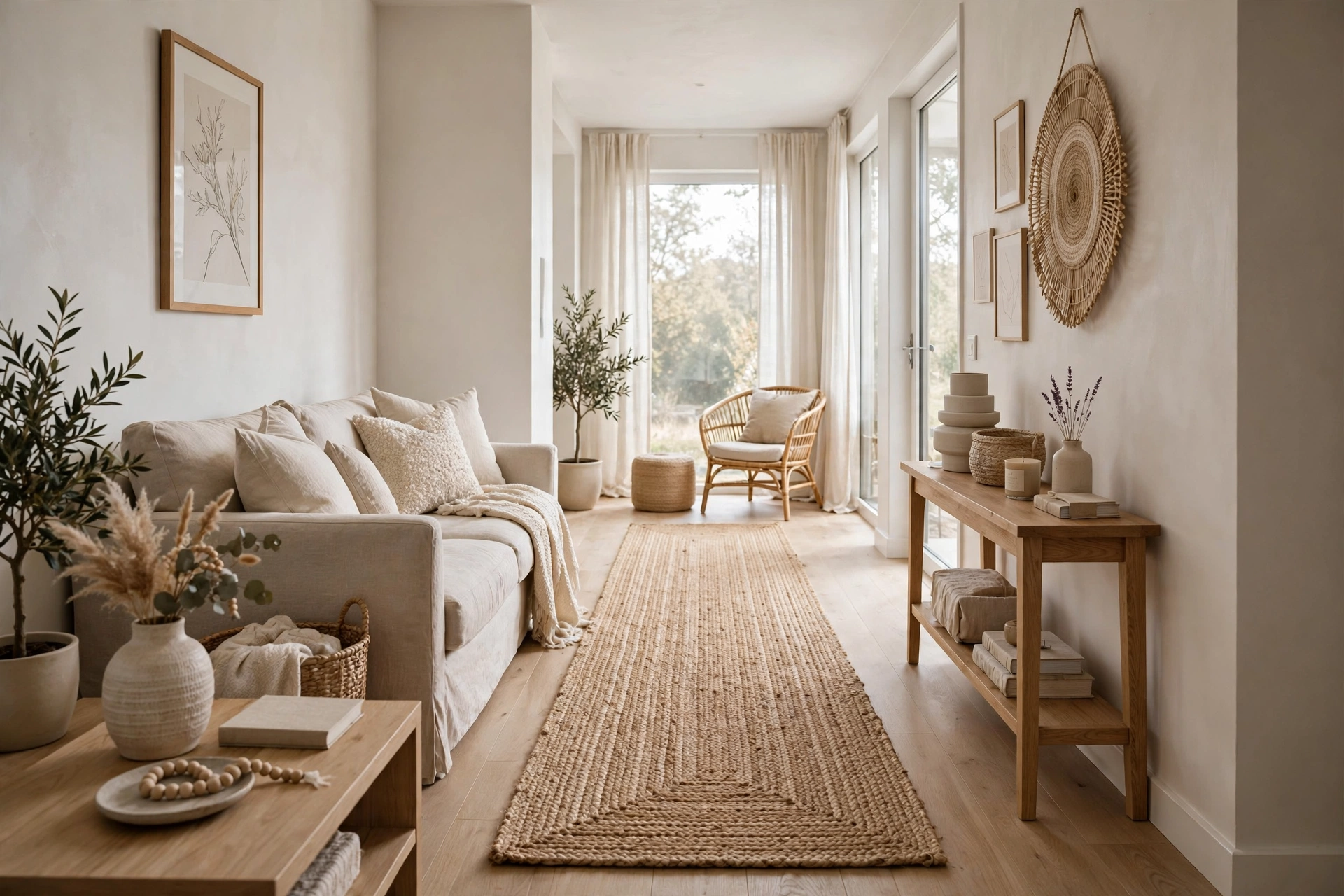
33. Tall plant corner
A tall plant like a fiddle-leaf fig or olive tree draws the eye upward and adds life to a dead corner. Vertical greenery emphasizes height rather than width. Keep the pot simple so the plant is the star.
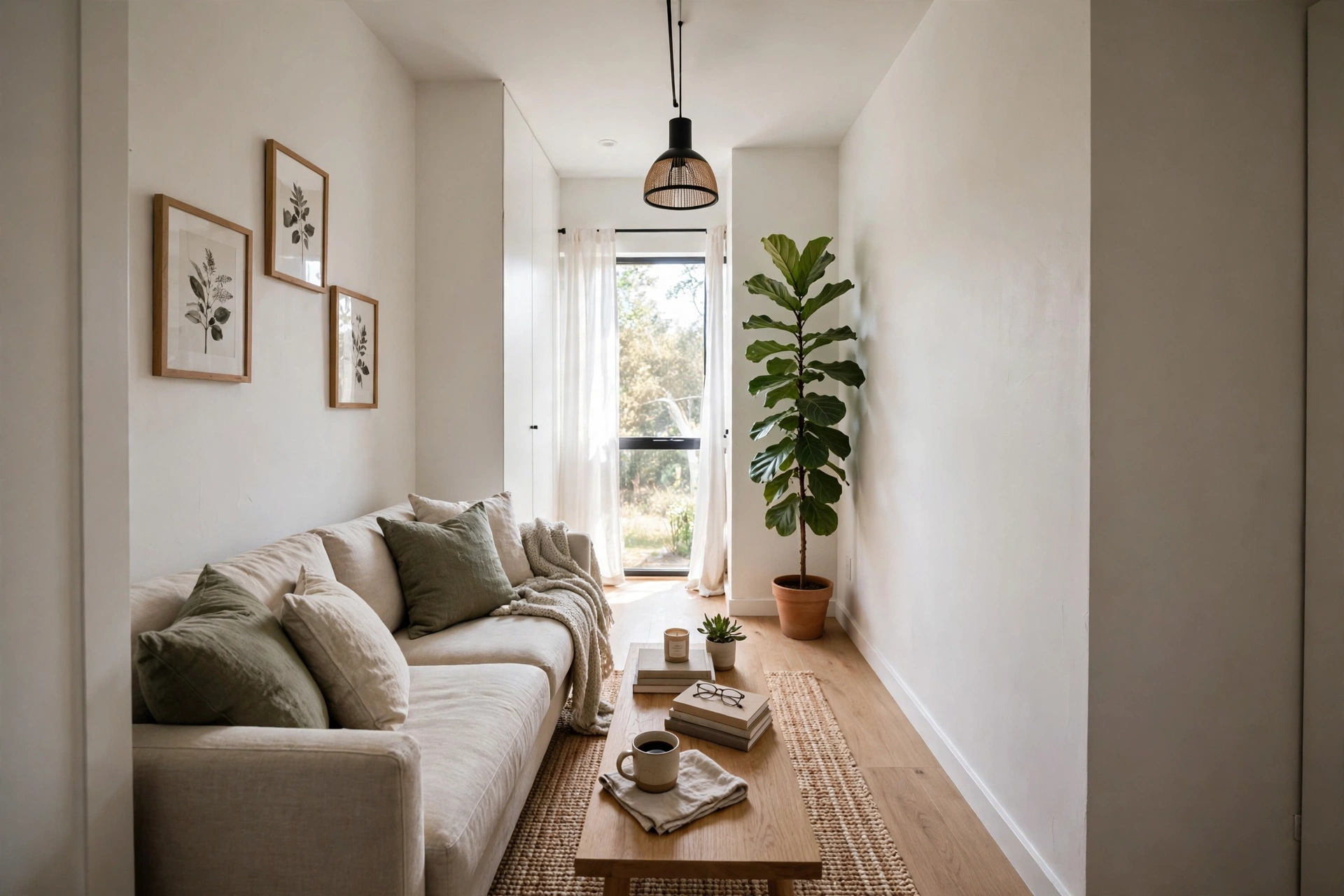
34. Folding room divider screen
A lightweight folding screen can carve a workspace or entry drop-zone out of the room’s length without construction. It adds pattern and privacy while staying movable. Choose an open-weave or cane design so light still passes through.
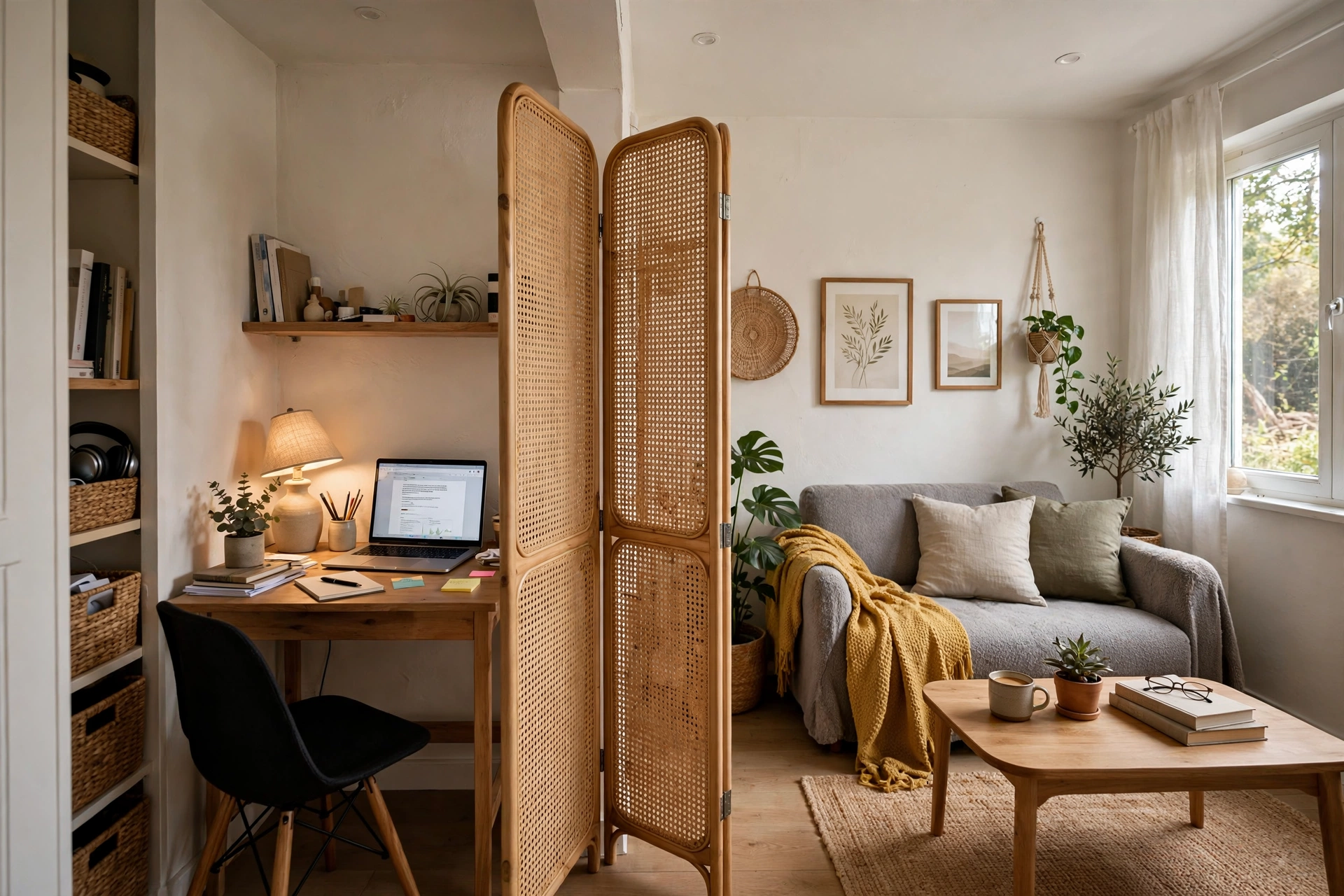
35. Compact workspace zone
If you work from home, dedicate one end of the narrow room to a slim desk and chair. A small desk against the short wall barely intrudes and gives the room’s length a function. Keep it tidy with wall-mounted shelves above.
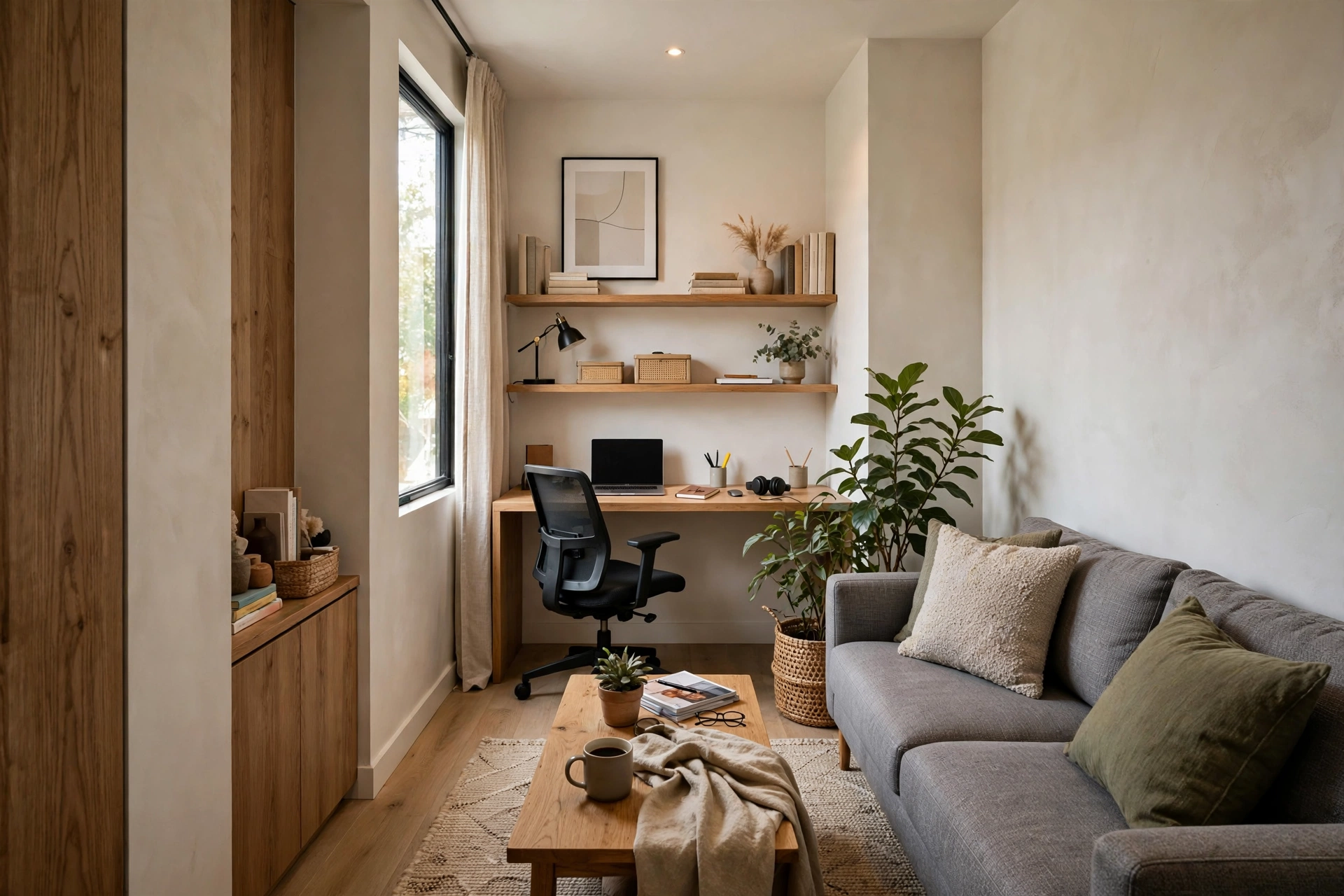
36. Matching upholstery for cohesion
Upholstering the sofa and chairs in the same or closely related fabrics reduces visual clutter. The eye glides across matching pieces instead of stopping at each contrast. It is a simple trick that makes narrow rooms feel calm and unified.
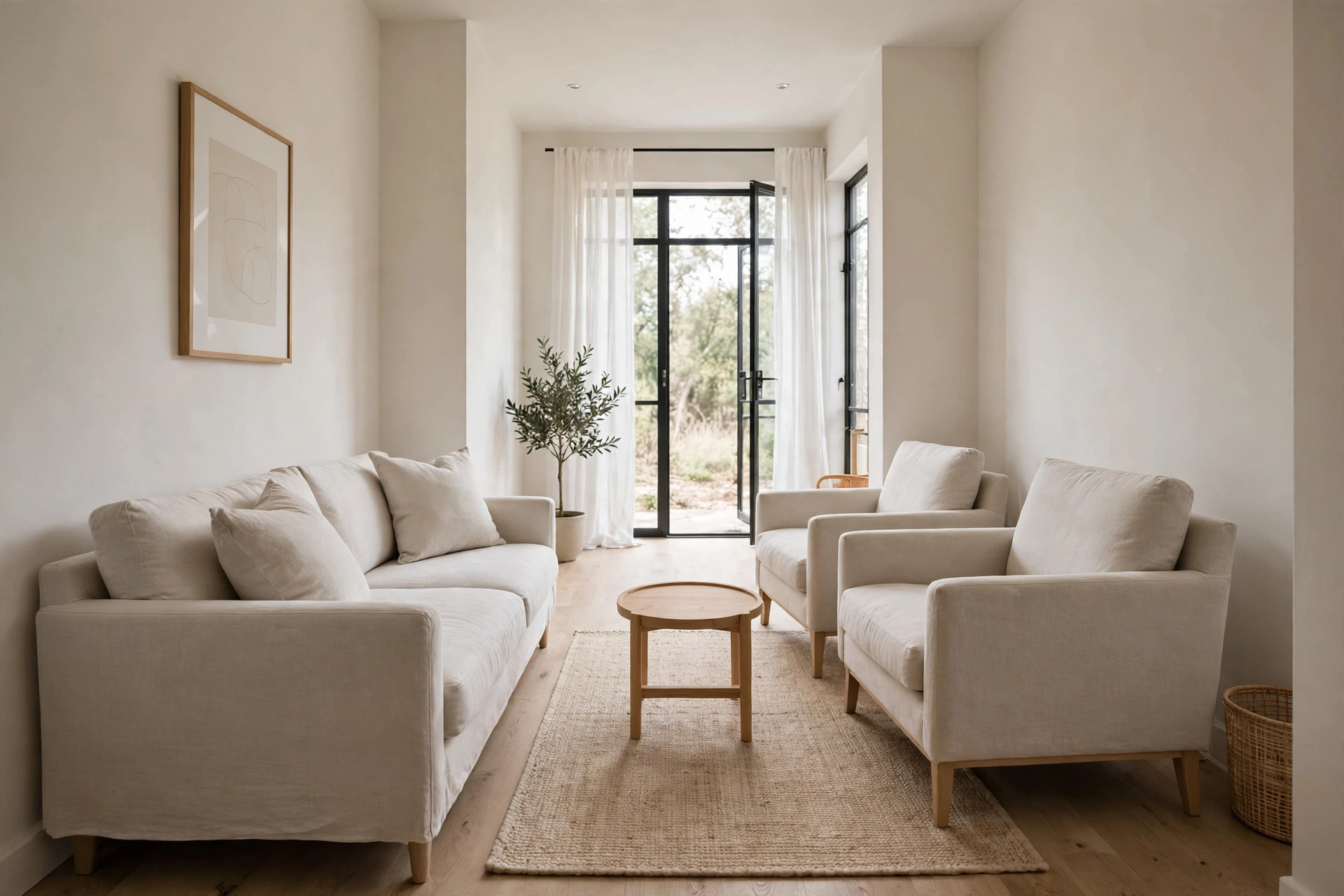
37. Warm throw and pillow palette
A cohesive palette of throws and pillows in warm neutrals with one accent color adds coziness without chaos. Limit the mix to three tones so the narrow room feels curated, not crowded. Texture does the heavy lifting here.
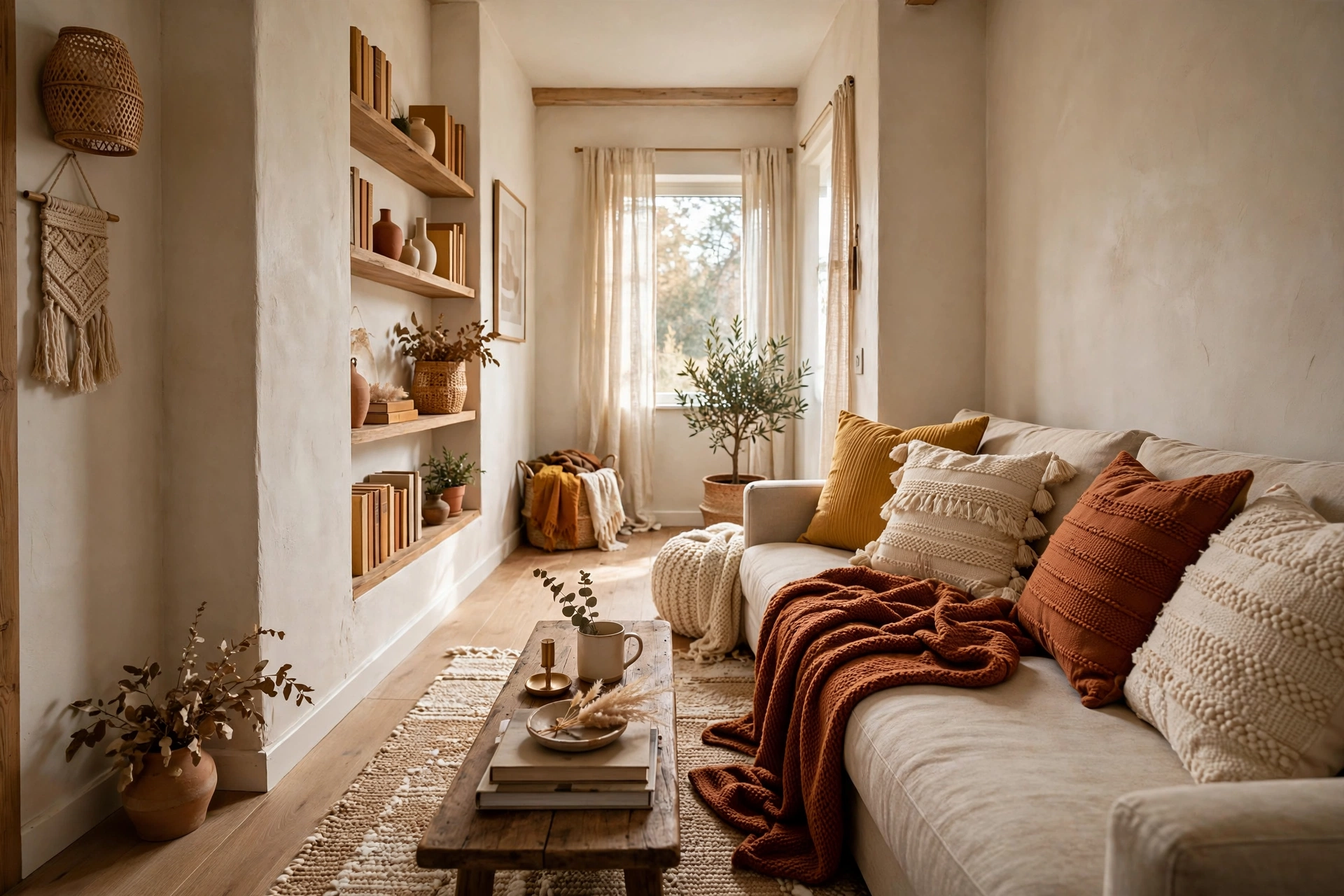
38. Clear traffic lane along one side
Keep one side of the room completely open as a walkway from the front door to the far end, with all furniture hugging the opposite side. That open lane connects your entry to the living space, so take cues from our Christmas door ideas to make the transition from front door to sofa feel intentional and welcoming. Never let the lane get blocked by ottomans or plant stands.
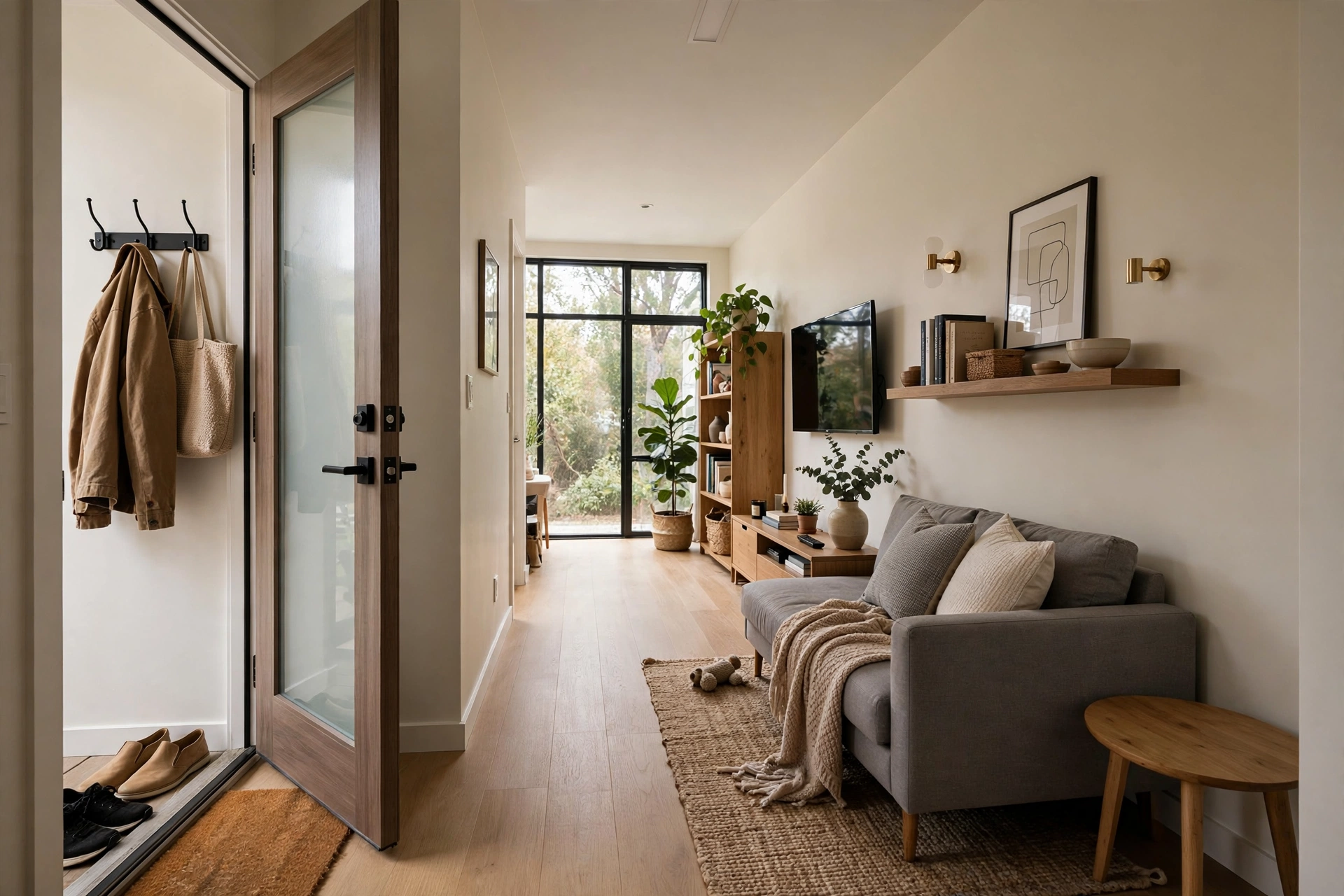
Narrow living room styling tips
- Measure first, buy second: Map your layout with painter’s tape on the floor before ordering anything, since every inch counts in a narrow room.
- Keep the palette tight: Two to three colors plus natural textures keep a narrow room calm; let one accent color do the talking.
- Go vertical everywhere: Bookcases, art, plants, and lighting should all climb the walls to balance the room’s horizontal stretch.
- Choose double-duty pieces: Storage ottomans, nesting tables, and daybeds each do two jobs in the footprint of one.
- Light every corner: Dark corners make narrow rooms feel like tunnels, so make sure each end of the room has its own light source.
- Edit ruthlessly: In a narrow room, every object is on display, so keep surfaces styled lightly and store the rest out of sight.
FAQs
What is the best furniture layout for a narrow living room?
Float the main seating away from the walls with a clear walkway on one side. Place the sofa along the long wall, anchor one end with a focal point like the TV or fireplace, and keep the opposite side open for traffic flow.
How do you arrange furniture in a long narrow living room?
Divide the length into two zones, such as a main seating area and a reading nook or workspace at the far end. Use rugs to define each zone and keep furniture scaled slim so walkways stay comfortable.
What colors make a narrow living room look bigger?
Light, reflective colors like white, cream, and pale gray make walls recede and bounce light around. If you want drama, put the deeper color on the short far wall only, which visually shortens the room.
Can you put a sectional in a narrow living room?
Yes, if you choose a compact one and tuck it into one end of the room. Keep the chaise on the short side and make sure at least 30 inches of walkway remains along the open side.
Final thoughts
A narrow living room rewards thoughtful choices more than square footage ever could. Pick the ideas that solve your biggest challenges, whether that is seating, storage, or simply making the room feel like you, and layer them in one weekend at a time. And when the holidays arrive, your well-planned narrow room becomes the perfect backdrop for gatherings, so browse our Thanksgiving centerpiece ideas when you are ready to host dinner in your newly polished space.


4 Comments
Pingback: 31 Very Small Open Plan Kitchen Living Room Ideas That Maximize Space
Pingback: 29 Summer Coffee Table Decor Ideas For Breezy Styling
Pingback: 31 Small Living Room Dining Room Combo Ideas For Tiny Homes
Pingback: 24 Studio Apartment Ideas For Small Spaces